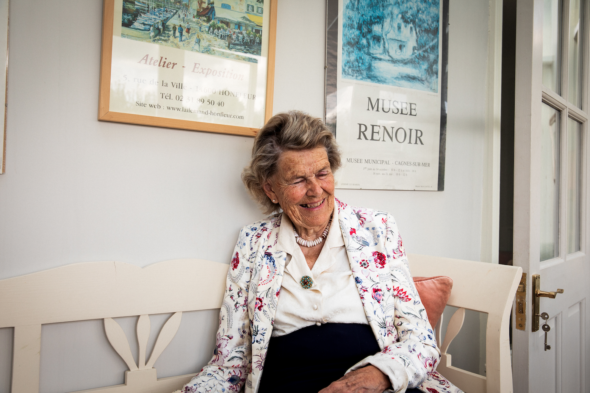
We got a kettle, a roll of Fablon, and found some old tables, and put a sign up saying "coffee and buns"
Listen 00:13:58
Story: Marigold Cleveley - Central LondonStories of volunteers supporting the health service since 1949
Sato Liu - Central London
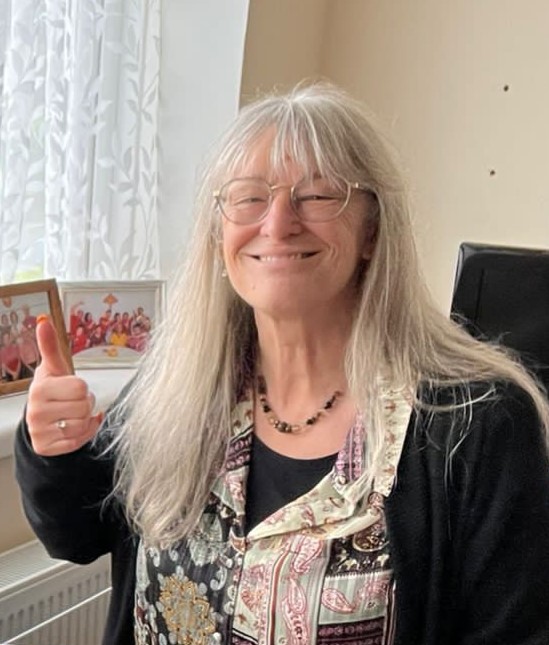
Homeopathy, its values, and lifestyle have always been important to Sato. It’s impacted not only her lifestyle, but also her career choices and now her volunteering.
Her passion for complementary medicine is as infectious, as her knowledge about it wider ranging. In a time when the NHS seemed to have turned its back on its contribution, she still champions it enthusiastically.
It’s usually tea and sympathy, although they are not tea and sympathy. What inspired us was the growing threats to the availability of homeopathic medicine in the NHS.
Her story plots the contribution of the Friends at the hospital, sharing the genuine support they have offered in helping the hospital leadership to achieve its aims in so many small, but equally in some very significant ways.
Interviewer
So could I start by asking your name?
Sato Liu
Sato Liu.
Interviewer
And could I ask which Friends group we’re going to be talking about today?
Sato Liu
I’m with the Friends of the Royal London Hospital for Integrated Medicine, formally known as the League of Friends of the Royal London Homeopathic Hospital, which changed its name in 2010.
Interviewer
And could I ask your age?
Sato Liu
Yes, I’m 69 this year.
Interviewer
Thank you. So what first inspired you to get involved with Friends?
Sato Liu
I wouldn’t say I was inspired as such. I have been working in the field of complementary medicine since 1980. And I’d worked for a national charity that was dealing with homeopathic herbal medicine and Anthroposophic medicine, did that for 20 years. I then worked for the Prince’s Foundation for Integrated Health on a contract basis. When the contract ended after two years, one of the doctors from the hospital, who I’d known since 1980, said that the League of Friends of their hospital needed a Campaign Manager. “Would I be interested?” Of course, I was totally interested. So in 2007, I started working with the League of Friends.
Interviewer
As a Campaign Manager. What does a Campaign Manager do in a League of Friends?
Sato Liu
Interesting. Yes, not something you normally associate with the League of Friends. Is it usually tea and sympathy, although they’re not tea and sympathy. What inspired us was the growing threats to the availability of homeopathic medicine on the NHS. And this was the Homeopathic Hospital. If it hadn’t been the Homeopathic Hospital, I probably wouldn’t have gone to it, to the Friends. So with the threats to homeopathy, that put a threat to the hospital itself, because of all the doctors. Most of them were homeopaths. Some of them did acupuncture, some did herbal medicine, some did other forms of complementary therapy. In fact, the Hospital itself has an interesting history. It was the first NHS hospital in the UK to introduce Acupuncture. That was in the seventies. It was the first hospital to have a complementary cancer care section. So people that were suffering from cancer could have complementary treatments to offset some of the side effects, or whatever. It’s not an alternative it’s, a means of helping. So it was things like that. And, if these things are taken away, then the choice of the patient is taken away.
Interviewer
So…
Sato Liu
So that’s my passion.
Interviewer
Absolutely. And, a great passion. So we’ve got this sort of matching of your passion and an opportunity. So in my mind, a Campaign Manager is organising marches, and holding banners, and writing aggressive letters to Parliament. And that’s what it was?
Sato Liu
No, I didn’t do that. I would, let me see. Yes, we, we did go on marches we didn’t actually organise necessarily. These are patient organisations that may have done them, or professional organisations. Like the Vets did a march because veterinary homeopathy was also under threat, and so on. So yes, we, we would hold a banner. I know we’ve got a lovely photograph Friends’ banner, “Save NHS Homeopathy” with the Big Ben tower, the Queen Elizabeth Tower behind it, that’s a beautiful photograph. If I can find it I’ll let you have it. So yes, we would go on marches, but it was more than that. It was more… letting people be aware and doing posters so that patients that came could pick up and see what the discussion was about. And were they interested in doing anything about it?
Sato Liu
And if they were interested, would they sign a petition or would they write a letter to their MP? Would they do this? Would they do that? But we also supported the hospital in things like writing a list of all their services and sending it out to GP’S, so that they would know what was available. So if they needed to do a referral and a patient said, “I have this issue”, IBS or whatever, they could, they the GP would have a laminated card that said, “Oh, we’ve have these services available. We could at offer it at this hospital so we can refer them to that.” Or when, the Choose a Booking system came out, you could choose the hospital you wanted to go to. So your GP’S going to refer you to a Rheumatologist, or a Dermatologist, or something you could say I’d like to go to the Homeopathic Hospital and they would look and say, “Oh, yes, they’ve got that service.”
Interviewer
So people traditionally would think of a League of Friends, as definitely involving tabards…
Sato Liu
Yes. In the café!
Interviewer
Yes cafes, and perhaps some fundraising, and that sort of thing. It feels like there’s a much more sort of solid, philosophical base to The League of Friends, about trying to support homeopathy. Is that fair in your view?
Sato Liu
Homeopathy was a big thing, but it’s the hospital because the hospital was the Homeopathic Hospital right, but the hospital itself, it changed its name in 2010 to better reflect the wider services it offered because it wasn’t just homeopathy. I mean, it was homeopathy in 1847 when it was built, but in the seventies, they introduced acupuncture, the cancer care clinic, children’s services, women’s services and so on. So there were different services offering a wide range of treatments, whether they’d be conventional medicine, or conventional with homeopathy, or acupuncture or mindfulness, or, autogenic training. It could be anything, but it was integrating different treatments that suited best the patient’s needs and the patient’s choice too.
Interviewer
So we’ve got a hospital with some really key skills. Do the Friends groups, or does your Friends group, does it have some of those traditional services as well? Or does it, is it more focused on helping outreach and understanding the integrated services?
Sato Liu
It was both.
Interviewer
Okay.
Sato Liu
So supporting the practitioners, the nurses ( because some of the nurses became Nurse Practitioners), They’d run acupuncture clinics, autogenic training, doing Reiki, massage, whatever… Remedial massage, physiotherapy. So supporting them, the doctors, supporting the pharmacy, supporting the patients, and letting external sources know that things were available, and what was available.
Interviewer
So if I’d gone there, would I have found a friend’s coffee shop, for example?
Sato Liu
Oh yes, there is a coffee shop. Yes. I mean, the last ward, – it used to be a five floor hospital, all for the Homeopathic Hospital, had wards, x-rays. So it is not only homeopathy that was out there. You know, it was a conventional hospital that incorporated homeopathy. And then as I say, from the seventies it incorporated, more and more.
Interviewer
So I’m interested, the people who are attracted to the Friends group, do they tend to be people who have specific interest in the different therapies, or are they people who are former patients, or professionals?
Sato Liu
I wouldn’t say people are attracted to the Friends so much as… they get information from that. They are attracted to the information that we were making available. The coffee shop was there. We had Jane, who was one of the Friend’s Trustees. She’d been, we called her the Ambassador, Friend’s Ambassador, and she would sit there on the third floor of the hospital, that’s where I was going. The last ward closed slowly, slowly, all wards were closing as the Hospital services changed. And I think the last ward closed in the late 1980s. Now, there are no wards. It’s more an outpatients’ clinic, which tends to take away the support Friends would get, because you don’t think about supporting your local GP. You know, you go in, you have your treatment or you get consultation, and you go out. I mean, when you talk to Cynthia and Marigold, you’ll have more of a background, I think Marigold may have been in involved right from the start ‘73, ‘75, when the Friends first started.
Sato Liu
And there were wards. Then when I came there weren’t any wards. So it was Outpatients only, that tends to detract from the support Friends can give, because normally you sort of go round the wards and, talk to patients, offer them a book, or, you’ve got your book trolley or your tea trolley. Whatever, that wasn’t going on when I arrived, that didn’t happen. So it was more supporting patients sitting in the waiting room and, some of them needed comfort for one thing or another. So you would give the tea and sympathy. Others didn’t want the service to close, or they wanted to get a referral and that was getting harder and harder. Hence, I was brought in. I changed the term Campaign Manager, to Projects Manager. Campaign, people think of, as you said…”boxing gloves on.” This was more looking at the needs of the patients, the needs of the hospital.
Sato Liu
So getting things out to GPs, knowing about the services, more of a project than a campaign. Although it is a campaign than in its own, right. When Practice-based Commissioning came in, we raised some funds, paid some people to write up care pathways, because care pathways was the way, Practice based Commissioning was going. They didn’t have care pathways at the hospital. So the funding I got, I employed a couple of people… well, one person. And when she left, got somebody to finish the job, then the GPs, the doctors would look through the care pathways that had been written, and they’d tweak it so that it was absolutely perfect. Then we could send out care pathways for the clinics that were available. That made it easier as well for GP referrals, because there was a clear path of treatment, and termination of treatment, if you like.
Interviewer
Yes. I think what I’m loving, and what I’m hearing, is that this is a very professional skill set that the Friends group would bring. It’s really much beyond being able to make a nice cup of tea.
Sato Liu
Yes. I can’t do that very well, as you’ve witnessed,
Interviewer
But you know, there’s an interesting sense that it feels like a much stronger partnership with the aims of the hospital, with the work that the Friends are doing here. Yes. Really helping the hospital to achieve what it’s trying to achieve.
Sato Liu
Well, it was. It was, and I say ‘was’, because now – I don’t know if you, you heard but a few years ago, the British Homeopathic Association, as it was then, it’s now called Homeopathy UK, took the nhs England to court, and we were going to be co-partners in this, with our Friends. Because there was this move to remove homeopathy and herbal medicine from the NHS. It’s been available on the NHS from the moment the NHS was conceived. It was in included. Hence the Hospital was still there, but we lost. We landed up just being a supporting partner, but we took them to a Judicial Review, to say that the NHS England, can’t do it, but they did! So now homeopathy, herbal medicine are no longer available on the NHS.
Interviewer
I’d seen that in the headlines, I think.
Sato Liu
Yes. It’s a few years ago now.
Interviewer
Yes,
Sato Liu
Absolutely. But, we had to fight, you know, and we had to support the British Homeopathic Association in that fight, and it cost. Money could obviously be lost, but we had to fight because there are patients there. I can’t remember the actual figures, but it’s something like less than 1% of the NHS budget went on treatments for homeopathy, less than 1%. But there were 27,000 consultations at the hospital. This is just at the hospital in a year, not GPs that were practicing homeopathy as well. So just at the hospital, 27,000 for less than 1%, 0.1%, I think it was don’t quote me on figure, but it is that small.
Interviewer
Yes.
Sato Liu
Yet one person’s treatment can cost that kind of money alone. And yet 27,000 consultations that took place that year or a year, and they are suddenly denied it.
Interviewer
Yes.
Sato Liu
And they are now falling back on the conventional treatment. That’s going to cost more.
Interviewer
So that’s where we stand at the moment. That hasn’t changed?
Sato Liu
No, it’s been removed from the NHS, and I don’t think it will ever go back on, unless there’s a radical rethink, because the NHS is in financial crisis.
Interviewer
So if we were to go to the hospital today for a treatment that can’t be offered to us on the NHS anymore. Can it be offered to us privately?
Sato Liu
You can do what you like privately, as long as the NHS isn’t paying for it. Absolutely. So if there’s a homeopathic or a herbal, you know, phytotherapy, if one of those, if the patient has a consultation at the hospital, because all the doctors are conventionally trained, they’re conventional doctors, they will do the normal consultation. And if the patient at the end of that consultation is given a prescription, it has to be for something that is sanctioned by the NHS. But if I, for example, if it were me and I saw one of the doctors there, and they said, “well, we can give you this anti-inflammatory or this whatever” I’d say, “well, I don’t want that. Can I have something homeopathic for this?” The response would be “Yes, but I can’t give you a prescription for it. You’d have to go and buy it yourself.” So then I go and buy it for myself.
Interviewer
So they can tell you what you might, might work for you?
Sato Liu
I think they’re allowed to do that.
Interviewer
If they know, and then you can…So, so the Friends group?
Sato Liu
But they’re not allowed to give you a homeopathic consultation or a herbal consultation. They can only give you the normal consultation.
Interviewer
So you’ve been really true to your values over the years as an organisation. And you’ve fought really quite hard, as hard as you can fight to get it there, which has included lawyers, et cetera. Did that change the relationship in the hospital or…?
Sato Liu
No, not among the staff of the hospital, because they’re there because of their values too. I mean, why would you do all your training to become a doctor, then additional training to become a specialist, whether it’s in rheumatology, dermatology, whatever specialty? You know, it’s not cheap. But these guys, these people have done all that training, gone through the hardship of training and then paid extra to train in one or other complementary treatment/therapy to become a homeopath, herbal phytotherapist or whatever it might be, acupuncturist. They’ve paid on top of having done conventional training. So they’ve got values too, and they don’t want to just look at MIMS, you know, the directory of medicines, and say, “oh, that’s an anti-inflammatory look. There you go.” No, they want to find out more about the person, treat that individual on what their needs are. And they’ve had to go through the ringer to get there. So the support that we give them, they also give us.
Interviewer
Yes. So what I’ve heard is there’s actually a strong relationship between the Friends and clinicians?
Sato Liu
There was.
Interviewer
There was?
Sato Liu
Most of those that were practicing homeopathy, have left now, one died.
Interviewer
Mm-hmm.
Sato Liu
Unfortunately the lead guy, he used to be the Queen’s Homeopath. Or the Homeopath to the Royal Household, one of the…
Interviewer
So, homeopathy was something that, or is something that’s important to the Royal family as well?
Sato Liu
Absolutely. Oh yes. Yes. You’ll find, they’re all carrying Arnica on them, even Zara Phillips, you know! They give it to their animals, the horses. In fact, a Patron of the Friends, well two of the patrons were. Sir Michael and his wife, Lady Angela Oswald. He was something like the Queen Mother’s Stock Master, and later advisor to the Queen’s National Hunt. And he used homeopathy. He was racing manager to the Queen Mother from 1970 to 2002, then from 2003 he was the National Hunt Racing Adviser to the Queen. So he was a Patron. Unfortunately, he died the same day as Prince Phillip’s funeral.
Interviewer
Oh dear, okay. It sounds like there’s a really interesting organisation. Do you have any favorite memory of the Friends Group?
Sato Liu
Well, it would have to involve Jane. She was a hundred years old, and she’s standing on a picket line. I mean she’s not on a picket line, because that sounds like a, a strike. It wasn’t… It was a protest, Protest line outside of the British Medical Association buildings, with a banner.
Interviewer
Okay.
Sato Liu
Or outside the Houses of Parliament, or taking in a position, and she’s…yes
Interviewer
It’s really interesting because the key sort of thing that I’m feeling about the Friends group. Some Friends, groups are all about service, but your Friends group has got voice as well. It’s about voice and, absolutely it’s heard.
Sato Liu
Absolutely. Certainly from 2007, prior to that, it was more sedate, but there wasn’t the need to have a voice as such. It was there to support the hospital. So we’d give lunches, you know, lay on the lunch, when there’s a staff meeting, or whatever. So that was an opportunity to mingle, give some food, they don’t have to bring their own pack lunch, or whatever. So that was a support, nice, gentle. But when the threats to homeopathy, particularly homeopathy, came about, then we had to have a voice, and we had to bang and shout, and say, “No, I don’t think so. You can’t do this, because people want it!” And the interesting thing is that a lot of the patients that come to the Homeopathic or came to the, I keep calling it the Homeopathic Hospital, it’s the Hospital for Integrated Medicine, because of the choices that it was doing/offering: they came as a last resort.
Sato Liu
Dr. Fisher used to call it the TEETH (Tried Everything Else, Try Homeopathy) patient. The patient, you know, the GPs had no idea what to do with these patients. They tried all the normal drugs, and what have you, these hadn’t worked. So they’d shunt them off to the Hospital for Integrated Medicine. So it wasn’t a case of belief. Of these people thinking, “I only want complementary medicine, you know, I won’t touch that orthodox stuff.” They were the fed up, and the desperate. That’s the point. They’re not the ‘I believe in homeopathy. I believe it works.’ They didn’t care. “Just give me something that will make me better, something that will work.” So, I would say they were the fed up and desperate, but when they got results from that, that’s where the support came from, because they got results where they had not received results or had support in any other way.
Interviewer
So I have a sense in some of our discussions that the Friends Group might be slightly different in 2022, than in some of the previous years. So how, how does the Friends group look now?
Sato Liu
I’ve only been a Trustee for a year and a bit, because prior to that I was employed. Then COVID hit. So obviously the offices closed down. I was out, homeopathy had been taken off the NHS. There wasn’t really a need for me anymore, but I was still very much supportive having worked with these amazing people. That’s the answer to the question you asked, in a way earlier, is amazing people. So, so committed and such a lovely team of staff that, yes. That’s why I went from being an employee, to being a trustee.
Interviewer
You stayed part of the family?
Sato Liu
I stayed even when I’d left, you know!
Sato Liu
Yes. I was still part of the family. So, yes. I mean, once you’re there, you just stay and you’re there till you die, I think!
Interviewer
Absolutely. And, and that again really highlights to me that sort of important point – that just because you’ve got older doesn’t mean you haven’t, you’ve lost validity in what you’ve got to say. You will have a view that’s relevant, till you die.
Sato Liu
Yes. Or go berserk, you know, whichever soonest.
Interviewer
Yes, absolutely.
Sato Liu
But yes…
Interviewer
As one of my interviewees said to me recently, which made me smile “well at my age, dear, we are either dead or gaga!”
Sato Liu
That’s exactly what I meant.
Interviewer
I thought it summed it up quite nicely.
Sato Liu
Yes. Again, much more articulate than mine.
Interviewer
I guess…Has COVID changed things at all for you?
Sato Liu
Yes. Because obviously with the hospital, pretty much on lockdown, the doctors were working remotely. That seems to have continued. I have to say also our offices were being squeezed and squeezed. We were lucky to hang on and we only held on to having a space because of the Operations Manager, you know. They wanted to keep us. But because we are part of this conglomerate of Hospitals now: UCLH has seven Hospitals. It’s not down to the Clinical Director, or the Operational Manager, or the Hospital Manager. It’s not their say anymore. And if they want to keep something like the Friends or, or anything, they have to fight for it because it’s being… the hospital, is slowly, slowly, slowly being taken over by one of their other hospitals, or floors rented out to the Great Ormond Street Hospital. So we are now down to about half a floor, I think. So. Yes, it’s, it’s changed considerably obviously with the volunteers not being able to go in, and have the coffee shop open, in where the waiting room is. There’s been no interaction.
Interviewer
So do you think things like the coffee shop might come back?
Sato Liu
I really don’t know.
Interviewer
Okay.
Sato Liu
In truth, I do not know.
Interviewer
And you know, that, to me is really interesting because we’ve got some Friends groups where volunteers are still being told they’re not allowed to go in!
Sato Liu
Exactly.
Interviewer
And then we’ve got other hospitals where Friends groups are actually in there running the coffee shop, and there is no sort of one size fits all across the NHS.
Sato Liu
Yes. Well, there’s a Costa Coffee shop downstairs. It used to be a part of the hospital, but then it, then it got franchised out or something. So I think, because there’s that running, I don’t think they give free tea and coffee to the staff though.
Interviewer
No?
Sato Liu
Which is where the Friends was good because all the staff got it free.
Interviewer
Oh, okay. That’s very positive. When you knew I was coming to see each today, was there anything that you were desperate to tell me you haven’t had the chance to say yet?
Sato Liu
No. It was more that I thought there were because you’d said on the zoom that you wanted to break up the text with some pictures and I’ve got a catalogue of, I’m almost a Trustee of the book of photographs. Okay because, you know, we used to. There’s so much….. I hadn’t even told you that we paid, we designed and paid for the appointment cards. We did the leaflets before UCLH decided to make them the same across the board. So the leaflets on the different clinics we did. We did a heck of a lot of different things, you know?
Interviewer
I…I’m really, it’s really interesting to hear, as I say, I used that word earlier, that partnership that you had with the leadership and management of the hospital, and how practically you were so helpful in helping things.
Sato Liu
Yes. Because I’d been Chief Executive of a charity, the Natural Medicine Society, which was a patient group from a national organisation fighting to protect homeopathic, Anthroposophic, and Herbal medicine from various legislations coming in from Europe, my job had been to run that, to lobby, develop quite a lot of different skills. And it gave me the ability to see where there was need. So for example, before the hospital realised they needed care pathways, I saw the need, because of the skill set I bought with me. I could see that if there was clinical base…
Interviewer
Clinical based practice?
Sato Liu
That’s it. You needed care pathways. Yes. So I asked if they had care pathways. They said, “no.” So that’s where I was able to fundraise and get that done. So it was, it’s not that they needed them, it was having the time didn’t have the time. I mean, you know they’re busy, they don’t see. So where you can see the need, ahead of time, you can talk to the Clinical Director, the Operations or the Hospital Manager. And you can say, if we’re doing this, do you need such and such? And they’d say “yes”, right. “Shall we do it for you?” “Yes”. Or when they are running out of appointment cards, they’d come to us and say, can you pay for appointment cards? So we’d do that. One day I was walking around the park, Queen Square Park, and I saw a bench for the Trident air crash, July, 1972. This was in 2011. The lives of some of the UKs leading homeopaths were lost on that day.
Sato Liu
And I thought it’s 40 years next year, we should do a memorial for this before it’s out of people’s memories. So we organised a Memorial Service for that and, got a cross-section of the various religious communities, we even had people from synagogues there, because there were Jewish people, there were Orthodox Christians on board. There were, you know, a variety of people who had died from the homeopathic community. We made it a non-denominational Service of Remembrance, it was brilliant. The turnout was superb with family and friends of those who had died along with today’s homeopathic community attending. It was 50 years this July and there was a bit of a write-up about it in the Homeopathy UK magazine. We didn’t do anything on it this year. But it’s an example of just doing, you just see things and you know what could be done, you know. If you see a ripped curtain around a bed, you know they need new curtains, it’s a similar sort of thing, but on a subtler level.
Interviewer
Yes. And what, again, I’m really enjoying about hearing this narrative is that it’s not a defensive relationship between the organisation and the Friends. It’s much more of a shared vision that we are going to work together. And if we can help you, we’ll help you. And if you’ve got some skills, we are happy to accept your skills as part of that. And that is just, it’s been lovely to hear.
Sato Liu
Yes, it was amazing. It was an amazing experience. I mean, as I say, we are trustees now. We’re not in there. It’s almost at another crossroads for the Friends effectively. I mean, I’m almost now seeing it now as if we are caretakers of a Trust Fund. We are not in there. We can’t get in there so much. So it’s more, they have to come to us and say, “we need a new monitor” or “we want to, so and so”, or , we pay for training courses to say the pharmacist, or the nurses or whatever, you know, CPD things. But of course now homeopathy is off the NHS, they can’t do it as a continuing professional development course. So us paying for those courses, which we also used to do. Oh yes, we hosted 168 European doctors at the hospital for one of their conferences. The Friends provided all the food arranged the evening, you know, the day food and provided and arranged the lunch, and the dinners in the evening, and the entertainment for them. So we did that as well.
Interviewer
You’ve done so much
Sato Liu
Oh more than I have even mentioned actually.
Interviewer
Well, but we’re going to have an interesting piece because we are interviewing at least three of you. So we’ll have how…
Sato Liu
Well, you’ll have the history!
Interviewer
Yes. The stories will come together, and then we’ll also come back to you to look at those pictures. So thank you ever so much.
| Contributor: | Sato Liu |
| Recorded on: | 13 November 2022 |
| Role: | |
| Setting: | Hospital |
| Organisation: | |
| Hospital: | |
| Location: | |
| Themes: | |
| Decade: |
Listen 00:13:58
Story: Marigold Cleveley - Central LondonListen 00:23:42
Story: Cynthia Burton - Central London