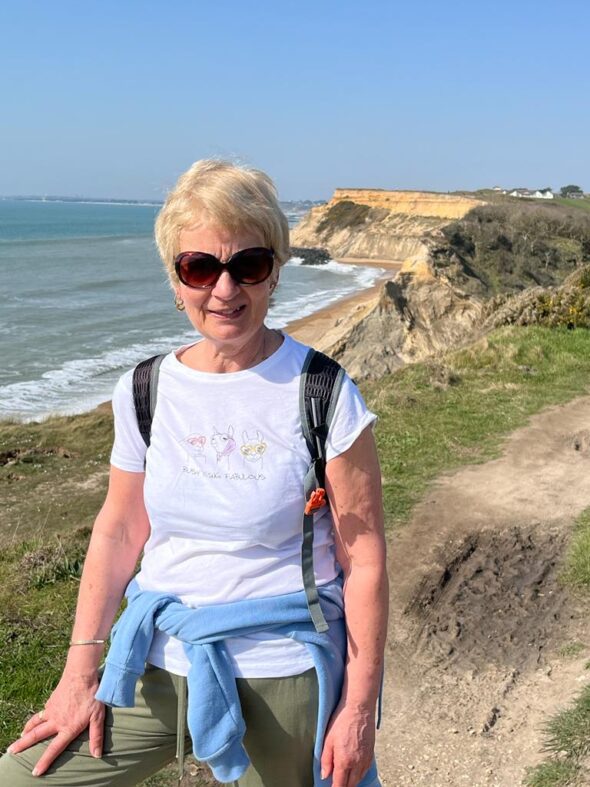
Patricia Evans:
Patients’ need support, and if you take all the various institutions within our hospital, they all seem to be directed towards research. At the end of the day, patients need, need help. They, if you have people with chronic long-term conditions, they’re likely to be either, well not employed or, or having monetary problems because of, of their condition, the various state benefits, et cetera, don’t normally cover everything. Or maybe because they’re just earning or, or just above the threshold, they don’t qualify. So, so it’s a question of helping them, more often than not, to come to Outpatients. So, we pick up the travel. If they’re having rather a complex operation, they need their family with them. And so, we tend to pick up the tab for a hotel stay. So, the patient can be accompanied by their family. People who are completely below the bread line are catered for, but it’s the ones who are just above it, they experienced the most difficulty, as far as I can see.
Interviewer:
And I suppose a key challenge for you is actually finding out who those people are?
Patricia Evans:
That’s it. And we rely on the staff for that. They had a conference not so long ago. It was called “The Frontier”. So, they’re introducing their new research to the world, whatever. And so, I made a point of going to it and I kept giving everyone a, a bright red paper clip, big one. They don’t forget we are here. And that’s just to remind you to, to send us your requests. And because otherwise you’re sitting on money and it seems a shame that you’re sitting on money, which could be better put to good use fellow who had had most of his ins out because he had bowel cancer and he had, he couldn’t even pay his electricity bill. So, so we gave him the maximum route we could. And that seemed to anything, I mean, it just paid for his electricity bill. At least he felt someone was there caring about his condition, I think. Yes.
Interviewer:
And, and also, it’s just having someone to talk to. I imagine someone who, who seems to understand the challenges for them?
Patricia Evans:
Yes, yes, yes.
Interviewer:
Fantastic. Now, when you knew that I was going to be talking to you today, was there anything else that you would keen to tell me that you haven’t had the chance to say yet?
Patricia Evans:
Well, I, I was, I was thinking about that if we can’t get to the ward to, to talk to patients directly at the moment because of the, obviously the risk of, of the COVID that we have to rethink our remit, and maybe we need to, to make patients’ lives better from the point of view of providing them with technology, various things. So, the Roundwood in central Middlesex is what we call the Intestinal rehabilitation unit. And you have long stay patients, long term, you know, eight months they could be there for. So, we wanted to provide, at least this is Matron Gondo, this is, wonderful woman. And she said, “well, we need movie nights, and we need you know, different things like that”. And so, they have this rather drab room with a tiny little television practically close to the ceiling. And so, you, there’s no way you can have a movie night, or any kind of sports night, or whatever. So, we thought, well, we’d, we’d buy by them a decent size, like 55 inch and also six televisions for their patients’ individual rooms. So, they can pursue their university course on it, or whatever. So, so we’ve directed it towards things at the moment, which ultimately will support them as opposed to actually being a physical presence on the ward.
Interviewer:
Brilliant. That’s great. Well, it’s been lovely to hear your story. Thank you.