
Services for Patients
Discover the stories of volunteers delivering services to support patients.
Stories of volunteers supporting the health service since 1949
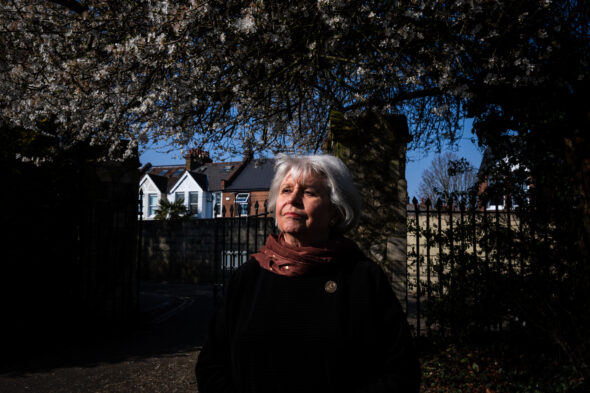
Kathy Sheldon - South West London

The interview continues with Kathy talking about the many ways she is embedded in the Barnes community, her networks, and the way her passions extend to all things “Barnes”.
Her volunteering is clearly about who she is, not what she does. She brings her creativity to every situation, no idea is ignored no matter the potential obstacle, if it is for the good of the community she cares about.
Women will go to it because there’s a wider role. They’re interested. They want to hear…
Making things happen can be fun, but it also involves pushing herself outside of her comfort zone. Her narrative touches on how important it is to understand people and keep them involved. It also recognises how the world of people volunteering is changing as well as the potential impact of covid on the future of volunteering in hospitals.
Kathy Sheldon:
I’m about to write another letter saying, well, if the solicitors have been hanging on to them all this time, I think the need to create a stink somewhere or other, because that’s rate payers money and taxpayers money, that is being wasted. And if we lose this improvement for local people, you’ll have to answer for it. But when I spoke to somebody from the Estates Department there, the day, they said, they’ve had an email from the Council, saying that they hope to have the papers with them next week. So whether that’s the signed papers or not, I don’t know. But again, it’s about knowing the people who can help you. It’s not what you know sometimes, Well, it is that, but it’s who, you know, as well. So getting the right people and getting in that I can, the staff could never have done it. I can do it. There’s times I wish I’d been able to say things, and do things, because they can’t sack me, whereas they can the staff. So the staff are very happy to tell me. Well I shouldn’t say this. I’ve picked up things that haven’t been right for them and I’ve passed it on, and had things improved for them as well. So, but whereas they are terrified that they’re going to be lose their pensions, or the job, or the, you know, whatever.
Interviewer:
So your independence is valuable?
Kathy Sheldon:
Absolutely. Yes. Yes. And I think I’m just seen as somebody who’s helping them. So, and the rest of our committee, of course. So it’s about these small…
Interviewer:
Take me back then too, to the change when you became more involved as, because you were no longer staff, how did that?
Kathy Sheldon:
Right. I, I then was Deputy Chair for Juliet, who was the Chairman at that time. So really it was about organising parties for patients. And we would set out all the inpatient wards. She moved down to the South Coast, and that’s when I was approved and voted in as Chair.
Interviewer:
And what motivated you from giving the odd cake, and knowing that you have the VE day celebrations, and you felt that the money, was that the moment? What motivated you to do this?
Kathy Sheldon:
Well, I would say it is, well, first start going right back. I was seriously ill in the Seventies and probably in the NHS saved my life. So I’ve always, and I’ve always, from grandmothers and parents who were around long before they NHS came in, knew the importance of the NHS. I always used to say, “I’m not the type of person that demonstrates, but if it was to save the NHS, I would.” So that’s been since a child that, that that’s valuing what the NHS is for, for people. And then being there and seeing how much people enjoyed things. I like to enjoy myself. You come away with a good feeling and if you’re going to be ill and you’re not going to be home at Christmas, and you might mightn’t have any relatives or anything, something that gives you some enjoyment for that day, I think is worth doing it’sit’s about being a good neighbour, isn’t it as well?
Kathy Sheldon:
And also the, the, the chain of people who you know, and all sorts of local churches. That was the other thing, I was amazed at when I first went there for so many people who were coming in and out of the Friend’s Office, I knew through the local church scene and things. So it, which goes back to when it was founded by the Catholic women, you know, when the Catholic Women’s Guild were asked to support and they got all the local churches and Methodist and Church of England, everyone, to help. So again, it’s a, it’s a community of people, you know, it’s and gradually get known through and there the voluntary sector, it’s a whole thing, but it’s not about doing nothing, it’s not about and it’s about helping them to, if they have to put up with something, helping them to do that and helping them, not just helping them, helping the staff.
Kathy Sheldon:
I mean, what Boris is saying now, is what we’ve always done: that’s supporting the NHS and the staff, and if they haven’t got the equipment we need, then we help them buy it, which we have done. We bought blood pressure monitoring machines, and all sorts of things, over the years, as well as parties. It has been equipment as well. We bought for OT’s who give therapy, we gave them the money to put together files and CDs or whatever for patients to take home with them, with all, with all the information about what that the NHS wouldn’t have provided that, years ago, we all bought them televisions, and now they’re not needed. So it might be more to do with IT stuff in the future.
Interviewer:
So that was an obvious motivation for you. You retired and you just naturally got involved?
Kathy Sheldon:
It’s evolved. I would say it was, it evolved. It wasn’t, I’m going to do this. It was gradually getting involved and the more you get involved, and if you see a value in it, you keep doing it. And I’m an ideas person. So before one thing’s finished, I’ve always, “oh my God, Kathy has got another idea.” So it’s looking to see where whatever you’re reading this applies to, you know, it’s different types of people like that. I would suggest David’s a bit like that actually. Oh, the other thing I should say is the involvement with Attend, I think over the years was excellent, because I first went to one or two meetings in the nineties, which were the regional ones and I enjoyed them absolutely, and I think part of that was really realising you’re part of a much bigger organisation. There’s lots of other people out there.
Kathy Sheldon:
Some of them doing the same things, some of them doing quite different. I mean, I realised very soon that the smaller hospitals like ourselves, the community hospitals, and so forth, but very different to the big sexy St Thomas’ and Guys, and all of these ones, the needs were different and how you supported them a bit different. So with them, yes, there was going to that. David will hate me saying, but I will remember when we used to have conferences or something every few years. And it was the Golden Jubilee of, well, it was called the National Association in those days. I don’t think it was Attend then, that was before David joined and that we went to Derbyshire and had it there for a weekend. And it was great. It was getting to know a wider community, but again, for Attend, things have moved on and I understand why.
Kathy Sheldon:
And then again, through somebody in the Attend office, I was asked to join the London regional committee, which I did. And that was lovely then when Sarah Mullaley, she was chairing it then. And when she stood down I can’t remember why, how, who, or what, but I became Chair. And I think I was Chair for coming up four or five years. I can’t remember. But that was really interesting because again, you will look, you were meeting or looking, talking, communicating with a much wider range of organisations and the social care field, which is what a lot of us are doing. Now, we’ve had to move to that. It’s not just Attend, as I say, I think a lot of hospitals, the smaller ones need to work with the local communities, or providing care. As I told you about the service that’s FiSH gives for the, for the dementia patients, we could do the same, but why they’re doing it and they’re doing it effectively.
Kathy Sheldon:
They have lots of volunteers. So we have plenty of money. So we give the money to them to provide that service. And equally we, we all understand each other and work together, always for patient good as well, like the good of the local residents. So I think that can benefit anyone, but through Attend, I did some really not patient involved things and wonderful things, all the meetings that we had. And then even once, Pam who was Chairman at the time of Attend, Pam and I were invited to 10 Downing Street. And I went, but after the invitation came, I discovered it’s, it was a reception for “older” people who volunteer, but that, that was Gordon Brown was in place then. And that was wonderful. I wouldn’t have had any of those opportunities to enjoy myself if it hadn’t been for, from being involved with the Friends of Barnes Hospital.
Kathy Sheldon:
So it’s given me opportunities to enjoy myself as well, apart from what I’m doing day to day, and then having this book done, that’s been a new venture, totally new. We have a local, well she’s just down the road, a local resident who is a professional author and reporter, and particularly specialises in health things. And she agreed to do it for us, and somebody else I know who did all the graphics and everything. So we had the right people in place, but then sort of all the stages that that’s gone through, hunting up photographs and things. So, so although we’re not doing much direct patient care at the moment, we are doing a lot of other interesting things that hopefully will benefit in the future.
Interviewer:
It sounds like you’ve had considerable experience in, in those leadership roles. So, you know, what would you say, what would you say led you to be a leader? And what do you think is good about that and who you talked about inspiration, like what’s, what is a good leader in a voluntary situation?
Kathy Sheldon:
Well, there’s different sorts of leaders and different sorts of organisations. I think from being young, I used to organise parties and things with friends. I also, in my early life, before I got married, I trained in what was called institutional management, which is catering, management generally, but in the catering field, it applies to everything. And then when I went to work at Barnes, my lead manager at the time suggested I should go on a course. And I went on a HNC course and did well in that. And that at that time I wasn’t, I wouldn’t have done public speaking or anything. I would have been too shy. The part of that course was also doing that sort of thing, and being filmed, doing it. And that raised my confidence enormously, and then being involved in all these things.
Kathy Sheldon:
And now I’m not frightened of talking anywhere or to anybody, but it’s all been a progress. And I think you have to have an interest in that. There are some people who are very shy and would never do it, who are very introvert. So probably I’m more extrovert, and I’m much more lateral thinking. So there are certain types of people. So I can see opportunities. As I say, there was the books, there was the Barnes Hospital. I’m now thinking, because I was asked recently to go on a zoom meeting just last week with leads of various organisations in the Barnes area that had been working closely together through the COVID crisis. And they’re wanting to know how they should be working in the future. I was invited to join that and there’s one or two things came out from there, but I think that needs some support that needs doing.
Kathy Sheldon:
And that’s probably going to lead me to start working with others. To say, what can we do to develop that? And some of it was around mental health and how to support people. Like there’s no places for them to congregate. Is this something we can push for, for the Trust to have a room available on a night, or a weekend, where people can drop in and chat to people. So I’m not saying that will happen, but it’s just, it’s not thinking, “oh, what, what should I do?” It’s little germs come into my head. And I’m just that sort of person. And not everyone is like that.
Interviewer:
We’re inspired by one of the previous leaders that you think it’s interesting. You say you went from never being a public speaker and not having that confidence. And then being, I suppose, involved with her and her campaigning, and fixing and doing, so she had an influence on your progress?
Kathy Sheldon:
Oh, absolutely. I mean, she’s still around, she actually still a member and comes to our AGM’s and I always say “I’m here it’s because of you that I’m here now.” So yes. I mean, I don’t know whether it’s what she’s involved in now, but she was the sort of person who was always involved in the voluntary sector. And it was a generational thing. It’s got to be harder to achieve that in the future.
Interviewer:
Do you think it’s a women thing as well? Do you think it’s female thing?
Kathy Sheldon:
I think it is interestingly for a good number of years ago, we had an event that I was at, at Barnes Hospital, and we always invite clergy from various places as well. We, you know, we include them. We send out information on everything to over 300 places or organisations, because I want people to know that we’re there and we’re doing things, even if they’re not coming, it’s important. They know we’re still around. So we’re not a hidden, we’re not hidden locally if they didn’t know about us they soon will. Well, and at this particular, and this is going back to the nineties, I think it might’ve been the early Two Thousands. I said to the chaplain who was there, who was a woman, I said, “this is amazing. There are three women dog collars here today, and there’s not a man.” And she said, “no, well, it wouldn’t be, men only go to the things where they think they have a purpose. Women will go to it because there’s a wider role. They’re interested. They want to hear. But if you would give them a role of coming and doing something or speaking, then they’ll probably come.” And I think there’s truth in that.
Kathy Sheldon:
Not totally, because there’s exceptions, but I think the whole of, of the community is changing with, with women going to work I mean, you must find that. How far can you be involved in the voluntary sector as people like, I wasn’t the majority of people I knew at the time weren’t working members, some of them did work. And then they retired at 60. Now with a retirement age being 67 and later they’re not around to do it. And it also means we don’t have so many men around because men work. I mean, all people work much longer hours unsocial hours, and all this high-tech stuff that’s around means you’re never away from it. And you don’t get the time we had before, because the husband may have to go home and look after the kids, while the wife is going to work.
Kathy Sheldon:
Whereas before, he went home, his dinner was there, and he went out to help with the Scouts. So it’s a change in society. I’m not saying it shouldn’t change, but I’m just saying the biggest change was women working and working longer hours, not just part-time, being a breadwinner. It was mortgages going up that what they’re earning is essential. So they don’t have the time and commitment. They don’t have the time to commit. I’m not saying they never do things, because they will do it and they’ll come in for it. And certainly we have one of our younger members: my guess is she’s probably in her thirties and she has a little girl now. She’s still a trustee with us and actually she’s been able to come on the zoom meetings where she couldn’t always come to our physical meetings, but most people that we have coming in as trustees have retired, or in the sort of work where they’re self-employed, and they are part and doing it part time and so forth, but they bring lots of skills with them. I mean, where would you get an accountant? Where would you get a treasurer from, unless he’s a retired accountant and most of them are these days.
Interviewer:
So when you got involved on the committees at Friends, how big was the Friends Group then?
Kathy Sheldon:
Much bigger than it is now. I mean, it probably had a membership of about 180 either individuals or couples. I was very shocked when we were doing the distribution of our books or find that we’ve only got 35. It’s not individuals because a lot of them are couples couples who are members now. So that’s probably roundabout 60 people because most of them are husband and wife, but that’s a lot less than it used to be. And a lot of people have died who would come into things, but we still do have younger people joining the friends. And there are still people come in often, sometimes when they’re being patients or their mother, father or whatever, had been a patient. So it’s, it’s a changing world, but we can, as long as we haven’t had to do any fundraising, which I think would have been more difficult, but that’s because…
Interviewer:
So do you remember times when you did fundraising?
Kathy Sheldon:
Oh Yes, yes, yes. When I was in the early days we had to do with, we always had jumble sales, we had Christmas fair, we had car boot sales, and we were raising about £15,000 to £20,000 a year in those ways. And that was essential. However, we then had legacies from two or three places, which meant we had about £250,000 in the bank. Not big, not, not a huge amount when you look at the large organisations, but for ours at that time, changes were happening. We were thinking of using some of them to improve a ward for dementia patients, but we were told not to. And then we discovered that the hospital was possibly going to close. So at that point, what do we do? We did some, we also, because again, probably so what I’ve done with Attend and Healthwatch and so forth, was I organised some workshops for the committee and to looking at what we were going to do in the future, because things were changing.
Kathy Sheldon:
And if we no longer had a hospital and we weren’t the Friends of Barnes Hospital, what would we do? And the decision, I can’t remember whether this was before we had money on, might’ve been after Alan. The decision was quite firmly. We will carry on, we’ll be a grantmaker and raise money if we can, but we’d have to change our names and look at different ways of doing it, which is probably what we’re doing now. Anyway, I’m doing it through other organisations. So we have, we have a lot in one of the filing cabinets, there is a decision about our future, which so far we have need to look at. So that, I’ve lost my, what I was saying there..
Interviewer:
You used to do fundraising?
Kathy Sheldon:
We did all of that. And we did. And, you know, they, they were great fun, but there were also, “oh God, it’s a Christmas fair coming up again.” It was collecting jumble and what are going to have? And, and people were still coming, but gradually the number of people who could help out were reducing, you know, to run a stall and so forth. But then when we discovered that the hospital might be closing, I think it was around that time that we had legacies and we had all this money. I wrote to the, we got in touch with the Charity Commission and asked their advice. They said as, because we didn’t know if, when we were going to close, would we have to move off the site, will there still be patients and their advice was, you could accept any money that comes in, but don’t do any massive fundraising.
Kathy Sheldon:
We could go to Barnes Fair and have a stall and so forth, but don’t go out to raise £20,000 as we would have done in the past. We can accept new members, but don’t have any major recruitment. You could leave leaflets and hope people would join. So it was, don’t push yourself far in that way. Because if you know, knowingly recruiting people and money, if you were going to close, wouldn’t have been a good thing. So we’ve taken their advice, and we set up bits of money coming in, and we’re still getting new members, but we’re now looking and saying, I think now once we have this £11 million secure, I think that that’s the time that we will start doing a new recruitment drive. And it’s the membership. It’s not really well, we do get a lot of money. I think it’s about £2000 a year comes in through that.
Kathy Sheldon:
There’s some people, some people give a fiver or a year, or some give us a few hundred a year. And I think we have the attraction because we’re small and we don’t employ anybody. So they know the money is going directly, and they must approve of what we do, to keep giving. We’ll be looking more closely as how we operate with a new constitution, but we’re still a little bit in the dark. But if we know that there’s definitely a health facility, if it’s going to be called Barnes Hospital, it will still be the Friends of Barnes Hospital. It may become Friends of Barnes Hospital in Richmond Royal. We may be much more of like a more full, full-on community organisation. However, if there is a dementia hub at the hospital, or other things like that, we, we will divert to whatever’s needed at the time. We won’t be, you know, we will still have a wider perspective of what were going to do, and what’s the word? The object!
Kathy Sheldon:
Yes. So we’re, we’re still, we’ll be looking at our objects, but it’s probably going to be not dissimilar to now, but it will certainly be about as, as if we had to start from scratch and raising money. I think there might be, “Ooh, God, where do we go from here?” It’s quite comfortable when you’ve already got the money there. And it’s about trying to raise the level of of understanding of people and getting them to help us stay there and, and putting our money out in the right places. I should also say a lot, a lot of people, do like coming to us for money because we can react quickly. If they’ve got something that that they want to, they want to do next month. And they can’t apply for grants from the big organisations. And for six months they can come to us. And if we think it’s good, we can within within a month, say, turn around and give them £6,000. We could even give, in some cases with the hospital staff up to £200, we will make a decision there and then, and give it to them.
Interviewer:
So do you think, I mean, that’s quite, in terms of how people would view volunteers. It’s changed a lot from somebody might come and volunteer and be baking cakes and running stalls, going into wards, giving out Christmas cards, giving patient support and giving grants. But that was, there was, you know, I don’t know, maybe 25% was the grants. And 25% was the fundraising. And the rest was activities on wards, that has shifted. So now your volunteering is, is grantmaking and policy pushing and community linking. It’s a very different. So does that mean that the volunteer, your members are all doing that?
Kathy Sheldon:
No, the actual members don’t do these things where they’re just members of pay, pay a subscription. And there are one or two members who would also be helping with volunteering. But our last volunteering was at Richmond Royal. We took over the tea bar there, and there was a group of volunteers there that ran it for the cause when that closed, we closed as well. It could be, if we got a new hospital, it might need a tea bar. We may find roles, where we do become more active, and need volunteers, but at the moment, because we’re likely to work more closely with Alzheimer’s or FiSH. I mean, FiSH has about 400 volunteers on that book. And if they can come in and use our space to provide teas for people with dementia, and we work with them, I would need to recruit volunteers to do it because they’ve, they’re already doing it, but it’s helping them to go forward with that.
Kathy Sheldon:
So it’s, I think what we have to be, we have to be prepared for whatever the future brings, and look at ways of supporting patients. And so I would widen that now to the wider social care services as well, because they are… Everybody’s a patient aren’t they, the GP surgery. So anybody can be a patient, but we’ve never targeted a particular type of person, just patients of Barnes Hospital. So we can change the type of person, person, the patient. We support it also by the geographical area about hospital. So at times that was ones with, and it was our side of the Borough of Richmond. Once we left that site, they took their services away. So it’s no longer that area, but we now have patients coming all up from all over the Borough of Richmond. So we can support patients from a wider area.
Kathy Sheldon:
So we’re looking all the time with our constitution and we will, even though we’re going to change it, we’re keeping it a flexible constitution. We can’t do everything. So you still have to make choices. We always look at what the NHS itself should be doing, pushing them to do it. For instance, when I said we gave £500 to support, well it’s like two big wooden troughs at the entrance to the hospital. I, it was, I’d spoken to Estates and came down and we, we, I put my thoughts into the planning of this area. And when I said, “well, the trustees will possibly give some money, but the, the mental health trust should be too.” So when it came back it was several thousand pounds because there was a wider area of graveling and that to do. I said, “right, if we offer you £500,” they said, “that’ll be a great help.”
Kathy Sheldon:
So the trust have put in one, two about £3000 and we’ve given them £500 towards it. But because we know that there’s not a lot of money around, but we would not have paid for all of it, especially as that within the next five years, that might all be dug up anyway. So it’s, but that area is important for patients coming in. And again, we had, we’ve had feedback from staff saying “thank you for making it look nicer when we come in.” So it’s, it’s about a wider perspective. It’s, we also believe strongly in gardening and, and again, a gardening group, we give money to some of the OTs, have a small gardening group ongoing with different patients and they go and get the plants and do it in a little indoor area we have. We have, and we’ll do some on this outside of outside bit as well.
Kathy Sheldon:
So the environment is very important. So we do support that to get it away from the NHS structures, if possible. And I’ll also be fighting if when they get full planning permission, the step on the, the, the my work then will be to ensure that ourselves, the carers groups, and one or two others are involved in looking at plans and putting forward ideas that it’s not just left to NHS speak because every, somebody working miles away in an office, probably hasn’t got a clue about what a local person in Richmond needs. And why are you that person, what’s your cause? You must have the, I don’t remember. I wrote another one that I was very happy that I helped with about a year ago. Next door to the hospital, there’s a cemetery and the gates, and it’s very good to walk from where I live to walk down the road through the cemetery, into Barnes Hospital, instead of going around all the side roads it’s quicker.
Kathy Sheldon:
And I thought, “why on earth are they locking that?” It was locked from six o’clock in the summer five o’clock in the winter, until 10 o’clock the next morning. So cutting it out as an access point for anybody. And I know that people used to go through that to take the kids to school and things, as well. So I made out a case for keeping it, keeping it open, submitted it to the Council. And after about a year, it agreed. So that cemetery is, but nobody, I hadn’t thought about it until a couple of times I went down and found, “oh, they haven’t opened the gates yet. I can’t go through, I have to go all the way back and all the way around.” And I put forward, it encourages people to walk instead of taking cars, all the right reasons. Because again, through what I’ve done, I understand the points you’ve got to put in to fill the gaps, so it hits the targets of the Local Authority or the Health Authority.
Kathy Sheldon:
And I think it was just my personal experience. And I also spoke to a few people, even in a pub one evening, when I was there with some friends. Somebody chatting came over and chatted and somebody said, “oh, she’s the Chairman of the Friends of Barnes.” And he says, “oh yes, yes.” And I said, “Do you ever use the…” I said, “I’ve got an idea. Do you ever walk through the cemetery?” I said, “yes, well, I’m wondering whether I should fight to try and get it pursue, trying to get it open 24/7.” He said “That’s a good idea!” And if you get that from a bloke in a pub and then one or two mothers, I stopped going through and said, “do you think there should be open longer?” Many people are not going to walk through in the, in the dark, it’s a choice, but it was closing from four when you might still be light till five or six.
Kathy Sheldon:
It’s certainly light from eight o’clock in the morning, staff can get through more quickly. There was a lot of good reasons. Oh, and I also, when I submitted it to the Council, some of the stuff that came back said they found there was less vandalism in cemeteries that were left open than the ones that were locked. So again, all of that pointed, Notices were on the gates, if you, if you object to it, it’s is a trial for six months, I got various people to write saying they approved of it. Because I thought if they’re just got people saying they don’t like it. So I managed to write up pieces of paper to say, you know, if you agree with this sign and send it off. So, so I worked on that and it’s there. Nobody will ever think of it. Nobody you consider, how did it stay open? But I’ve got that personal satisfaction. And it wasn’t, again, it was only because I’m a local resident and you know, all those years, I’d never thought of it, but probably because I used to go in my car in those days, I walk more now.
Interviewer:
What is that? The key that you’re local and you’re part of that beauty and you just, your life just means that you’re talking to people and everybody who’s a patient or not a patient. Everybody needs to think that’s, what’s important in your role.
Kathy Sheldon:
Yes. I think it’s very important. It’s being local, being part of a community. People knowing your cause right from the start, I used to get people saying “my mother’s been in Barnes Hospital. She was so well looked after she was,.” you know, and if, if I hadn’t been getting feedback that the care was good, I wouldn’t have been happy either. But also, if I had feedback that wasn’t good, I would pass that on to the higher authorities and tell them. So they knew if they, if I, them it was done with good reason that, I was what’s called a, critical friend of whatever. But I also passed on any thanks. And when I’ve had letters, we get letters all the time from people thanking us or saying how good the staff have been. So, and when, when you get somebody’s wife, whose husband used to run a local primary group saying how excellent the care was her husband had from Barnes Hospital staff, you’d think, “oh, well, if, if that’s as good as he would’ve got at the Priory”, and things like that. So it’s also about, you know, it’s the level of where people are coming from and you know, their experiences. And it’s, they’re not just saying it for the sake of it.
Interviewer:
It sounds like it produces a great sense of pride?
Kathy Sheldon:
Oh yes. Yes, yes. But I get, I get kicked as well at home. “When Are you going to be at home? Shall I make an appointment,” You know that I suppose, yes?
Interviewer:
And have there been dark times, times when you want to throw it in?
Kathy Sheldon:
Whenever with the continuity of the hospital, you’re getting two steps forward, then you’re going back one and there have been times I’ve thought, “why am I bothering all?” Because there was also a level of local opposition to the outline planning because of the housing, not because of the hospital. One of the things that it was, that is probably coming onsite is a school for special needs pupils, which again, fits perfectly, and we know it’s needed and I’m fully behind. And I’m realistic and said, well, we’ve got to have the housing. The money has to come from somewhere. And these people who were, complaining and saying about the increased traffic and all sorts of things, times like that, I was thinking, “why am I bothering?” You know, can’t you see the wider picture and yes, there’ll be disruption for the year, the months or years when the rebuilding and so forth, but that’s happened in the past, you know, and actually within the book that we’ve got the very first is about how that, how all the local people oppose the hospital being built in the first place, but gradually became very fond of it.
Kathy Sheldon:
So, so yes, I think it’s moments. And also sometimes with government, whichever colour, when they don’t support you, when they don’t put the money into the health service and so forth. And when they put the emphasis on the sexy bits of the NHS, which is necessary and always, and there’s always, oh, yes, we’re going to support, but they don’t.
Interviewer:
Do you think being involved has had an impact on your life?
Kathy Sheldon:
Oh, yes. Yes. I mean, it, it, can’t not, can it? Because if it’s what you’re doing for many hours a week, it’s going to impact on you, it’d make you… It determines what I’ve watched on television, what papers I read, how interested I’ve been in the COVID news that’s been coming around and yes. And also people ask me about, and it’s also with the Health Watch stuff as well. Not just the hospital, people ask me advice on various things about how to get some support from the NHS. And like, you know, “I think my mother’s got dementia. What do I do? Where do I go? Can I bring her to Barnes Hospital.” And I’m able to say, “no, you go to your GP.” And, oh, I’ve also been able to help with that with people. Or I phoned up a GP and said, “you might know this person,” The single oldest, single people always have problem with dementia.
Kathy Sheldon:
And I need to tell you something and there is, and the reception. So I said to the receptionist, “I need to talk to a doctor about this,” but oh, doctors, can’t, it’s confidential. I said, “I know, however, I’m not asking her something. I’m going to tell her something” as it happened, she wasn’t in. And I happened to know this doctor anyway. So I left a message for her. Saying “this particular patient is coming in to see you. We do think she may have dementia and there’s one or two things happening. Would you, we’ll leave it to you?” And I happen to see this person a couple of weeks later and I said, “oh, I left a message for you.” She says, “yes, I got it. And we’ve acted on it.” And this lady who, which was about how was a trustee of ours. So, and she used to come to our meetings still.
Kathy Sheldon:
Because we never said to anybody, through you health, you can’t come. It was still part of her life. And she used to come and say, they’ve asked me to come and see the doctor here. I don’t know what for. I said, “oh, that’s interesting. You know, probably he just wants to see that your, that your you know, your coughs cured and things like that.” But we kept going with them. But again, it’s because people know that I know people or I might know something, but that’s nothing about me personally. It is about getting on with people and staff telling me things that perhaps shouldn’t tell me, but I can also go and ask them at any time as well. So, which helps.
Interviewer:
And how has COVID impacted things?
Kathy Sheldon:
Well, zoom for a start, immediately. Well, we haven’t been meeting at the hospital, However I can, and I have gone down into the office once or twice because we can go through a back door, go in that way. There’s no patients, or very few patients going in, and staff are working out all the time. And when I did say, “is there anything we can do to help you through”, what we were told is we’ll give it to FiSH, give it to these organisations because they’re the ones who are helping our patients. But what we did do, if you remember, we’re heading up to Easter, I bought a hundred pounds worth of Easter eggs and Easter cakes and things, and took them into the kitchen and left them there for the staff. So part of what we do is cheering the staff up because they actually they, they’re not always recognised because we’re part of this bigger group up in Tooting. And it was it’s about making the local people feel, feel valued as well. So gosh, I’ve got, I’ve rambled on, sorry.
Interviewer:
No, it’s amazing. I’m going to stop the recording for now and we can review. I’m sure there might be things that we dive back into, but thank you very much for everything that you’ve just told me.
Kathy Sheldon:
And to have a little piece of paper in my bag. And if I think of anything that I should have said, I can write it down. This is when you think it’s later, you think, oh, I didn’t mention that or whatever, but as you see, it’s very easy to go on about something
Interviewer:
That you’re passionate about,
Kathy Sheldon:
But that’s because other people are as well.
| Contributor: | Kathy Sheldon |
| Recorded on: | 24 January 2022 |
| Role: | |
| Setting: | Hospital |
| Organisation: | |
| Hospital: | |
| Location: | |
| Themes: | |
| Decade: |
Discover the stories of volunteers delivering services to support patients.

Discover the stories of people volunteering in tea bars in hospitals.
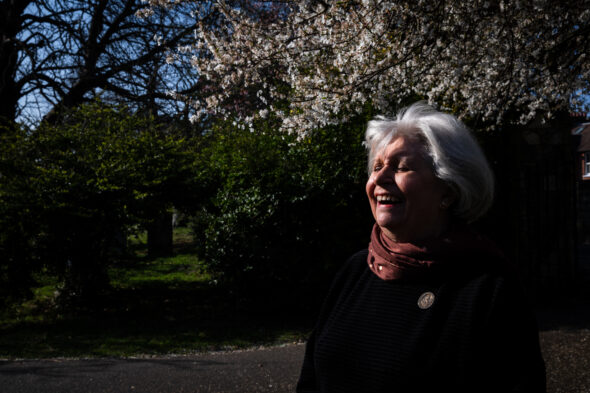
Listen 00:23:28
Story: Kathy Sheldon - South West London
Discover the hard-working volunteers behind efforts to raise funds to support local organisations.