
Services for Patients
Discover the stories of volunteers delivering services to support patients.
Stories of volunteers supporting the health service since 1949
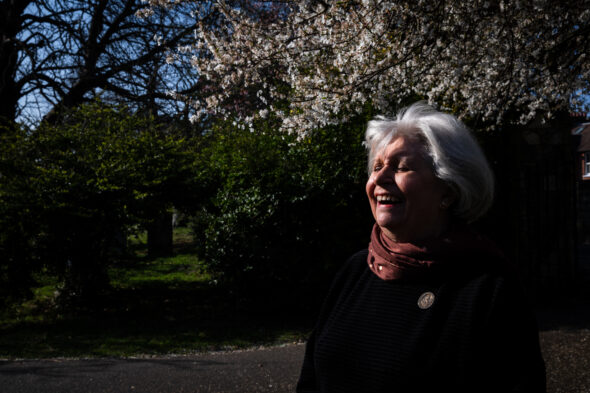
Kathy Sheldon - South West London
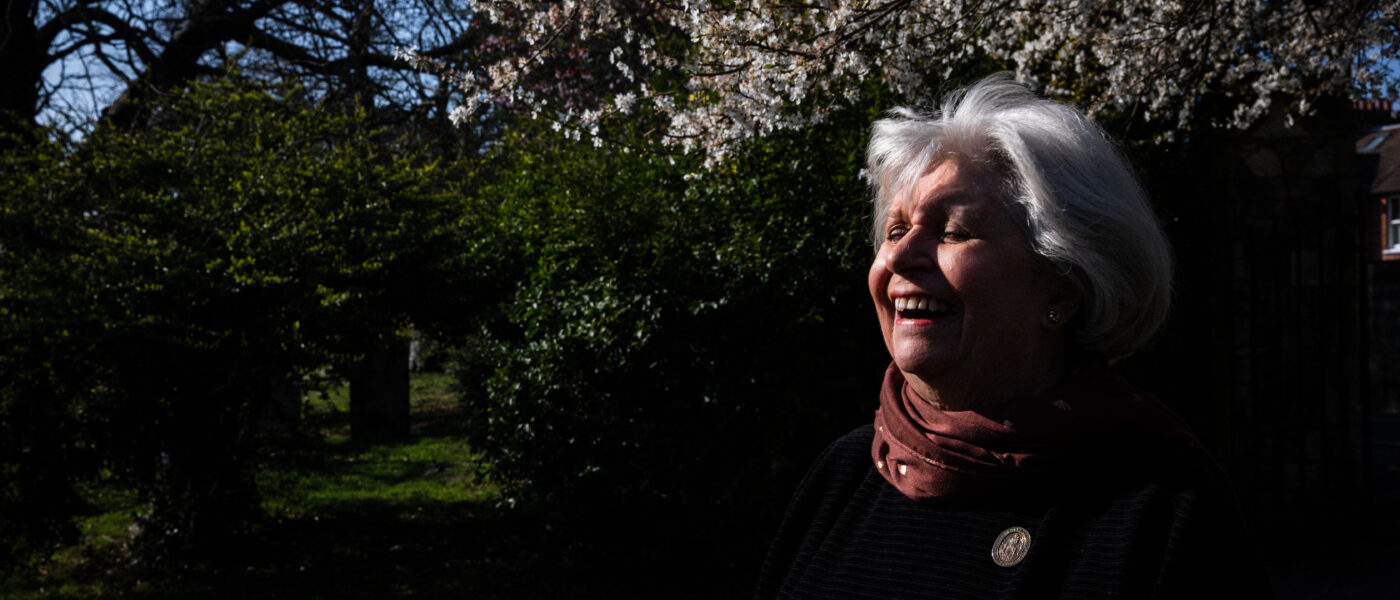
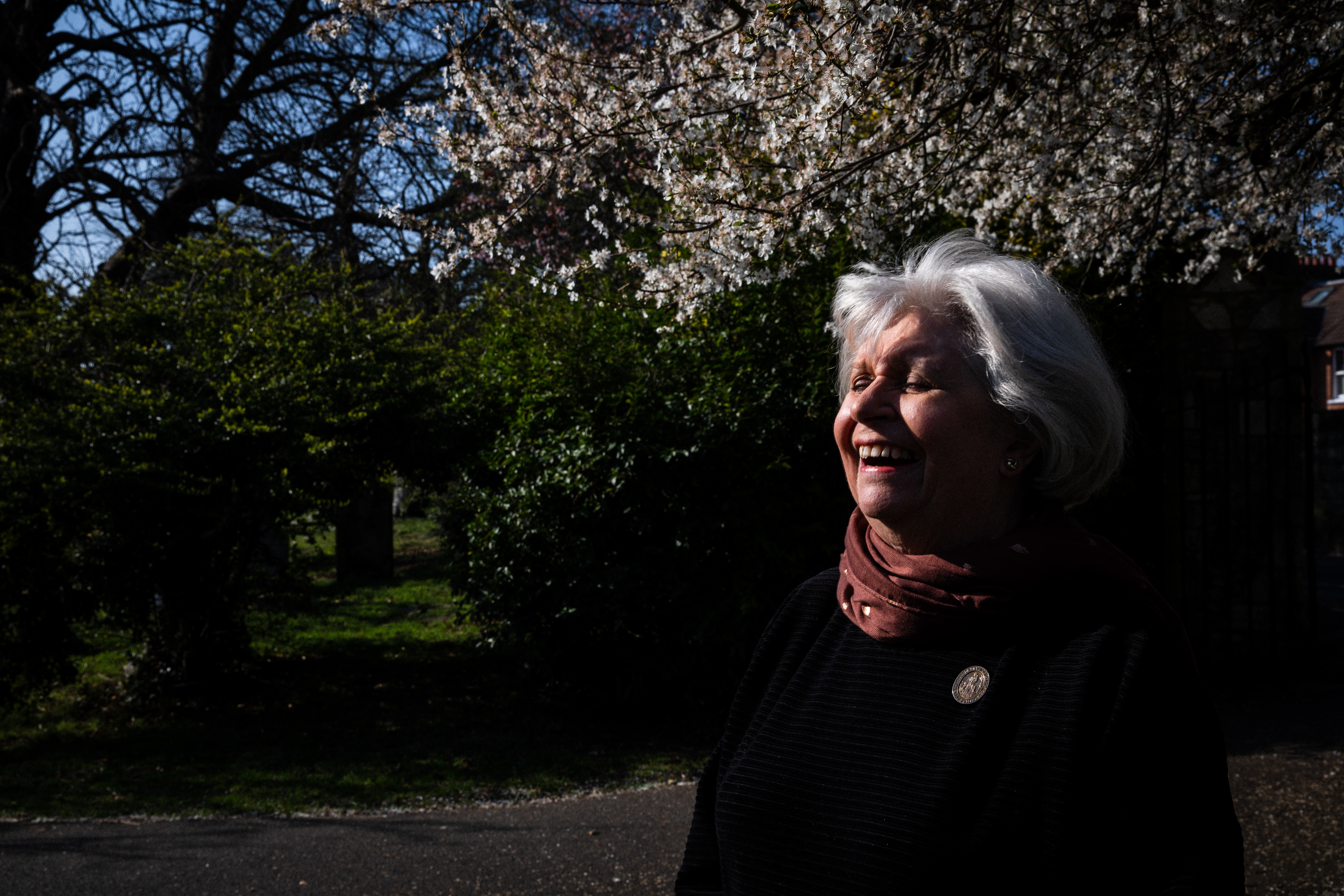
A career at Barnes Hospital meant joining the Friends committee seemed like the next logical step for Kathy.
Her heart is clearly for the people of the local community where her tireless enthusiasm means she is constantly innovating new ways to help, alongside the many traditional supports the Friends Group continue to offer.
We have had a lot of letters from carers, or people who have left, and written back and said how much they appreciated what was done
She has strong links with other voluntary sector organisations in Richmond which extend from her days of involvement with the Community Health Council, to Healthwatch today.
Interviewer:
Right. We’re now recording. So for the basis of this interview, I’m just going to say what date it is. Today is the 5th of August. Yes, Wednesday. August 5th.
Kathy Sheldon:
Glad you reminded me.
Interviewer:
So please, just for the recording, could I ask you to say your name please?
Interviewer:
Kathy Sheldon.
Interviewer:
Can I ask where you were born?
Kathy Sheldon:
A little place called Stanhope in Country Durham.
Interviewer:
And if you’re happy to, can you give me an idea of your age or the decade of your birth or anything like that?
Kathy Sheldon:
I’m 74.
Interviewer:
And please, can you tell me where in London do you live now?
Interviewer:
Southwest 14, which is East Sheen.
Interviewer:
And which Friends group are you a member of?
Interviewer:
Friends of Barnes Hospital.
Interviewer:
All right. So, I’m going to ask you some questions, and I think let’s start with when did you first start volunteering in the NHS, and what was happening in your life at that time?
Kathy Sheldon:
Within the NHS? Okay. I had gone to work at Barnes Hospital. I was the generation that stayed at home and looked after the kids, and was therefore involved in all the charities from school and Scouts, and what have you. Because I’d also been quite ill for a period in that time, I didn’t feel that I could go back to work. Then I began to feel well enough, and I looked for work and I saw an advert for a little place called Barnes Hospital, which is a 15 minute walk from here, wanting a Patient Affairs Officer. So I applied, and actually I got it and I hadn’t been there long… and part of my role was mixing with patients, staff, all sorts of people. I hadn’t been long there when I discovered there was a League of Friends office opposite me, and sort of chatted to the Chairman, and various people.
Kathy Sheldon:
And it was approaching Christmas, and I knew they had a Christmas Fair. And one of the members who organise the Fair, was coming down the corridor. And I said, “Oh Juliet I’ve got a spare Christmas cake if you’d like it for a raffle for the Fair.” Before I knew it she was diving up the corridor shouting “Kathy bakes, Kathy bakes!” And that was it. I was in, I wasn’t allowed to leave. So I supported the Friends during the years I was working still at Barnes Hospital, because you couldn’t be on the committee if you’re a member of staff. But I helped at a lot of their organisations. I also went to them for funding, for things like parties or big events, and said, “Would you fund it if we had a large party for all the patients in the hospital, for whatever national occasion it was. And they usually said “yes.” So I got involved in that way. And they would talk to me about things that might be needed to ask my advice of, should they be getting new curtains, or whatever? So that’s how, and then I took early retirement in 1996 and they asked me to go onto the committee.
Interviewer:
What year was it when you first got, when they first found out you could bake?
Kathy Sheldon:
That was August….I started at August, 1988. So from the late 1980’s,well I was involved from the start. And also within that first year in 89, it was the hospital’s hundredth birthday. So I was involved in organising events for that, which of course involved working with the Friends and things as well. But can I tell you about one event I asked for money for? And there was, oh gosh, I think it must’ve been, it was similar to VE Day, but one of those national celebrations after the Second World War. And there was a concert happening in Hyde Park. And I thought at this point up, to that point, it had always been older people with physical disabilities who were there, or physical ailments. And it started bringing in older mental health patients. And I thought these people would love to go to this concert.
Kathy Sheldon:
And it was just approaching the weekend when it was all going to happen, or a week before. The League of Friends weren’t around. Our founder, whoever, the WRVS, or whoever was organising, managed to get the tickets. Paid for it on my Visa Card, and then said to the League of Friends afterwards, “Will you pay for this?” And of course they said, yes, but they said, “what’s the point? All of these people that were dementia clients, they won’t understand it.” I said, “no, you must take them.” That was organised. I wish I’d gone with them, but I didn’t. When I saw the staff the following week. “So how did it go?” It was amazing. There were ladies there, there’s one lady in particular who’s never said a word since she came into the hospital, and suddenly she started talking, and that was a magic moment when I thought activity and enjoyment and all sorts of things can help these people, even if they can only remember it for the second it’s happening, and enjoy that moment. It’s still important, even if they’ve forgotten it by the next day. So that was a sort of conviction moment.
Interviewer:
So when was that? Quite early on?
Kathy Sheldon:
Well, I took retirement in 1996. So, it must have been 1993 or 1994. Were there any events then? You know, you could still look back at what events were happening such as which singer was on the stage in Hyde Park, and the patients are being given the front row. And the staff said all the people sitting around them were so nice, and talking to them. And these have been people who’ve been locked up in one of the long-term mental health hospitals until then. Though, suddenly they were out in the wide world and were being accepted. So that was, you know, when I thought, you know, you can never say never.
Interviewer:
What was Barnes Hospital like then when you first started in your role and started to do a bit of volunteering?
Kathy Sheldon:
It was lovely. It’s always been a small place. It’s been managed by all sorts of different people over the years, different health authorities, physical health and then since 2000 it has been mental health. So it’s evolved. Everybody knew each other and in my role, they knew me because they brought all patients’ details to me, used to meet in the photocopy room, and get to know you, went to the canteen, and it was really nice. It was more cottage hospital style. So it was alright. It was old fashioned in some ways. Apparently years before it had a bad reputation, but that has all been improved. Particularly helped by the lady who was Chair of the Friends at the time, who’d also worked in a role of Barnes Hospital in admin. And she’d started improving conditions for patients. So it was always about improvement of the patient experience.
Kathy Sheldon:
So it wasn’t a big hospital where you raise money to buy expensive x-ray machines. But you might, when they did the new building, they raised money to put into the wards to improve the standards of the furnishings. You know, they put £20,000 in, so that instead of standard NHS furniture they had Ercol or something like that because you had day rooms, and things like that. It was in the days when some people went there for the rest of their lives. So it was a homely environment much at the time. It was a community.
Interviewer:
So people were going in and staying there long term, as residents?
Kathy Sheldon:
Yes. Not all of them. Some of them went home, but there was one or two long stay awards as well.
Interviewer:
And so what was the Friends’ role in the hospital when you first got involved?
Kathy Sheldon:
Oh, supporting activities for patients and parties. Going back in the records of the minutes, it was Matron. They were going to have a party and Matron will supply the jelly. And somebody had asked for curtains for a ward, and Christmas presents. And nothing’s really changed. The emphasis may have changed a bit because there’s no longer inpatients, but we still buy presents for people who are living at home. So all of that, and it started with that because in the days it first started, the Mayor of it’s called Barnes Hospital, it’s not in Barnes, but it was at Barnes Park at the time. And the Mayor of Barnes went to visit the hospital at Christmas. He was absolutely horrified that there was no presents for the patients. So he went to the local, well, it was the Catholic Women’s Guild who then got in touch with other churches in the area and said, would they help get presents together for Christmas for patients at Christmas? And that’s how it evolved. It started with Christmas presents and we’re still doing it.
Interviewer:
So do you remember any of those early Christmases with them? At the hospital and with the Friends?
Kathy Sheldon:
Yes, one of the ones when I was working there, so it must have been round about 1989 or 1990. The lady who was sort of Matron at the time decided that everybody was going to have Christmas lunch together. So we went in the day before and set out what was the day hospital. We set tables, decorations, and everything. And every patient came in and they were wheeled in, some walked in. They all had clean clothes on. You don’t do that now, but sometimes people had clothing that was second hand, but it’d been all laundered and they’re all dressed up in lovely clothes. The Chairman of the Health Authority came in and carved the turkey. So all of that happened, and everyone had a lovely time.
Kathy Sheldon:
Now that only happened two years running, and then the health centre service started changing. But again, yes, that was good. So it was Christmas presents. The other thing that we kept up, until more recently was Easter eggs. And that was great because we bought all the Easter eggs. We went in on Easter Sunday and took them around the wards and handed them out with a card written out for every patient, with their name on. And it was great. And when we used to go in the wards and do it before we left, there was a great round of applause. And everyone was saying, “This is wonderful. Oh, lovely. I’ve never had an Easter egg for years.” So now that was greatly appreciated. But of course, many years later, we couldn’t do that. You couldn’t write a card for Mary Jones because of patient confidentiality. So things have changed gradually over the years. And there’s just been some good reasons we could still go in and give them an egg, and write out a card without their name on it. We always thought it was important to name them and make them a known person. They’re not just the patient.
Interviewer:
Do you remember any of the particular patients that you became like really friendly with? Any characters there?
Kathy Sheldon:
Because they’re all older, they probably died. We had a lot of deaths in those days because people did come in to die as well. But I do remember, you know, there were characters around. I was called all sorts of things. And this was more from when I was working though rather than from when I was member of the Friends. But especially as I had to take people’s money off them, and put it in the safe. And there’s what the staff told me, because I’m going on to what I was doing working. Is this okay?
Interviewer:
Yes.
Kathy Sheldon:
The staff came up and said, “We’ve got a lady just come in and she’s got shopping bag stuffed full of pound notes and things, and we can’t get it off her. And obviously you can’t leave that on the ward.”
Kathy Sheldon:
So I went down as well and started chatting to her and we got around her and I said, “Well, have you read this in the paper?” And as she’s talking to me, she’d put the bag down on the floor so she could look at the paper, and I gradually kicked the bag out of the way. And then one of the staff sneaks up and grabbed it, and ran out of the nearby French window.
Kathy Sheldon:
And I went out and took off. It was about £5,000 pounds in there in notes. And this was in the nineties. But ever since that, she used to tell people I was a thief. I stole her money. But it was, you know, all sorts of things like that. I’m trying to remember from when I was with the Friends, the characters we’d encounter. We’ve had a lot of letters from carers or people who’ve left and have written back and said how much they appreciated what was done. And then there’s one gentleman. His wife had come in with a mental health problem. And he said, “I’ve never had anything to do with mental health in my life before. I just couldn’t understand it and I thought I’ve lost her. She’s never coming back. She’s in here, it will go away.”
Kathy Sheldon:
And I think she was in three or six months, and it wasn’t dementia. It was a functional mental health. It was obviously depression and anxiety. But eventually they got her back to normal, or shall I say her usual state? And he wrote afterwards as they’d moved away. He said, “I never thought I’d get my wife back. But Barnes Hospital gave her back to me and he sent a cheque for a thousand pounds to the Friends because of that. So we got a lot of benefit from the work that the staff were doing as well.
Interviewer:
Was there always been a close relationship then between the Friends and the staff?
Kathy Sheldon:
Oh yes. There still is. And you can only keep it because it’s smaller, but it’s getting more difficult as things are changing, but because it was a smaller hospital I could go in and I could walk around and I got to know people, and I went on to wards and said, “Is there anything you need? Christmas is coming.” Well, I still go in and meet people before Christmas. And so they do know me. I’m well known there. I think if we were a committee that didn’t go in, we just met as a committee, which unfortunately it does mean some of our members can just do that because we’re not mixing with patients now, as you used to when you had in-patients. But I think many of us are well known. The Treasurer is certainly is because they get money out from him. They go meet up with him to get the money or whatever.
Kathy Sheldon:
So I still go and we recently changed, well, I’m now going into the changes in the hospital more recently. About 10 years ago, we learned that the hospital was likely to close. And at the time we were told it was unlikely to survive. It would be sold off for housing or something, which immediately got me into gear. I’m quite a political animal with a small “p”. I should also say that right since the mid nineties I’d been involved with what was then CHC, Community Health Council, where you looked at what was happening with health services, not just mental health, but around your areas in the Richmond and stayed with all the different iterations that had happened after that, when it became Patients Forums and then Links, it’s now Health Watch. So I’m with Health Watch. So I was aware of the wider political situation within health and social care, which gave you an understanding of what’s going on.
Kathy Sheldon:
So I sort of got geared up for fighting this, and got involved with the local authority, and the CHC who were then in place. And also with our local MP Zac Goldsmith who was around at the time, he was very helpful and organised meetings for us with the CHC, and the Local Authority and the mental health trust. And eventually it was agreed that the site would be sold, but a third of it was going to be kept for health purposes. So we’re now in a position where the hospital, they closed all the wards, which changed everything. We have no inpatients. We moved into a bit in the centre, an old building that was refurbished, and it’s only community mental health services, but patients still come in for clinics and so forth.
Kathy Sheldon:
And this was all older people. A couple of years ago, they closed another site where adult mental health and children’s mental health operated from. They’re going to keep a bit of that. But in the meantime, all the Richmond older people services, all the adult services, and the children’s services, are based on our site in some very old refurbished areas, just in one area. The Trust were offered a grant of £11 million to rebuild in our area. And we worked with some other voluntary organisations and with the help of Age UK (the community association) we came up with an idea for a dementia hub on the site. And again, we took this to the meeting with the MP and the local authority and so forth. That was thought to be a good idea. And at a board level our mental health trust has accepted that as one of the uses, which is why it went to NHS England or London.
Kathy Sheldon:
And one of them who gave them this £11 million grant on condition that there is a viable business plan that goes forward. So waiting for all the papers to be signed, stands with the Local Authority at the moment, but I’m writing letters to them complaining that they’ve done nothing. But it’s because I have that wider knowledge. We also know people, we know the local community, and we know the feelings around there. We are accepted by both the local authority and the mental health trust as the ears and the voice for a lot of the local people, which I think is important. We’re not just sitting in an office hidden away and not doing anything. In the meantime we’re supporting wherever we can. So we’ve just given £500 to have some plants put in a box to the entrance of the hospital to cheer it up, because it was terrible. I don’t know what happens when we eventually get a new building there, but hopefully we’ll be involved more with it. But we are working with a lot of other local organisations as well. I’m sort of meandering a bit.
Interviewer:
No, that’s great. I think it’s interesting that the Friends group is doing anything from £500 for some flowers, or for some curtains, to real campaigning for a huge rebuild and what should be in this whole offering within the community and is representing the community. They’re doing a really great job. Was it like that when you first started? You said you took early retirement, and your role changed. So up until then you were mainly baking some cakes and having involvement with where the grants would go, but then it changed for you?
Kathy Sheldon:
Yes. But however, the Chairman in those early days, I don’t think Cameron was on the CHC and she was quite political in what she was doing. And she would question what was going on. And she knew about the wider and I respected her enormously. And when I when I was on the committee and in those days you could nominate people from your organisation to go on the CHC. And I was, I put myself forward, and got on and she was a role model in many ways for me. So although I’ve done it probably a lot more than she did, she, she was already doing that. And then if it’s about influence and talking to people and, and having that, but also accepting when you can’t do it, You know, fighting for, I mean, I would love to have had the whole site for NHS purposes, but there’s a point when you say, “no, it’s not going to happen.”
Kathy Sheldon:
Because the Trust needed the money from that sale to, to build a new hospital, at Tooting for mental health patients and, you know, there’s, but we had secured a third of it. And as it’s going to be two and a half stories, we’ll probably be able to use it there’s as much usable space as the wards were spread over the whole wide area. So I feel, and, and community services needed very much so, and working with other community organisations, for instance, you know Alzheimer’s Society have always been in the hospital providing some group therapy for patients. So we funded them to a certain degree in what they’re doing, in the hospital, with the patients, with, you know, giving them money to have tea in biscuits, or given them sweets and things at Christmas. And that, so we’ve worked closely then FiSH was another organanisation, very good organisation that does know about how they started a retro cafe for dementia patients.
Kathy Sheldon:
Every dementia patient is a patient of Barnes Hospital, It’s a fault within, within our constitution. So we’ve been the last few years, we’ve given them £6,000 every year to run that service. And we have to look when we give him money, we have to look carefully and make sure it falls within our constitution. So we are very conscious of that. So it’s always, so now that we have adults and children, because support any adults and children work that goes on in the community as well, children are likely to move back to Richmond Royal, but we are considering whether we should become Friends of Barnes and Richmond Royal Hospitals, which is where we need to talk about our constitution in the months ahead as well. So that’s a possibility, and there wouldn’t be opposition anywhere from that. And we have talked to the children’s services and they’re, you know, they, they support a lot of what we do and we can’t that we can’t give them sweets at Christmas because of the nature of the illnesses, but we’ve put money into Christmas decorations in the reception area, and things like that.
Kathy Sheldon:
So it’s, so it’s a to them seeing what helps their patients, and doing it.
| Contributor: | Kathy Sheldon |
| Recorded on: | 24 January 2022 |
| Role: | |
| Setting: | Hospital |
| Organisation: | |
| Hospital: | |
| Location: | |
| Themes: | |
| Decade: |
Discover the stories of volunteers delivering services to support patients.

Discover the stories of people volunteering in tea bars in hospitals.
Listen 00:39:35
Story: Kathy Sheldon - South West London
Discover the hard-working volunteers behind efforts to raise funds to support local organisations.