

Stories of volunteers supporting the health service since 1949
Ian McDowell - Central London
Hospital chaplaincy, as a local vicar, first brought Ian into the world of hospital volunteering. This interest developed, including becoming a hospital voluntary services manager and became involved in a policy group in Whitehall.
People have no idea how to get into the NHS, who to speak to……. and I think one of the most important things about Leagues of Friends is that they are gatekeepers and trusted local faces that people can recognise.
Initially involved as a volunteer and committee member, Ian is now the Chairman of the Guild.
He is passionate about the benefits and interested in what the local community can bring to the life of a hospital and sees the Friends as an easy entry point.
Interviewer:
I’m David Wood. I’m from the National Body that works with the Leagues of Friends across the country. Could I ask your name?
Ian McDowell:
Ian McDowell.
Interviewer:
Which Friends group you’re involved in?
Ian McDowell:
I’m the Chairman of Bart’s Guild, the Guild of the Royal Hospital of St. Bartholomew to be a bit more fulsome about it. Yes.
Interviewer:
Excellent. And could I ask how old you are?
Ian McDowell:
I am 53.
Interviewer:
So Ian, I would say that you’re probably younger than the average person that I’m interviewing and people have really different stories. So what’s your story about how you got involved with the Guild?
Ian McDowell:
Okay. Well, a long, long time ago, I was a vicar in East London and I started doing more and more hospital work, particularly hospital chaplaincy work. And that led to lots of work in the National Health Service of a more general kind promoting community engagement in local hospitals.
Ian McDowell:
So, I managed Voluntary Services, but I was also part of the policy group in Whitehall that was promoting the importance of hospital volunteering. So, that was some time ago. I then left to start my own company, my own small business, which was also about promoting the patient perspective and making sure that hospitals understood what it feels like to be a patient and understood the local communities. And we did a lot of work on that for five, six years with a number of national charities, including household names like Macmillan. And I’ve now branched out into a range of different things.
Ian McDowell:
One of which is being a Chairman of the Guild at Bart’s Hospital, which is an incredible honour, given that the Guild is a national treasure and really part of the national heritage of Leagues of Friends and was one of the really founding Leagues of Friends that a lot of other leagues used as their inspiration when they set up because we were around as early as 1911.
Interviewer:
Absolutely, and so did you come straight in as Chairman or had you been involved in it prior to that?
Ian McDowell:
I had been a trustee for five years or so. And while I was a trustee I did a range of things on a voluntary basis. Mainly things like helping to design the annual calendar and writing, because I enjoy writing. So doing a bit of writing about the Guild, publicising the Guild’s activities, that sort of thing. And Yes, and then I ended up being rugby tackled into the current position in which I find myself, which is fine. I really enjoy it.
Ian McDowell:
They’re a magnificent group of people. I’ve been a Chairman of several committees over the years. However, I’ve never been Chairman of committee that has been so distinguished, whose members have been so distinguished or so supportive of me. I mean, I really do feel immensely well supported. Much more than I deserve.
Interviewer:
I find that difficult to believe I have to say.
Ian McDowell:
It is true.
Section: The Role of Friends Groups
Section Time: 04.15 -08.09
Interviewer:
And it’s interesting because my understanding of a lot of League of Friends is that the fact that they’re all pushing in the same direction, they’re heading in the same direction and they all have sort of the same core values and understand what the organisation’s trying to achieve. But we get a lot of synergy, a lots of support in our Leagues of Friends committees I have to say. They’re a positive experience, hopefully.
Ian McDowell:
Yes. I think healthcare is a really powerful thing for people to focus on. You know, one of the great things about the NHS is that it really brings the country together in a very special way because we all, you know, when we’re cut, we all bleed. Health and wellbeing is something that we all have in common, regardless of our background, our gender, our age, our ethnicity, you know, it’s something that we all have in common. And so anything that’s focused on healthcare tends to be something that really powerfully brings people together. So it’s not surprising to me, you know, that Leagues of Friends are some of the strongest places of community cohesion that exist actually, that doesn’t surprise me at all. Not at all.
Interviewer:
So as you sit there as Chairman today and you see the world in which we live.
Ian McDowell:
Yes. Yes.
Interviewer:
How do you think the League of Friends can contribute to the family at Bart’s Hospital moving forward?
Ian McDowell:
Well, I think we’re at a really important moment in our own story as a Guild, but we’re also in an important moment collectively as Leagues of Friends. So let me explain what I’m talking about. I’ve just been looking at the minutes of our committee from the First World War and they read as if people are talking about last Thursday, because when we’re living through important moments in national history, it doesn’t feel like that. It just feels like normal life.
Ian McDowell:
But actually I think that we need to pinch ourselves to remember that at the moment we are living through a time which will be remembered in decades and hundreds of years as a really nationally important moment for the country. And it’s brought the NHS back into focus in a really powerful way.
Ian McDowell:
We’re at a time when social cohesion could not be more important, when everybody’s struggling with this thing that’s affecting all of us. And I think this is an opportunity for Leagues of Friends and including our League of Friends to seize the moment and really use that important moment that we have. The opportunity that we have to raise the profile of health care, but also the profile of community engagement in health care, which has never been more important.
Ian McDowell:
You can know all the science, you can know all the medicine, but if you’re not engaging with the people who are affected by that science, you may as well go home, you know, and it’s the Leagues of Friends that are the experts on the local communities. And the Trusts need to listen to them.
Interviewer:
And it’s interesting because my understanding of a lot of League of Friends is that the fact that they’re all pushing in the same direction, they’re heading in the same direction and they all have sort of the same core values and understand what the organisation’s trying to achieve. But we get a lot of synergy, a lots of support in our Leagues of Friends committees I have to say. They’re a positive experience, hopefully.
Ian McDowell:
Yes. I think healthcare is a really powerful thing for people to focus on. You know, one of the great things about the NHS is that it really brings the country together in a very special way because we all, you know, when we’re cut, we all bleed. Health and wellbeing is something that we all have in common, regardless of our background, our gender, our age, our ethnicity, you know, it’s something that we all have in common. And so anything that’s focused on healthcare tends to be something that really powerfully brings people together. So it’s not surprising to me, you know, that Leagues of Friends are some of the strongest places of community cohesion that exist actually, that doesn’t surprise me at all. Not at all.
Interviewer:
So as you sit there as Chairman today and you see the world in which we live.
Ian McDowell:
Yes. Yes.
Interviewer:
How do you think the League of Friends can contribute to the family at Bart’s Hospital moving forward?
Ian McDowell:
Well, I think we’re at a really important moment in our own story as a Guild, but we’re also in an important moment collectively as Leagues of Friends. So let me explain what I’m talking about. I’ve just been looking at the minutes of our committee from the First World War and they read as if people are talking about last Thursday, because when we’re living through important moments in national history, it doesn’t feel like that. It just feels like normal life.
Ian McDowell:
But actually I think that we need to pinch ourselves to remember that at the moment we are living through a time which will be remembered in decades and hundreds of years as a really nationally important moment for the country. And it’s brought the NHS back into focus in a really powerful way.
Ian McDowell:
We’re at a time when social cohesion could not be more important, when everybody’s struggling with this thing that’s affecting all of us. And I think this is an opportunity for Leagues of Friends and including our League of Friends to seize the moment and really use that important moment that we have. The opportunity that we have to raise the profile of health care, but also the profile of community engagement in health care, which has never been more important.
Ian McDowell:
You can know all the science, you can know all the medicine, but if you’re not engaging with the people who are affected by that science, you may as well go home, you know, and it’s the Leagues of Friends that are the experts on the local communities. And the Trusts need to listen to them.
Ian McDowell:
Some of us may be jolly irritating sometimes, and I’ve no doubt that some of us are, including me, but we are the people that the Trusts….if the Trusts would only talk to us and engage with us on a more regular and more systematic basis, the value that they would get from the knowledge that members of Leagues of Friends give and bring you know, cannot be overestimated, they would be amazed at the wisdom and knowledge that they gained.
Interviewer:
And do you have regular meetings with the Trust?
Ian McDowell:
We in Barts have a brilliant relationship with our hospital management, which goes back a very, very long time and is partly to do with the presence on our committee of sort of elder States People from the hospital who there’s a bit of a long traditional, relatively long tradition of you know, retired leaders being involved in the Guild, which is obviously what we call our League of Friends and the presence of those people really cements that relationship with the top tier of the hospital administration.
Ian McDowell:
I can just pick up the phone to the Chief Executive like that. I mean, only just now we’ve had some email correspondence actually in the last 24 hours. So there’s just a very, very easy, mutually respectful relationship in Barts. And we’re very lucky because we have the most urbane and charming Chief Executive, who’s a cardiologist called Charles Knight OBE as of couple of weeks ago. We’ve got the best Chief Executive we could possibly wish for. We’re very lucky, we’re a lucky bunch, really.
Interviewer:
And do you have any particular plans moving forward as a group?
Ian McDowell:
Gosh, I mean, the list is a very long one. I mean the big ticket item is really the Bart’s 900th. So our hospital’s about to be nine hundred years old, which is pretty good. I mean, it should really be on a geriatric ward itself, you know, but actually, you know, the point is it regenerates itself every generation because it has an immensely strong idea behind it, dating back to the 12th century, which is community involvement and community engagement.
Ian McDowell:
So the hospital is on the fringe of what used to be the old City of London, where the really very, very poorest communities lived in a really, quite a marshy, unsanitary sort of part of the old City of London. And when our founder came back from Rome, having been on pilgrimage with malaria, and he recovered after praying to Saint Bartholomew, he really identified with these poor people who were living in the marshy scrublands just to the North of the City of London, which was also affected by mosquitoes in the summer. And he’d really experienced it for himself. So he set up this hospital to look after those local communities. And those were the communities.
Ian McDowell:
Nowadays the City’s changed and very, very affluent people have moved into those areas. But up until the 1930s, up until the Second World War, there were still really seriously poor people living right, on the doorstep of Barts. And it’s all in Mrs. Wickham’s history of the hospital.
Interviewer:
So, do you think that COVID and all the challenges that faced our communities with have presented any new opportunities to the Friends groups.
Ian McDowell:
I think a lot of challenges really, I think it’s all to do at the moment with the challenges that it has presented. But those are opportunities for learning. And we were only just talking about how we’re all increasingly using social media and Zoom. And that’s been one of the main things that we’ve learned. I think we’re also learning that when needs must, it’s possible to rip up some of the bureaucracy that surrounds health care and really accelerate help to the people who need it.
Ian McDowell:
And one of the things that I’ve really tried to do, not always successfully, but one of the things I’ve really tried to do is to reduce red tape as much as possible so that we can get the help to the wards who need it, and the staff who need it virtually instantly. And that’s been one of the things I’ve really tried hard to do, and COVID is all about that. COVID is all about, you know, it’s happening now. And so we’ve got to burn a bit of red tape and really do it.
Interviewer:
Excellent. Is there anything else you’d like to tell me?
Ian McDowell:
Not really. I think we’ve got we’ve pretty well covered everything.
Interviewer:
Excellent. Thank you.
Ian McDowell:
A pleasure. Oh, I want to mention businesses, local businesses, sorry. One of the really lucky things for us is that we’re surrounded by large companies and businesses. And we have a particular opportunity and we’ve just had some bank clerks from the local branch of Metro Bank helping us with our hospital garden, our Princess Alice Garden.
Ian McDowell:
I think this is something that’s, you know, potentially really fruitful for all Leagues of Friends that particularly support for hospitals has never been as high profile as it currently is because of COVID and businesses are increasingly very, very interested in being associated with supporting their local hospital.
Ian McDowell:
And I think Leagues of Friends very often, and I think this is a really, this is something that’s really clear to me at the moment. The NHS is very, very impenetrable. People have no idea how to get into the NHS, who to speak to who to, if they want to help, they don’t know who to talk to. And I think one of the most important things about Leagues of Friends is that they are gatekeepers and trusted local faces that people can recognise that are the way in to the NHS for local businesses. The local DIY shop wants to support the hospital. How on earth does the local DIY shop get in there? Well through the League of Friends who can make sure that the money or the practical help or whatever it is that they’re donating gets to the place where it’s going to make the biggest difference, the quickest. That’s where the Leagues of Friends come in. And that’s certainly where we try to come in.
Interviewer:
That’s fantastic. Thank you.
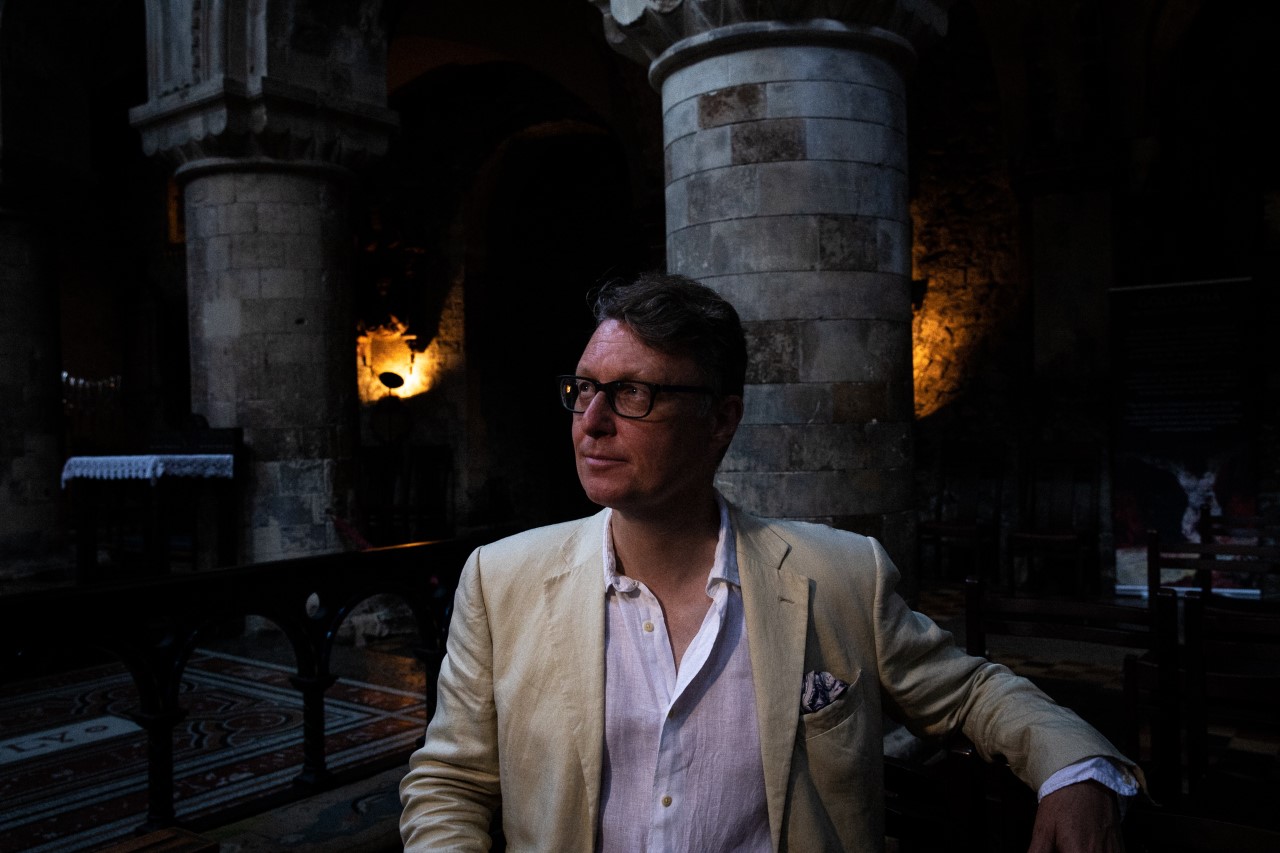
| Contributor: | Ian McDowell |
| Recorded on: | 18 January 2022 |
| Role: | |
| Setting: | Hospital |
| Organisation: | |
| Hospital: | |
| Location: | |
| Themes: | |
| Decade: |

The Guild of St Bartholomew’s is a group of volunteers established to ‘help the Hospital by personal service and by the provision of such amenities for the patients, staff, and students that would not be available for them under the NHS.’ While the hospital staff tend to the medical needs of the patients, the Guild tends to their spiritual ones.

Listen 00:08:22
Story: Ann Wickham - Central London
Listen 00:10:51
Story: Jan O'Neill - Central London