

Stories of volunteers supporting the health service since 1949
Ann Wickham - Central London

When Ann’s husband became a doctor at Barts, it was part of the natural order that she become a member of the Guild. This was in the mid 1960’s and she has been involved constantly since then.
My husband was on the staff of St Bartholomew’s Hospital and his immediate consultant’s wife happened to be the Chairman of the Guild. And she suggested I come along to a meeting in 1966, and I haven’t left since.
While currently the President, over the years Ann has thrown herself into all aspects of the work. Her particular interest has been organising and documenting the history of the organisation since it was formed in 1911.
Ann Wickham
Ann Wickham.
Interviewer
And which Friends group you involved in?
Ann Wickham
The Royal..The Guild of the Royal Hospital of St. Bartholomew.
Interviewer
And how old are you?
Ann Wickham
82, 83, no, 83. I forgotten that.
Interviewer
Excellent. Thank you. So could I ask, what first inspired you to get involved with your Friends group?
Ann Wickham
My husband was on the staff of St. Bartholomew’s Hospital and his immediate consultant’s wife happened to be the Chairman of the Guild. And she suggested I came along to a meeting in 1966 and I haven’t left since.
Interviewer
Okay. And it’s got a very interesting name, the Leagues of Friends have all sorts of different names. Why is yours called a Guild?
Ann Wickham
When it was founded in 1911, it was suggested to call it a Guild of people who would work for the hospital, for the patients. And so therefore it was known as a Guild rather than a League of Friends at that stage.
Interviewer
So there you are. You’re invited along. And did they allow you just to sit quietly? How did they get you more involved in their work?
Ann Wickham
I signed a piece of paper and that’s it. That’s it. I was a member and then two years later I was on the committee.
Interviewer
Okay. And what did the Friends group do then?
Ann Wickham
Oh, at 1966, they ran a shop. They ran a trolley, service, newspapers, outings for the patients. They have a lot of patient involvement in parties, Christmas parties, mostly that raising money to help the patients.
Interviewer
And was it all done by Friends, volunteers, or were there paid staff as well? At that point in time?
Ann Wickham
No paid staff. They were all friends and volunteers members at that there was more distinction, between, volunteers and members. The volunteers did all the work friends all paid a subscription.
Interviewer
Okay. And was there, there seems to be a lot of practical contribution from what you described, you know, they’re actually doing quite a lot of things. Yes. So roughly how many volunteers were there?
Ann Wickham
Oh, gosh. I would have thought 50, 75, something like that. I can’t count them up. That’s a rough estimate
Interviewer
That’s really interesting. And were they involved across seven days of the week or was it just particular times, do you think?
Ann Wickham
Not weekends usually. Just during the week, weekdays and they had quite a strict rota.
Interviewer
So, and you did lots fundraising?
Ann Wickham
Yes. You had fairs and they had, concerts, they had all sorts of things, anything to raise money. And we also did a London flag day during that period.
Interviewer
It’s interesting. I’ve come across other groups in London that mentioned the flag day, Roy Green, who we will both remember was a great fan of the London flag day and the benefits it had for all of the different groups across London. It was something to get involved in. And your fundraising, what did you use it to pay for?
Ann Wickham
Benefits for the patients, a lot of equipment for the wards. In those days, It was probably a toaster or a television or whatever. That sort of thing. As the years progressed, it became more and more, there was a very strict rule. We would not supply anything which the National Health Service should have done, but this broke down very quickly and we found ourselves supplying all sorts of things to wards which the National Health Service should have done and didn’t.
Interviewer
Absolutely. Yes. I definitely, I sometimes have questions asked of me at the national body about whether it’s appropriate for a group to buy something or not. And I’ll have to say my personal position very often is well, is it needed? And if we didn’t buy it, would patients suffer because they weren’t going to have it because it wouldn’t get bought. And very, very often practically we see all sorts of different things get bought. Do you think the Friends group today is very different from how it was then?
Ann Wickham
No. I think the objectives are the same to help the patients and staff and students now of Bart’s Hospital. So I don’t think the objectives have changed.
Interviewer
And do, do you find that people know who the Guild are and want to join it?
Ann Wickham
No they don’t, hence my silent army, which is what I always call, they don’t know about them really, however much you advertise or you wear tabbards or you go around. Now we’ve got a shop in a much better position. I think people are more aware of it, but I really don’t think on the whole, particularly the, administrative staff, nursing staff to a certain extent.
Interviewer
So there’s almost a sense, that, that the very people that you’re there to support don’t really understand who you are. And I don’t think that’s an uncommon situation. From my perspective, I think we’re living in a generation where we’ve got people who go into the health service who just think of it as state provision. And they don’t understand the long history of how actually it’s a provision by the community. The community have paid for it and the community want it to happen to help support people.
Ann Wickham
That’s right.
Interviewer
So, do you think that the people who are members and volunteers are different today to perhaps they were in 1960?
Ann Wickham
To a certain extent? I think that one of the problems is when I started a lot of the consultants lived in London and their wives had, you know, time to work for the Guild or whatever. But nowadays, firstly, the wives of the white consultants live outside London and secondly, the wives are usually working. So it, it is a change of personnel, I think.
Interviewer
Looking at that, in that context, do you think there’s still a need for the Friends groups today?
Ann Wickham
Oh, definitely. Without question. Yes.
Interviewer
Absolutely. And what would you say to encourage people to get involved today?
Ann Wickham
A lot of it would depend on their individual circumstances and how much time they can give. Hence we do have the members who just pay a subscription, which is fine, but to encourage them to come and be a volunteer, it’s quite difficult actually. I mean, one of the main difficulties today, it wasn’t one earlier is all the police checks and all the other checks they have to have now, and that can take three or four months. By that time they’ve lost interest. And that is quite a problem, I think. Absolutely.
Interviewer
And do you have young people that get involved?
Ann Wickham
No, not really as much, because again, because of these checks, I would love to see schools encouraged to send people around. I’ve always thought this. But it is the health and safety and police checks, which have discouraged this sort of participation.
Interviewer
But certainly if a young person wanted to get involved, that’d be very welcome?
Ann Wickham
Yes. Oh yes.
Interviewer
And when you were thinking about what I might come and ask you today, is there anything else that you thought you might want to tell me that we haven’t had the chance to say?
Ann Wickham
No, not immediately. No. Okay. That’s fine.

| Contributor: | Ann Wickham |
| Recorded on: | 12 January 2022 |
| Role: | |
| Setting: | Hospital |
| Organisation: | |
| Hospital: | |
| Location: | |
| Themes: | |
| Decade: |

The Guild of St Bartholomew’s is a group of volunteers established to ‘help the Hospital by personal service and by the provision of such amenities for the patients, staff, and students that would not be available for them under the NHS.’ While the hospital staff tend to the medical needs of the patients, the Guild tends to their spiritual ones.

Listen 00:17:04
Story: Ian McDowell - Central London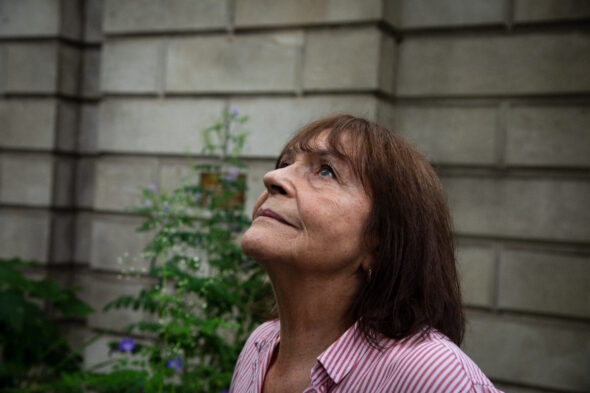
Listen 00:10:51
Story: Jan O'Neill - Central London