Please let us know what you think of our website by completing our quick one-minute survey Leave feedback

Friends Voices

Stories of volunteers supporting the health service since 1949

20240511 114334

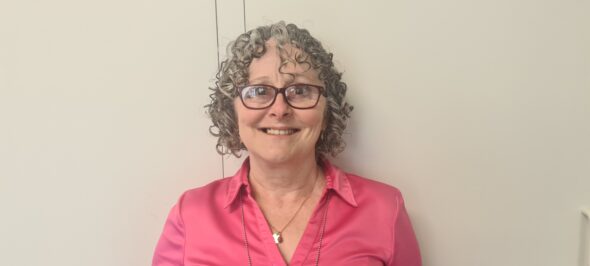
Nicolette Coleman, Avenue Child Contact Centre - Essex, Westcliff-On-Sea

Nicolette Coleman, Avenue Child Contact Centre

Nicolette Coleman - Essex, Westcliff-On-Sea

20240511 114334

Over twenty years after getting involved, Nicolette still enjoys every moment of her volunteering. 

 It’s not that it’s easy, or fun, it’s worthwhile. It makes a difference to the lives of the children and families that the service supports. 

I’ve been doing this job along with a lot of the other volunteers for 20 years now. It was April, 2004 we started this and here we are 20 years later and still loving it.

As Nicolette speaks, it is clear that there is a great team that delivers the service, supports each other, and gains great satisfaction from that community contribution. 

Faith as a basis for volunteering

Interviewer

Good morning. Could I ask your name?

Nicolette Coleman

Nicolette Coleman.

Interviewer

And what group are we talking about today?

Nicolette Coleman

Avenue Child Contact Centre.

Interviewer

And could I ask how old you are?

Nicolette Coleman

I’m 64.

Interviewer

Thank you. So what first got you involved in volunteering?

Nicolette Coleman

Well, I’ve been involved volunteering at church for a long, long time. I’m trying to think, probably back in about 1990, I started volunteering in parent and toddler group at Avenue Baptist Church. And that sort of developed and then I became a deacon, and then it was Church Secretary,. and things went from there. And it was while I was Church Secretary, I think that I started doing Avenue Child Contact Centre.

What is a Child Contact Centre

Interviewer

So what is Avenue Child Contact Centre?

Nicolette Coleman

Okay, it is a supported centre for separated families. So we don’t do supervised, we don’t write notes, we don’t interfere in contact. It’s just a safe space for separated families, who can’t come to their own agreements regarding contact. So the parent the child lives with brings them here. We take them through to visit the other parent, they spend time together, then we take them back to the other parent.

Interviewer

And how do people find out about your service? How do people know what goes on here?

Nicolette Coleman

I think a lot of it is through the courts. If people have a CAFCASS officer or they’ve been to court, they’re often told either the name of our centre or to find a local centre. And so they then Google us.

Interviewer

So we are, we are in Westcliff on Sea. Where’s the nearest centre to here?

Nicolette Coleman

Basically, we’re the only real supported centre in Essex. Now, there used to be loads, but now there’s only us. I’m trying to, I want to say Harwich but isn’t right. But it’s somewhere a long, long way away that I barely think of as Essex.

Volunteers who support a Child Contact Centre

Interviewer

Because for people who wouldn’t know, they might think, oh, you know, there’s one like three miles away or something like that, that it’s a long way away. Do you have lots of volunteers here? How does it work?

Nicolette Coleman

Yes, we’ve got about 15 volunteers now.

Interviewer

Okay. That’s great. All different ages?

Nicolette Coleman

All different ages. I think our oldest is, I think we’ve got a couple of ladies who are late seventies, and three of them, I don’t think any of them are as old as 80 yet, but they’re all late seventies. And then our youngest is Arianne, who, I think she’s late twenties and somebody else has just applied to become a volunteer and she’s still at uni, so she’s probably about 20.

Interviewer

Okay. And what do you think encouraged, why do people come to volunteer here?

Nicolette Coleman

I don’t know. I think some of them just, they want a volunteering opportunity. They tell me and they sort of looked online, and found out about us, and thinks it’s not exciting, but, you know, the sort of thing they’d like to do. I mean some, like the one who’s just applied to volunteer, she’s doing family law at university, so I thought this would be a good place to start. We’ve got another volunteer who’s recently started, Ian. And he’s come here because he’s, many years ago, not in this area. He used to see his daughter at a child contact centre. And so when he was looking for a volunteering opportunity, he thought what he wants to put back into something that, you know, did some good for him.

How to access the services of a Child Contact Centre

Interviewer

If I was somebody who is potentially using this service, how long do I get to see my child here? How, how long is a session, as it were?

Nicolette Coleman

So we’re open twice a month for three hours. So in theory you can have three hours twice a month. Most people because of disagreements or because of the courts, we’ll only start on one or two hours. But, and we give people 12 sessions, which can be extended if necessary. But the idea with supported contact is that it’s a breach to learning how to manage things yourselves and moving on, which is generally what happens.

Interviewer

So I’m imagining that very often it can feel quite stressful for people when they first come here. Yes. And how do you manage that? How do you help them settle in?

Roles performed by volunteers at a Child Contact Centre

Nicolette Coleman

To be honest, it’s just because the volunteers are so lovely and, but what happens quite often, and I, we had a really good example a couple of months ago with people come, and this man, he was having his interview with us before he started, and he was very on edge, you know, “I don’t want to be here” and this is, and we took him to look in the room and as soon as we walk in, people tend to go, “oh, it’s much nicer than I expected. That’s not what I expected.” And so on, that sort of thing. And particularly when they attend their first session, so the visiting parent arrives before their child, we take them in and I always take them to one of the volunteers who generally makes them a cup of tea and talks to them, if they want to talk. And you know, it’s just that, it’s like we had a grandma attend recently and it was very heart-breaking because the child didn’t often attend, but she thinks we’re wonderful. She’s, you know, she sent us a card to all my lovely ladies and Anthony because we would just bring her in and make her a cup of tea. If, if the child didn’t turn up, she would just sit and chat to one of the volunteers, and have a cup of tea.

Interviewer

Okay. So I’m, I’m now really interested because I just assumed that it was absent parents, but it can be, any family member can use this as a service?

Nicolette Coleman

Yes, it’s less usual. It’s nearly always the parents. But yes, we have had grandparents. I’m trying to think what else we’ve had. We’ve occasionally had sibling contact. It’s more rare because that tends to be done through social services I think. But we have occasionally had that.

Interviewer

Okay, It’s really quite varied. Yes. And so I’m, I’m thinking that this relationship using you could go on for a long time, potentially?

Nicolette Coleman

Yes and no, because as I say, supportive contact isn’t supposed to be a long term. It’s supposed to be short term. Well, they learn to trust each other. It’s…which is easier. If the courts are involved because often after the six months they’ll be back at court and the court will say,” oh, three more sessions there and then move on.” But other times it’s not. But we just encourage them to, you know, if you could do it this way. Some people use us then for handover contact. So we’ve got one coming today. So literally the Dad comes in, bring the children to him, he takes them out for three hours, brings them back and we give them back to Mum. So he’s not in the centre, So when people have had their six months here, we often suggest that. So you don’t have to meet until you’re ready. And when we do that, it quite often moves on quite quickly. So,

Satisfactions of volunteering in a Child Contact Centre

Interviewer

So I have a sense that there must be some parts of this job which are quite heart-breaking? And then there are others which really you must go home and think that’s great.

Nicolette Coleman

Yes, definitely.

Interviewer

So tell us a bit about the, sort of the, what makes you go home and think, what’s great?

Nicolette Coleman

It’s when one’s, you know, situations that have looked hopeless like this grandma, for example. It didn’t often work out with the child, and the last time she attended she happened to meet the other grandma outside with the child. And they had a long chat and said the child’s not comfortable coming in, which was very obvious to us, because the mother of the child didn’t want him to be here. So the two grandmas agreed they’d all go out for a cup of tea together, buy an ice cream for the little boy. And I mean it really was, because when they’d gone out, we hadn’t got any other parents in at the time. And I went running into the room, I was like, “excellent news everybody.” And everybody cheered because it was, you know, we were just so happy that she got to spend time with him in a happier environment. And like one that came for their last session, last time we were here, the mum had all sorts of problems and she’d had to have drug tests and stuff. And the child was living with the dad, but they’d been back to court and agreed that, you know, last time was their last session, and they were gradually moving on to having 50/50 residence. And it’s things like that I could see the weight had lifted off this Mum when she was talking to me last time.

Interviewer

I’m just curious now, so you, you see people at this sort of point of crisis almost in their relationship and their family life. Does anybody ever come back and see you and say, “we are fine” and how, you know… tell you what’s been going on?

Nicolette Coleman

Not often, but they do. But again, this grandma, she came back last time, brought us a card, telling us how much she loved us, brought us a whole bag of treats and things that we could eat or give to the other families. So it doesn’t happen often because I think once people have left, they’re in their own world then, you know, then they probably don’t think about us anymore. But this older lady, she’s quite elderly. She drove up from Canvey two weeks ago just to give us a present.

Child Contact Center: A voluntary Service complimenting a Statutory one

Interviewer

That’s lovely. And do people, do you think recognise that you are not social services and that you are a voluntary organisation, do they get that?

Nicolette Coleman

At first, they don’t. In fact, still, it doesn’t have to remember the last time it happened, but you still get people who think we are part of the court process, and we have to say to them, it’s nothing to do with us. You know, what’s agreed in court, we’ll do our best to do. But you know, we weren’t there in court. But yes, they think we are part of it. I once had somebody, a Dad who wasn’t happy with the way we were doing things and he was, he said he was going to complain to CAFCASS about us. And I almost laughed because we’re not part of CAFCASS. No. We’re an independent charity, full of volunteers. So we, we do our best to make people recognise that we are just volunteers, not just that we are volunteers.

Interviewer

No, no, I get that. Totally. Is there anything else that you might have wanted to tell me today that I haven’t asked you about?

Nicolette Coleman

I can’t think of anything other than that. I’ve been doing this job along with a lot of the other volunteers for 20 years now. It was April, 2004 we started this and here we are 20 years later and still loving it.

Interviewer

I can remember you starting actually. Yes. And I can remember it happening here. Didn’t there used to be something in Glendale Gardens in it?

Nicolette Coleman

Yes, that’s right. And it moved. Yes, Audrey was looking for somewhere to retire to, I believe the story if you like. I thought it was quite amusing because I, at the time was working for a mediation service in Chelmsford and I had a quiet day in the office and so I was sorting out the files and at the time there were lots of about three contact centres in Chelmsford. And so I got them out and I was reading to them, reading through them, and I thought, that sounds really interesting. And we’ve got room at our church. So I emailed the minister, and said,” oh, I looked at these things and you know, would that be something we could think about?” And he said, “well, funnily enough, there’s this lady called Audrey who’s retiring and they won’t host it anymore at Glendale. And she’s coming to talk to the church next week.” And it just happened from there. It just, it felt, meant to be, I never intended to be the administrator or anything, I just thought I was going to come along and help like the other volunteers. But here we are. But I’m still doing it. So…

Interviewer

20 years later!

Nicolette Coleman

20 Years later, Yes.

Interviewer

And clearly still enjoying it.

Nicolette Coleman

I don’t want to retire. Well, I’m not old enough to retire just yet anyway. But you know, I have no intention of leaving at the moment

Interviewer

Excellent. Well thank you ever so much. Thank you. It’s been really interesting to hear. Thank you for your story.
 

About this story

Contributor: Nicolette Coleman
Recorded on: 21 October 2024
Role:
Setting: Community
Organisation:
Location:
Themes:
Decade: