Friends Voices

Stories of volunteers supporting the health service since 1949

Mary McNulty, Friends of Barnes Hospital - London

Mary McNulty, Friends of Barnes Hospital

Mary McNulty - London

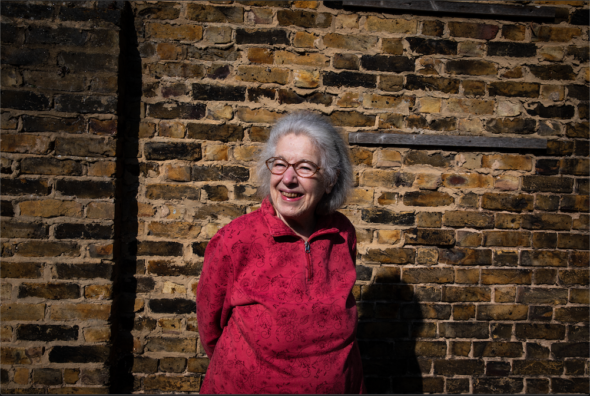
Mary is the longest standing member of the League of Friends for Barnes Hospital, after being the Secretary for more than 20 years. She joined after retiring early from teaching social policy and was looking for something to fit her skills, within a matter of weeks she was not only fulfilling Secretary duties but was also involved in all aspects of the Friends group – from running committees to fundraising cake sales.

I’ve lived in the area since 1965, when I started the main part of my teaching career. So I know I had known about the hospital, partly because the church I attended took services there because the church was in the parish.

Originally her group had a lot of involvement with patients and comforts on the wards, but as the hospital moved into only running mental health outpatient services so the focus on the group changed to supporting local community projects with a focus on mental health. Recently, with the hospital under threat of closure, Mary has campaigned to save the hospital resulting in plans now for a brand-new hospital of which the group are facilitating community consultation. Her motivation has always been to give herself a focus that suits her skills – known locally as the Committee Queen of Chiswick Polytechnic she runs the Friend committees with efficiency and great effect.

Becoming a volunteer at Barnes Hospital

Interviewer

It’s the 3rd of November, 2020. And could I please ask you to just tell me your name?

Mary McNulty

I’m Mary Ann McNulty.

Interviewer

Where were you born?

Mary McNulty

I was born in Beckenham in Kent. Now part of the borough of Bromley

Interviewer

And are you happy to tell me your age?

Mary McNulty

Yes, I’m 85 coming on 86.

Interviewer

And which Friends group are you a member of?

Mary McNulty

I’m a member of the Friends of Barnes Hospital.

Interviewer

Thank you for doing this interview. What I’d love to ask you is, do you remember when you started volunteering? Was it with Barnes hospital? Was that your first experience with the league of friends?

Mary McNulty

No. Can I give you a little bit of background?

Interviewer

Yes, please do.

Mary McNulty

Taught – with an MSC in social policy -social workers, district nurses etc. Retired at 50 early and looked after my mother who was physically disabled. And my aunt who had dementia, my mother died in 1990. My aunt went into a home and after a little while to catch my breath, I started thinking about volunteering and actually Barnes hospital was the third possibility that came my way. And I already knew about the hospital and I was recruited specifically as secretary because they had lost their secretary.

Interviewer

And so, you lived in the area all your life? And how were you familiar with the hospital from your relatives?

Mary McNulty

Well, I’ve lived in the area since 1965 when I started the main part of my teaching career. So, I know I had known about the hospital partly because the church I attended took services there because the church was in the parish.

Interviewer

And so, what, what kind of volunteering were you looking for? You said there was three. Three that you considered?

Mary McNulty

Oh one turned out to be too far away. One I was already doing when I took on the Barnes one and I went on doing that a few years. I was really looking for something that would use my talents and experience academically and experience as a carer – and I went on caring for other people subsequently. It’s more about me – I don’t think I had the burning desire to help older people. I wanted to help people and use my talents and experience.

Interviewer

What was your first experience when you were recruited? What did you have to do?

Mary McNulty

Well, I was doing the Secretary’s job straight away because the previous Secretary had actually died. I had great support from colleagues, also support from Kathy who was then working at the hospital. I have to say I was recruited on the idea of a meeting every couple of months, do the minutes, et cetera. And then not very long afterwards, I was asked, “And what store do you want at the sale of work?” And I discovered there’s a lot more to being the Secretary.

Interviewer

So, what kind of things that you get involved with after realising there was more to Secretary life than to two meetings a year.

Mary McNulty

Well, I mean, a lot of it was fundraising – especially Christmas. We also had a sale a few months before Christmas and used that money to finance, running the bigger Christmas fair. So, a lot of it was very much about, I was going to say small scale fundraising – one or 2000 pounds, perhaps if we were lucky, but just before I arrived, they had actually done a big fundraiser, including help from local Trust to actually buy a minibus for the hospital. But otherwise, it was very much comforts for the wards.

Interviewer

And this was in the 1990’s?

Mary McNulty

In the 1990s.

Interviewer

Yeah.

Interviewer

So how many other people were in the group at that time? Did you know people already?

Mary McNulty

One or two people vaguely. One or two people again from the local church, but I didn’t know anybody on the group, so to say intimately, well, though certainly recruitment tended to be through friends and mine was through the local council for voluntary service, as was our long serving treasurer for many years. But a lot of it was through friends of friends.

Interviewer

And what was it like when you first went to those first meetings? Did you feel warm? Did you think it was a good thing? What were the meetings like?

Mary McNulty

Well, again, very much concerned with day-to-day things and we had at least one person who would liaise with us, probably attend the committee meetings from the hospital. So, it was small hospital. When I joined, we had an empty block of wards that had been built at the end of the eighties. So, it was a low point. We did have older wards that were occupied.

Changes at Barnes Hospital

Interviewer

You say it’s a low point. How did that change the, the, um, the approach of the group? Did people feel that it was going to close or how did it feel?

Mary McNulty

well It was a new building that had never been occupied. So there were still wards, which were there. The other problem was that the new wards were for mental health patients and previously it had been more geriatric hospital.

Interviewer

So it was quite a time of change?

Mary McNulty

So it was a time of change in that sense. And the time has changed for members of the committee and some of whom had actually worked at the hospital. And so there was quite a lot of work to do to persuade people that the hospital will still be available for local people. Um, even though it wouldn’t be available for necessarily the same type of patient, I think those change a lot now, but back in the mid nineties, people didn’t think that they or their relatives, um, getting dementia or needing healthcare for very severe depression. Um, well, I mean the new wards were populated in the mid nineties with people from long stay hospitals. Um, and then some of the old wounds tended to close down. And of course, as you’ll know, from Kathy, um, the last five to 10 years there have been, um, no wards at all and we are very much a clinic

Interviewer

so has that been reflected in the way that the volunteer roles support the hospital? Have you seen a change in the volunteering needs?

Mary McNulty

I think that we never, we had a ward round, um, which was done by people who had formerly been with the WRVS. And that was the main contact with patients. We have some very good parties again, often organized by Kathy and then we had contact with patients, but we didn’t organize anything like visiting schemes

Interviewer

When the wards, when it went into the community. Presumably you changed again. So you did you know that you supported the hospital in a very different way?

Mary McNulty

what has now happened very recently is that we used to have day hospitals, but they’ve vanished too alas though I think they really provided a very good service. So there were always outpatients, but they would have been elderly people outpatients. And in the last 18 months, we now have in hastily, repurposed nightingale ward and in a new sort of cabin I suppose, services for adult mentally ill people that’s to say outpatient services and also for children. So very recently we’ve seen an influx of community services and we are now the biggest place for community mental health services run by the South West London St. George’s trust within the borough. So that really means another reorientation.

Interviewer

Yeah, and does that always become a fundraising element then and you always fundraising, but for different things or is it?

Mary McNulty

We haven’t had the big focus on fundraising. We used to have because we have received very generous legacies. So at one stage we had about a quarter of a million. I think now we have about 200,000

Interviewer

So the focus that becomes about grant making and what support is needed?

Mary McNulty

Yes. And at the moment, a lot of our grant making is to other organizations, voluntary organizations in the area, which are running services, which usually cater for the same sorts of people who are around patients. Our constitution allows us to help in beliefs in the community. So we are able to make grants to local voluntary groups, um, groups, which for instance provides what are known as retro teas. There’s a retro cafe which meets with nice table linen and, um, the best China. So the older people, you know, can take themselves back. They’re all sorts of things going on in the community. And those, we are helping

Being Secretary, 1990s to present day

Interviewer

Take me back to those days in the nineties when you first got there, you’ve turned up and you’ve done the minutes, but now you you’re going to do a stall. Then what were the stills like? What were those fundraisers like if you’ve got fond memories of them.

Mary McNulty

Okay memories, I think, I don’t think it was ever my favorite part of the job. Um, but, um, of course we are in Barnes and sheen and serve the borough of Richmond. So sending out, one of my jobs was some years was sending out a letter prior to the Christmas, fair to, um, members and contacts saying, we’re having this fair, please, will you let us know if there are any things that you would like to donate and arrangements for collecting those if they were bigger, et cetera, et cetera. And right at the bottom, it said, unsold goods of good quality may be passed to other local charities, because otherwise they just went to the dump, which was a great waste.

Interviewer

What kind of things did you get in, did you get all sorts in or was it hard to get stuff to collect?

Mary McNulty

No, there was always masses of stuff and good quality because of it being a relatively well-off borough. So good quality clothes. Sometimes you actually found that a patient had died and the family were giving you everything in the wardrobe. So, you know, you’ve found to shoes stuffed with moth balls and newspaper, which was not the nicest part of it, but teas and cakes went down very well. I’m not a cake maker, but a lot of people are again, including Kathy, who was very generous to us as a member of staff before she retired from the NHS and became our chair. So, um, it was good fun. It was good, fun, but not what I particularly enrolled for. And my gifts don’t necessarily lie there.

Interviewer

What was your favorite part then? what did you enjoy the most?

Mary McNulty

I want say I enjoyed me. Well, yes. I mean, I, I was once known as the committee queen of Chiswick Polytechnic, which was where I was working at one stage because I do actually enjoy committee work, which is quite unusual and I’m fairly good at it, I think.

Interviewer

And what, what do you, what’s your, what’s your secret to success at the committees?

Mary McNulty

Um, partly through experience when I worked in a voluntary college, which had people who are on the management committee, who felt it an honor to be on it, but really didn’t read the minutes. I think the success committee meetings is all the members having read what the minutes and the agenda papers say, and really get themselves geared up for the meeting and if that people are sitting down and flipping through and trying to catch up is not good. So I think committed meetings, I’ve got to be committed and not just feel that It’s been an honor to be asked.

Interviewer

How many people would be on your committee at Barnes?

Mary McNulty

The constitution, which has been around for about 20 years allows for something between 12 and 18. Um, when we were much more involved in the day-to-day work of a hospital number, raising money for sort of comforts for patients, um, new Quilts, curtains, et cetera, et cetera. Um, and there was a lot of fundraising. We did tend to have more, so it might’ve been 12 to 15. Now we’re much more thinking about something like eight to 12, because it is more of a business meeting. And there isn’t partly because there’s no longer the space at the hospital to have things like sales of work, which a lot of people really enjoyed. so in a way it’s a loss.

Interviewer

Hmm. And then did your role change, or have you been secretarial all this time?

Mary McNulty

I’ve been secretary all this time.

Interviewer

Wow.

Mary McNulty

So they’ve all changed in the sense that the way in which the committee work changed also when the hospital became part of the Southwest London St. George’s mental health trust, we became part of a very big organization. And so the policies that come from headquarters, so to say become more important.

Interviewer

So as your role has grown, have you taken on a lot more responsibility?

Mary McNulty

I think it’s just, I think it’s, I think it’s changed as the focus of the friends has changed. And also because the hospital has several times been under threat of closure. Um, we have been fighting for the welfare of the patients, which I think, which we think is served by having a local hospital that has been there over a hundred years and is still valued by people and does an important job. Even if that job has changed, it’s changed actually over 120 years because it was originally built as an isolation hospital, Scarlet fever, et cetera.

Interviewer

And now it’s completely different.

Mary McNulty

It’s basically a clinic. Um, as I said, we now serve lots of different sets of people. We really need a new building and have more or less been promised a new building, but with COVID, you know, how many millions is the NHS going to spare on a new building, even if it is badly needed?

Campaigning to keep the hospital open

Interviewer

so do you find yourself campaigning for change and campaigning for the rights of the patient more?

Mary McNulty

Yes. I mean, yeah. Compliant, yes. Campaigning for a future for the hospital. And again, that’s something that Kathy Sheldon’s led on.

Interviewer

And what type of things would that involve?

Mary McNulty

Um, well, we’ve been involved in facilitating the planning process, offering tea and biscuits to people who came to the exhibitions, run by the mental health trust, who owns the site, um, for what might go on the site. We don’t have any direct power over that, obviously, but we do have this, um, duty to the welfare of the people who are, or might be served by the hospital.

Interviewer

So do you think you’re an important bridge between the powers that be and the community?

Mary McNulty

Yes. Yes. And again, um, you know, the people who live around sheen, are the sort of people who if they don’t like something write to the director in very good English. So they are people who are very active, um, and particularly involved in planning and all the planning issues in Richmond create various considerable community interests. And so we have tried to be a link between the trust, which is selling most of the site, but keeping the area we now have for the clinics and on which we hope the new building will be built. So I think, yes, we have been. And as I say, Richmond is really something that takes quite a lot of negotiating.

Interviewer

Does that leave you at times in not necessarily confrontation, but certainly in, um, differences of opinion with, with, um, authorities or the community. And is that, is that hard to navigate?

Mary McNulty

I think probably there may be differences of stress, the differences of what we emphasize. The mental health trust, which covers five Bowers is using the money facilitated, you know, gained by selling parts of the site for development at other sites in Richmond for development is thinking about the really good new hospitals it’s going to build for mental health patients, but they aren’t going to be in Richmond. So there is a local feeling that Richmond is losing out. Although the authorities keep pointing out that patients from Richmond will benefit from the new hospitals. So, you know, there’s a little bit of explaining to both ways. To the mental health trust that there is unhappiness in Richmond. And to Richmond people, that it doesn’t mean that services are not going to be there. They’re just going to be provided somewhere else. But then of course the Southwest London region.

Motivation to volunteer

Interviewer

So what’s your, what’s your ongoing motivation to volunteer? Has that changed over the years?

Mary McNulty

I think it’s very much still to have a focus and having looked after another person with dementia, I said the first one was an aunt and then I looked after an aunt who was more generally physically unwell. And then I looked after somebody else with ongoing dementia who only died four or five years ago. So I just want to use my experience. I think I’d have a focus for myself. I mean at 85, I can’t be thinking about the next 10 years. So to say, at least not the next 10 years for me, although I can be thinking about the next 10 years for Barnes hospital or whatever replaces, it,

Interviewer

what would you say has been your, what’d you say you enjoy the most about it over the years? Where does the pleasure come?

Mary McNulty

Um, what’d I say, as I say, I do enjoy committees, some battles we’ve won or at least we’ve got people to take into account. Um, what I think are the needs of local residents and particularly people with dementia?

Interviewer

And do you think that comes partly from your personal experience? I mean, three people you’ve cared for with dementia that’s, you know, that’s extremely.

Mary McNulty

Yeah. I think I know more about the problems. Um, and also, um, I know more about what can sometimes be the bright spot, the funny spots sometimes.

Interviewer

Why do you think other people volunteer? What do you think people, you know, it’s a big commitment. You’ve took it on, you took it on at a time when you had a space in your life, but you know, it’s, it’s filled much more than that space. Hasn’t it? So why do people stay?

Mary McNulty

I don’t know. I think once I’ve committed myself, I tend to stick with something and it’s good working with other people. And as I say, um, I’m still keeping up with social policy. I still read the guardian and I still read the arguments over social policy. So there’s still something that links back into my professional life, even though I’m now in a position where I’ve been retired for longer than I worked.

Interviewer

And you were in teaching you said, what did you teach?

Mary McNulty

I taught social policy and sociology to, um, social workers, district nurses, community psychiatric nurses, local authority people.

Interviewer

I see. I see the connection.

Mary McNulty

Yeah.

Interviewer

And have you worked with some of the committee members right from the nineties? have always been the same people, made some good friends?

Mary McNulty

Um, I think, I think I’m now the longest serving committee member because Kathy Sheldon wasn’t a committee member while she was working at the hospital, but she was around when she was around as a member of staff when I arrived. But I think the last person who preceded me, um, retired a couple of years ago also probably in her eighties. And we’ve had quite an influx of new members.

Interviewer

And why is that? where have they come from?

Mary McNulty

Again, a lot of them have come from personal contact, people living locally, sometimes, sometimes people through the churches, although I mean that sometimes the church members saying to Kathy, possibly I have a friend, who’s not a church member, but who might meet the requirements for your new trustee, but it’s a form of networking, I think.

Interviewer

Mm. and do you think faith comes into it because there’s quite a strong link with the church often with league of friends. Do you think faith is an element of why people stay members?

Mary McNulty

Yeah, it can be that. I mean, the treasurer I first worked with was quite a militant anti Christian. Um, our current treasurer is not a church attender, so it certainly has some basis in faith. There’s also, of course, that is there. If there’s a network, then it tends to be the network that you’re tied in with.

Interviewer

Do you think that’s also partly why there’s often a lot of women, it’s often female leaders in these groups as well?

Mary McNulty

Yes, we do have several men actually, but it tends to fluctuate, but at the moment, at the moment we’ve got quite a few men and then other times it might indeed be all women. Um, I’ll, I’ll say, I’ll say the sorts of sale of work elements, et cetera. Um, or the cake making elements, et cetera, which is more female. We really haven’t been doing so much. So, um, I can think of at least four men who are currently involved.

Interviewer

It’s interesting, isn’t it? How maybe you’re like you’re saying it’s women get involved perhaps generationally that women weren’t working as much or there’s a risk? I don’t know, but there definitely seems to be a strong tradition of women being the ones that sign up.

Mary McNulty

I mean, certainly it used to be, and I mean, at one stage when we were looking for a chair, somebody from a hospital friends group a long way away, said something like, well, haven’t, you got the wife of one of your consultants who could be a chair, but we’d never actually worked like that. But what I have observed particularly with women is that, whereas you used to avoid school holidays for any big activity because grandparents were often looking after grandchildren during the holidays nowadays, it’s the grandparents who are actually looking after the children while mom goes to work in term time. I think that’s been particularly in London where childcare is very expensive. I think there’s been a big increase in the number of grandparents whose social service, So to say is looking after their grandchildren.

Interviewer

Yeah. I think that’s a definite trend. I think we’re all seeing that, like you said, the cost of childcare is very difficult and the need to work is it’s a big pressure.

Mary McNulty

Yeah. Yeah. And I think that’s certainly a change I have observed. I mean, I was in the fortunate position. I should add having retired at 50 of having quite a decent pension. And there isn’t much of that around either now. I, you know, there was a generation of us who retired from responsible jobs early and had been given inducements to retire in the way of decent pensions. I don’t know that you, you know, I mean, at one stage, the local U3A was run and pupiled by other people. I had talked with who had retired early and I don’t think that generation of us is anywhere around now.

Interviewer

Yeah. There’s not the same retirement at 50 now is there?

Mary McNulty

No, I mean, it was, um, it wasn’t a very good policy in some ways because it meant that the most experienced people on the highest salaries, um, were being asked to retire from 50 to 55 onwards. I think a lot of experience was lost. On the other hand, I think a lot of them, lots of them like me did go in for some sorts of voluntary work, social service.
The future for Barnes Hospital and the volunteers

Interviewer

What do you think then for the future? This is my final question. What do you think the future is for Barnes and for the volunteers and for the league of friends?

Mary McNulty

Um, well, as I say, I think as, um, at this precise stage of COVID and everything else, and um, government expenditure and so on, I mean the future is that there going to need outpatient services and the mental health trust has committed, um, to considering continuing to provide outpatient services at the site. Um, but it’s very difficult to know, you know, what is going to be the position of the voluntary sector in the long term? I mean, during the last lockdown, there was a real upsurge of volunteering, not just through friends groups but a real upsurge of volunteering in general. And I think a real increased valuation of the workers, the volunteers. But I think we may be coming into a period of government austerity again and whatever may be said about the ongoing importance of volunteers. I just don’t know whether the backing and the government money, um, through local authorities, which is needed by the voluntary sector to supplement fundraising, you know, is that going to be available? Does that make sense?

Interviewer

Yeah it does and it’s an unknown, isn’t it? That is the big question.

Mary McNulty

I mean, it’s a question that Attend may have been maybe asking itself as well as individual local groups.

Interviewer

Yeah, absolutely. As most of the sector. Well, thank you very much for this interview. Have you anything else you’d like to tell me before we finish?

Mary McNulty

I don’t think so. 10 minutes down, 10 minutes later, I’ll probably think of something, but I don’t think so at the moment. No.

Interviewer

Well, thank you very much. Thank you very much.

About this story

Contributor: Mary McNulty
Recorded on: 27 January 2021
Role:
Organisation:
Location:
Themes:
Decade: