Stories of volunteers supporting the health service since 1949

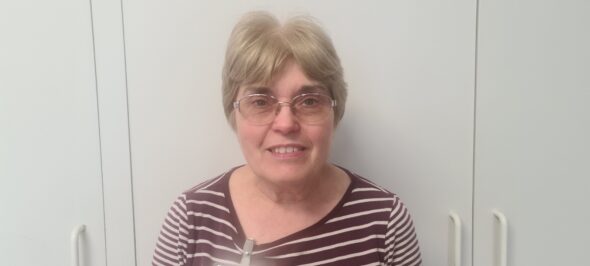
Hilary Collins - Essex, Westcliff-On-Sea

Combining a career in nursing, and a personal faith, Hilary has been involved in the Child Contact Centre at Avenue Baptist Church since it began.
“And so that’s the important thing for me is knowing that the children are really wanting to spend time with their non-resident parent and, and wanting to see them and engage with them.”
Bringing a wealth of experience, Hilary is involved both in governance as a trustee, to hands on volunteering with children and their families.
Interviewer
So could I ask your name?
Hilary Collins
Okay. I’m Hilary Collins.
Interviewer
And could I ask which organisation we’re talking about today?
Hilary Collins
The Avenue Child Contact Centre.
Interviewer
And could I ask your age group?
Hilary Collins
67.
Interviewer
Well, thank you Hilary. It’s good to meet you again today. Could I ask what has got you involved in this organisation?
Hilary Collins
The opportunity arose when the contact centre moved to Avenue Baptist Church, which is 24 years ago now. And an appeal went out for people to get involved in and help. And so that was something that I thought I would like to be involved with. So I volunteered, and agreed to become a trustee of the charity as well.
Interviewer
So what about either your life up to that point or your professional experience, or whatever drew you to this idea that this was something you’d like to help with?
Hilary Collins
My professional background, I was a children’s nurse when I was working. And so I had a lot of contact with children, with families working with families, some of those families that the parents had separated. And so I’d seen some of the difficulties that that arose when the child was unwell and, and the parents had separated, but how important it was for the, the parents to still be in contact with the child, especially when they were unwell. So the contact centre I saw as that opportunity to keep that contact between the, the parents and the child.
Interviewer
So you, over 20 years you’ve been looking at what’s going on here. Do you think what’s needed from the contact centre has changed over the last 20 or so years?
Hilary Collins
Not especially. I mean, what has changed is the, the nature of the families that come to the contact centre. When we first started up, a lot of the couples were previously married. Now very few of the couples are actually married when they separate. And we’ve also had a wider range of families coming for contact, including grandparents, which wasn’t something that was happening when we first started out. But the importance of children and grandchildren being in contact with their grandparents was increased. And so, yes, we’ve had that sort of contact. We’ve had contact between stepsisters as well. So the children had the same father, but different mothers and, and so the, the mothers saw it important that the children should get to know each other as stepsisters even though they weren’t living together. So, so we’ve had those sorts of changes. We’ve also had children that are in foster care coming to see their parent while they’re in foster care. Again, that’s something that wasn’t happening 20 years ago. So those sorts of changes have taken place, which has increased the need for the contact center so that those different sort of family arrangements can be accommodated within the contact center.
Interviewer
And what in your volunteering do you enjoy most? Which bit of the, the roles that you play here do you enjoy most
Hilary Collins
Seeing the reaction of the children when they arrive to to see their non-resident parent, you know the joy of the children. Many of them run into the room to see their, their non-resident parent. They give them a big hug, they give them a kiss, you know, their smiles and laughter. And so that’s the important thing for me is knowing that the children are really wanting to spend time with their non-resident parent and, and wanting to see them and engage with them.
Interviewer
So do you think that there’s only one sort of person that could volunteer here? Or do you, how would you see that?
Hilary Collins
No, I mean, we, we, we would, we welcome volunteers from across the age range from this different backgrounds, different ethnic backgrounds as well, different genders. So anybody who is interviewed and, and deemed as suitable would, would be very welcome in contact centre.
Interviewer
So if I’m listening to this interview and I’m a younger volunteer, how old do you need to be before you could start volunteering here?
Hilary Collins
You need to be 18.
Interviewer
Okay.
Interviewer
And if I was a person, for example, who used a wheelchair, would that be able to be accommodated as part of it?
Hilary Collins
Yes. We, we are fortunate that our facilities are all on a level on the ground floor. So therefore, yes, individual with a disability, a wheelchair user, somebody with limited mobility would be very welcome within the Centre.
Interviewer
Yes,that’s really helpful. Is there anything that you’d like to tell me that you haven’t had the chance to tell me yet today?
Hilary Collins
I suppose it, it’s a opportunity for volunteers to, to join us. We would especially welcome more male volunteers. Okay. We are predominantly female, although we are fortunate to have a few. And, and the, the the visiting fathers are particularly keen and, and responsive to the male volunteers. Mm-Hmm. <affirmative>. So it would be nice yes, to have…
Interviewer
A few more men?
Hilary Collins
A few more men!, The role is not childcare, which might be the misunderstanding by the name of the, the contact centre. And because some men don’t feel they want to be involved in childcare, but we are not doing childcare. We are supporting the parent who is seeing their child and the parent is completely responsible for their child while they’re in the contact centre.
Interviewer
And if I was interested in doing this, would I need to do a lot of training?
Hilary Collins
There is, there’s some training required. This is to introduce the, the new volunteer to how the Contact Centre works, the rules and guidelines by what which we operate. So we do that in-house. So once the volunteer is attending the Contact Centre, we, we can talk about this in advance with the individual. So they get an idea of, you know, what they’re going to be doing while they’re here. And then we have a, a formal training on an annual basis Mm-Hmm. Where we particularly consider safeguarding issues, which are paramount within the, the Contact Centre, but also learning about how to handle difficult situations and how to talk to, how to talk to the parents when they’re visiting.
Interviewer
I’d need to have a DBS check done as well?
Hilary Collins
Absolutely, yes. All our volunteers have an advanced DBS check.
Interviewer
But those sort of processes are relatively simple, aren’t they? Just some paperwork to fill in?
Hilary Collins
References as well, We ask for two references from individuals that know the, the potential volunteer.
Interviewer
So, hopefully we can encourage some more people to volunteer. I think that’s great. Thank you.
| Contributor: | Hilary Collins |
| Recorded on: | 21 October 2024 |
| Role: | |
| Setting: | Community |
| Organisation: | |
| Location: | |
| Themes: | |
| Decade: |