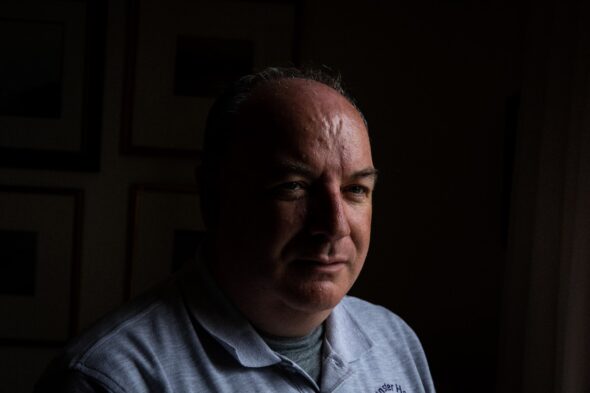
It's a craft, it's slowly done...it's a comfort thing, and it gives them comfort and warmth. They realise the difference, it does make you feel good.
Listen 00:24:39
Story: Richard Rooney - Central LondonStories of volunteers supporting the health service since 1949
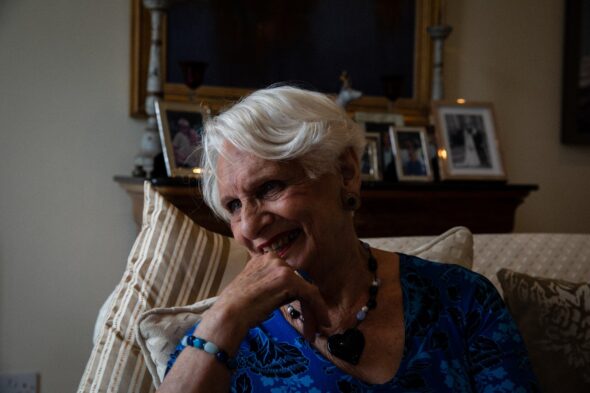
Clare Johnstone - Central London
While on a visit to the Chelsea & Westminster hospital for an outpatient appointment, on the stairs, Clare was suddenly struck with the thought “why don’t I do something for this wonderful hospital”.
I had been in hospital for an appointment, and I was coming down the stairs, and I thought “what on earth? why don’t I do something for this wonderful hospital?
Over 10 years later she is regularly volunteering on the weekly bric-a-brac stall. She sees it as an opportunity to cheer everyone up: patients, relatives and staff.
Clare Johnston:
My name is Clare Johnstone.
Interviewer:
NIce to meet you, Clare. And which friends group are you involved with?
Clare Johnston:
Well, the bric-a-brac, basically the brick-a-brack isn’t it? Yes. I think it is really.
Interviewer:
At the Chelsea and Westminster?
Clare Johnstone:
Chelsea and Westminster, Yes.
Interviewer:
Okay. And could I ask how old are you?
Clare Johnston:
Eighty and a half
Interviewer:
Eighty and a half, and proud of the half obviously.
Clare Johnston:
Absolutely.
Interviewer:
So what made you first get involved with the friends group?
Clare Johnston:
I had been in the hospital for an appointment and I was coming down to the stairs and I suddenly thought, “what on earth? Why dont I do something for this wonderful hospital?” And I managed to find a Friend’s Office. I..because I had no idea where it was, but I found it very easily. And I went in and I said, “look, is there any chance, I’d like to help. I’m a people person” because I’ve run my own catering business, which I ended up doing for 50 years. So, I mean, I was still doing it, but you know, odd things at that stage. So I thought, no, I’ve got time to do for this wonderful hospital. And, it’s easy to get to before Hammersmith Bridge shut, but anyway, never mind that doesn’t matter anymore, but truly, it’s just the best thing I’ve ever done. I absolutely love it.
Interviewer:
And had you volunteered in other places before, or was this just a, sort of a, a moment of enlightenment on the staircase?
Clare Johnston:
I used to help with FiSH, which is an organization in Barnes but then when my business got too busy, I had to give that up, but I’ve just actually signed on again. So, but, but anyway, I just love coming up and I love meeting the patients.
Interviewer:
Okay. And so how long have you been volunteering, for how many years?
Clare Johnston:
Oh, golly, certainly 10-12, something like that at least. I mean, I’m just trying to think. I started when Vera had been going for about 10 years, so, and Vera was the most wonderful person who, and it was really lovely because she was very poorly, she had COPD, and my first job was to go and get her oxygen.
Interviewer:
Okay.
Clare Johnston:
Which I did because as soon as she arrived, she needed it, and we’ve struck up a wonderful friendship, and we had a wonderful group, but then of course, as time went on, one got too ill that couldn’t come back. Vera sadly died, and other people came in and it was, it’s been, it’s a lovely group and we’re all very good friends, who’ve all got our own things that we do well. You know, some people sell more than others, but some people get more people in, you know, interested and so on. It’s very varied, but it’s lovely.
Interviewer:
So what skill would you say you bring to the Friends?
Clare Johnston:
Well I’m very good at finding out if people need a chat.
Interviewer:
Okay.
Clare Johnston:
Because there was one particular lady who used to come and, and she always used to make a beeline for me. And so I always made a point of chatting to her, one day she was weeping and I, she was one of the, obviously a mental health patient. Well, not obvious. She just happened to be a mental health patient. and she said, “well, I haven’t taking my pills and I’m hearing all sorts of noises”. And I said, “well, that’s a bit silly, dont you think, it’d be a good idea if you did?”. And so then I thought to myself, how can I help her to, to take it, and I said “tell you what, I want you to come back next week and tell me that you’ve taken your pills.” And after that, she used to come every single week. And, at the end of this, little, sort of, session I said to her “can I have a hug?” So it was, it was, it was a thing that I used to always go and hug her. And it, it’s the little things like that. Do you know are very important, because I mean, I can tell if somebody is really going through it. I said “I hope everything’s all right with you?”, or something like that. Sometimes they want to open up, sometimes they don’t and you respect them for it, you know? I mean, but it’s all part of it.
Interviewer:
So it’s a really important bit about you being, sort of, there regularly as a face for regular patients to recognise?
Clare Johnston:
Absolutely. Yes, absolutely. I mean I’ve, I don’t often, I haven’t hardly ever missed out really. You know, because I love it so much. It’s, it’s, it’s, it’s the centre of the week. We used to have it twice a week, and now we have it once a week, once a fortnight. So it depends. What’s what, but I must confess ,whatever, it’s really good.
Interviewer:
And so you’ve clearly got some very strong people skills. Have they ever persuaded you to use your catering skills as part of what you’re doing?
Clare Johnston:
Well, occasionally if I’m making the odd cake or two.
Interviewer:
Odd cake or two?
Clare Johnston:
Well, you know, if we’ve got a special to event know, I usually offer. Yes.
Interviewer:
What’s your favorite cake?
Clare Johnston:
Oh golly. I love making brownies, I can make good brownies. Actually, when I had a hip operation here at the hospital, I was so grateful to them afterwards, so I took them all. I rang up the ward and I said, I remember when I was coming from my things afterwards you know, for a review, “how many people in the the department?” they said 30. Right. So I brought a box of 30 plus a letter telling them, the hospital, how wonderful they were to dear old Mr Gibbons. And, they went down very well, but you know, it’s, it’s just it, I love it. Whatever, you know.
Interviewer:
It sounds like you’ve contributed quite a lot of to this project. You know, your listening skills, your catering skills. And it also, what you’ve described to me is that it’s a real friendship that you have with the other volunteers. It’s a proper relationship that develops through the volunteering.
Clare Johnston:
Yes, absolutely. I mean, you know, sometimes we don’t agree with everything, but that’s that’s life we just get on with it.
Interviewer:
Absolutely. So where does the bric-a-brac come from?
Clare Johnston:
Ah, now that is very important. That is people. we always say if ever you’ve got it, it’s one of the patters we say, “if you’ve got anything, you know, that you don’t want, please think of us” because we can sell it and it all goes towards the hospital and that’s the most important thing, and it all goes towards the hospital. And you know, because sometimes we have some wonderful things that are given to us, and we can charge them, except when poor darling Vera, was alive. Bless her heart. She said, “oh no, you can’t have it too expensive,It’s mustn’t be too expensive”. So consequently, we didn’t make much, but since darling Vera has died, and that’s not no disrespect to Vera, but it’s the thing is it’s, you know, we have to have to charge the right amount, but not over the top.
Interviewer:
Yes.
Clare Johnston:
Because it is for the hospital
Interviewer:
Yes. No, it’s really, it’s a very nice thing. And I have to say, we live in an age where people change quite a lot in the house quite regularly dont they?
Clare Johnston:
Yes, they do. Yes they do.
Interviewer:
And so things that perhaps are not worn out, they’re just not quite so much wanted as they were, they can be used in another environment beautifully?
Clare Johnston:
Yes, absolutely. Absolutely. We get, we do have some incredible china and glass and all sorts of things like that.
Interviewer:
So, you’ve been involved in the friends group for quite a long time. Are there any real favorite memories you have about being,things that you’ve been involved in or things that you’ve seen?
Clare Johnston:
Well, I’m just trying to think. I think quite often, you know, I think a lot of it actually is just knowing when you walk into the hospital that you, you know, that you have a job to do for cheering people up. And, we have a great laugh sometimes and it’s really a great deal of fun and we get to know lots of people and that’s really, and truly what, what I love about it.
Interviewer:
Have you found you’ve got to get to know the staff as well?
Clare Johnston:
Oh yes. Yes I do. In fact it was extraordinary the other day, I was in Sheen, and I met the nurse who used to run the ICU, you know, and she was, I said, “what are you doing in Sheen?” And, she said “I live here down the road” and she’s retired now. So it was really nice to see her.
Interviewer:
So that sense of community extends outside?
Clare Johnston:
Yes much so. Yes, very much so.
Interviewer:
So again, having looked at the friends group over 10, 15 years, do you think the friends group is different today to how it was 15 years ago?
Clare Johnston:
Yes.
Clare Johnston:
It’s, it’s very organised now. I mean, you know, Hilary is a really fantastic organiser for all, and it’s it’s getting people more involved and also, trying to persuade the various patients that come along, or it could be somebody from outside, not necessarily a patient because it wants it, it’s going, you know, they, they do come in and know that it’s on a certain day and they come in and see what we’ve got. And so we always say to everybody, you know, well bring lot of things, don’t worry, do you know. It doesn’t matter as long as it’s it, you know, everything’s okay. It be fine. And and so we get a lot for people dropping things off.
Interviewer:
And do you see that we do anything new or different perhaps now than we did before?
Clare Johnston:
I, well, I think it’s just grown.
Interviewer:
Okay.
ClareJohnston:
You know?
Interviewer:
So we do more?
Clare Johnston:
We definitely do more now. And, and I think that it’s, as I say, it is, it’s very, it’s very well organised and you know, we, the group, which is about four of us, it depends, you know, unless we do a big event or something, you know, we, it it’s, but usually were all there, and we all have our forte and so on, which is good.
Interviewer:
So if somebody said to you, “oh, well we all pay taxes, the NHS can look after itself. We don’t need Friends anymore.” What would you say in response to that?
Clare Johnston:
We do definitely do, because what the Friends does, it gets to the nitty gritty of everything, you know, like, we can see some of the patients can and I’ve done this, do know some of the patients, for example, complain about something. Well, I it’s a good when they complain because then you can try and see if you can sort something out. Do you know? Because it, I’ve often gone up and I’ve said to the Sister, “look what way can I mention this? Because Mrs So and So has had a bad experiences is there anything you know, I can do?”, Somebody tell you what to do, you know? So on. So it’s, it’s without, I think it, it helps that helps the hospital to see what’s the real feeling with the patients are sometimes
Interviewer:
Yes, when you’re not so emotionally involved in it, you can be more of an advocate can’t you?
Clare Johnston:
You can, but I must say I do get emotionally involved with some of them, but I don’t mind admitting it. Some of them are absolute poppets when they come along. I love them, you know? And it’s, it’s, you do strike up friendships and so on.
Interviewer:
So if one of your friends came to you and said, I’m thinking of getting involved in the friends groups or in a Friends group, what would you say to encourage them?
Clare Johnston:
Well, I would say that they have, you have enormous fun. You feel as if you’re doing something for a hospital that desperately needs help and try it. You’ve got nothing to lose. You’ve got nothing to lose and everything to gain. Really.
Interviewer:
Absolutely. Well, that sounds fantastic. Now, when you were thinking about coming to talk to us today, was there anything you thought I must tell them about that, that I haven’t given you the chance to tell me about?
Clare Johnston:
Well, except that I think that, oh really, actually I just, I, I just felt, I knew you’d be asking me various questions and so on. And I just think that, I mean, I think that I’m looking forward very much to it coming back on a regular basis. But, and I think that, it’s, it’s absolutely essential for every hospital to have a friends group because it’s it solidifies everything, you know, it, it brings people together. It gives people a chance and also instead of just going and buying a paper. They can buy something else, but even if it’s just the pound, you know, it all goes to the hospital. And it’s just that little, extra bit, which I think is essential, absolutely essential. And it’s, you know, so, and it’s a good opportunity for patients who don’t necessarily want to talk to a nurse or, or a doctor, they sometimes offload on us, which is fine. I mean, we keep their council, obviously without a doubt.
Interviewer:
Absolutely. And certainly one of the things that I’ve heard over the last few weeks is that we’ve seen lots of people getting back to football and they’ve enjoyed what they enjoy. And certainly our volunteers want to get back to what they enjoy, which is their volunteering. So we’re waiting for that opportunity. So thank you ever so much, really appreciate that. Thank you.

| Contributor: | Clare Johnstone |
| Recorded on: | 19 January 2022 |
| Role: | |
| Setting: | Hospital |
| Organisation: | |
| Hospital: | |
| Location: | |
| Themes: | |
| Decade: |
Listen 00:24:39
Story: Richard Rooney - Central London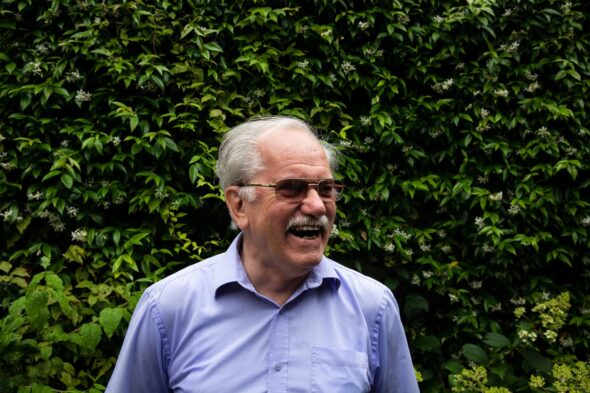
Listen 00:07:16
Story: Gordon Dempster - London