Stories of volunteers supporting the health service since 1949

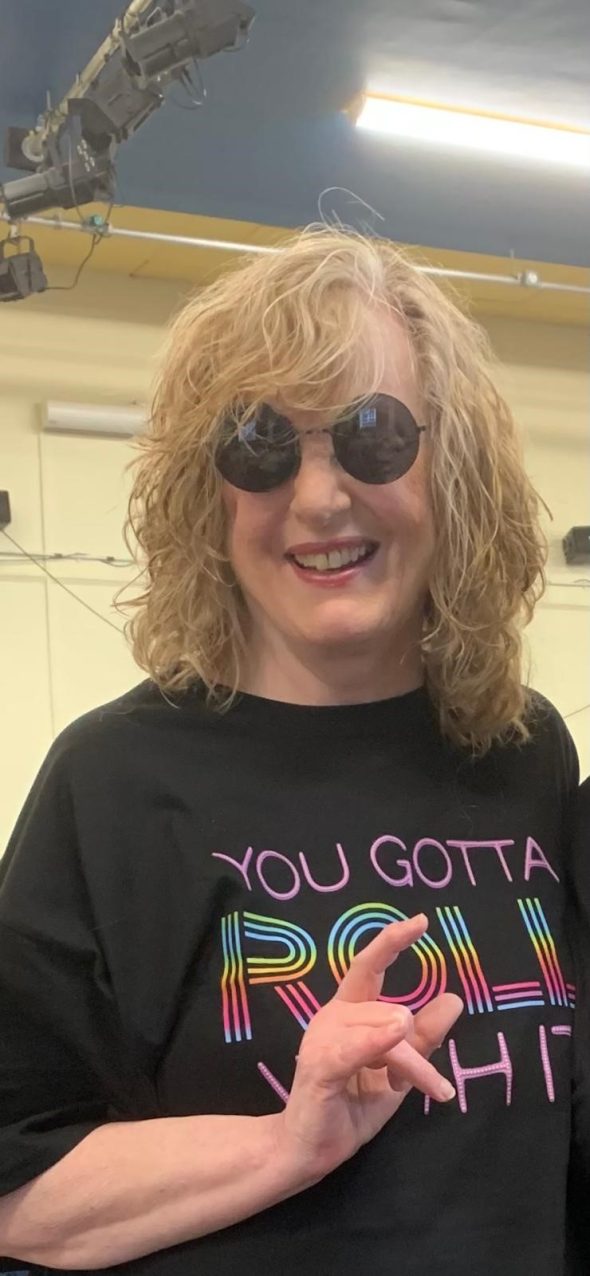
Amanda Berry - Harrow, London

Amanda, a retired nurse and dedicated volunteer, shares her journey from Canada to the UK, her nursing career, and how a life altering stroke in 2020 reshaped her path. After losing her ability to work, Amanda found renewed purpose through volunteering, and becoming both a befriender, and befriended with Attend.
So for me, to go and sit down beside someone, and just be, is such a gift and people just don’t realise it.
Amanda emphasises the deep value of human connection, especially for those experiencing isolation. The simple act of being present can be a powerful reminder of how small interactions can affect someone’s well-being. Now volunteering at Birchwood Grange Care Home, Amanda brings her warmth, experience and empathy to each resident.
Interviewer
First, can you just state your name, age, and the League of Friends that you are a part of?
Amanda
I’m Amanda, and you want to know that I’m an old woman.
Amanda
I’ll be 69 this year, apparently. And so I have been with Attend probably since 2021. Someone was befriending me. I had a stroke in 2020, and it was suggested that I have a befriender so I could have someone to chat with. Sona befriended me in early 2021. Then I became a befriender in 2023 or something. They had a position at a care home. So I said I would like to volunteer at a care home. So in the meantime, I had been a befriender. I had a couple of people that I’ve called, and befriended, and then I became part as a volunteer to say hello to those people there.
Interviewer
That’s amazing. So was volunteering a big part of your life when you were growing up?
Amanda
I’m from Canada, and during my high school, volunteering was part of our projects. I volunteered at a hospital when I was a student in high school. I think it probably encouraged me because I then wanted to become a nurse. I became a nurse’s aide. So then I worked for many years after that, after high school, as a nurse’s aide, probably 17 years or something like that. After being a nurse’s aide, my nursing friends at the ward kept telling me, “why don’t you become a nurse?” Because I keep asking them questions you see.
Interviewer
Yes
Amanda
And in a way, I thought, she must have liked the questions that I asked. They must have really meant something because she told me, “you go and become a nurse.” And I guess in a way that would answer some of those questions, I kept throwing out. Get me off their back. So then I became a nurse. I worked as a nurse for 30 years after.
Interviewer
So when did you move to the UK from Canada?
Amanda
Yes. So I came in 1999. I had just got my degree in nursing in Victoria in 1999. And at that time, I only had a full-time night-time position in a care home as a nurse, night-time with a degree. I thought that was kind of over the top. There just happened to be an advertisement in my nursing magazine that they needed nurses over here. So I went for an interview, and was hired right away. It was so cute because like, you know, you just make the phone call, and have the interview. The interview was like in a couple of weeks and I said, “oh, I don’t have a CV.” “Oh, just bring it with you”, she said, and I didn’t even have one. So then I had to quickly throw one together, and took it with me for the interview, and I was hired right on the spot.
Amanda
It was like, I was shocked. I was like, “oh my goodness”. They wanted me to start right then. But I had, as part of my volunteer service, to go to Haiti, that was going to be my fourth time going to Haiti, and helping out, and Haiti’s like a fourth world country. It’s worse than a third world. It’s the worst of the worst. I had been part of an organisation that built schools, and we had a feeding programme so they could come, and have their food, and then also get taught. It was part of the school programme that they would get some food. So I had already planned it, so I did that. So I was delayed in coming here about six months or so because I said no, I had to do that first. It was on my books to go to Haiti.
Interviewer
Seems like volunteering has been a very big part of your life. And in what ways has it made your life more fulfilling?
Amanda
I think probably I wasn’t aware of the significance of it. Of course, you know, me being part of a missions programme, and we supported people in Haiti, that was part of my life for many years. And so you don’t think of it, you just do it. And of course being a nurse. Basically what happened was I had a stroke in 2020. I could go to work one day as a nurse, and then the next day I couldn’t go because all of a sudden, I was debilitated. So then it was really a hard time for me because I viewed myself as no longer fit for purpose. Because, when one minute you can be out there giving, and being a nurse, and like, yes, nursing as a professional, but the nature of it is that giving part.
Amanda
And so then I had gone through a lot of evaluation, personal growth, and everything like that. And I attended workshops by Jay Shetty. I don’t know if you know who he is, but, I joined his programme at a huge number of dollars a year, but it turned out to really help me out because what I realised is that, I can’t go, and work as a nurse, but who I am that encouraged me to become a nurse is still there. Like, those parts of me that made me to choose nursing as a field. So I was going through that. And so then I found out that, well all that’s different is the way that you fulfill your purpose. The vehicles change, you can’t do it the same way as you did before.
Amanda
So I was working with Sona through Attend, and I talked with her, and everything, and that’s where she got me to be a befriender because she kept talking about going to these care homes. And I said to her, “well, what’s that? Maybe I could go to a care home.” And so I became a volunteer at Birchwood Grange Care Home because Attend supports volunteers at that place. So I go there now, I walk in with my walking stick, and I sit down, and I feel right at home. It was an easy thing for me to go to care home, to be a volunteer because like I said, since before I was 20 years old, I was working in care homes. So I know what they look like.
Interviewer
You mentioned before how you were befriended, and then later became a befriender. So how was your experience transitioning?
Amanda
Well, I think what happened was, for myself, it was like something that really helped me a lot. Helped me progress in my own recovery, and helped me, you know, build, and rebuild myself into who I was. So the importance of it was quite good. I think because of the place where I was in my life at the time, I think it was quite a natural thing for me though to become a befriender. I think it’s because, you know, like, it’s like second nature to me already. I’ve taken many counselling courses, that’s what we used to call it back in the day when I was studying. We took counselling, I think they call it coaching now. And you know, those things were like second nature to me because of my training, my experience as a nurse, and my training, and how I’ve helped people in the past already.
Amanda
So it was natural for me to do it. It wasn’t a big deal. Maybe for a lot of other people it might be something new to be in that aspect. And so I think for me to be a befriender, what I really have to do is stop being a nurse because I’m not supposed to be giving people advice or telling them, but it’s really interesting because there’s this one lady that I’m befriending now, she is going through a lot with her health, and everything. And so a lot of times my nursing cap comes on, but it’s more in an encouraging way. I’m just sort of explaining or reflecting what she’s going through, and telling her that it’s all right, and that’s quite normal, but based with my nursing hat on.
Interviewer
And then what is your favourite part of volunteering?
Amanda
Well, it’s interesting that you say that because, I belong to a rock choir, and part of rock choir, part of what we do is we raise money for charity, which is Mind. Part of mental health is social connection. So being part of rock choir helps that part of social connection. Volunteering for me is that social connection. So it’s like me hopefully helping those people who are isolated. The important part of their mental health is going to be some kind of social connection. A lot of times I think, “oh, I don’t have anything to give”, but you know what, you give a smile. That’s a big thing.
Amanda
Even in my nursing career, we often talked about, we always think, oh, we have to do something. We’re always busy. Have to do, have to do, have to do, have to do. But no, we don’t. As a nurse we know that we are human beings, not human doers. As a human being, it is so much. And the value to just be is hard work. So for me, to go sit down beside someone, and just be, is such a gift, and people just don’t realise it. But, you know, even if it’s 10 minutes, because I remember actually how that reflects back, you know, there was this guy at the care home, and I only sat with him for maybe 10 minutes, and we just chatted or whatever. I carried on and went on my way.
Amanda
Well, he did a writeup, and it was posted on the wall. He mentioned me, that I took time, and interest. And we don’t know the value of that thing. And to me it was human nature. You just do that, and you carry on. You know, I didn’t even think of it. But then when we sit down here, well, it’s that social connection, and what’s important, and it’s a huge thing for mental health. And that’s part of your mental health, just that social connection to be healthy.
Interviewer
Yes.
Amanda
So I hope that, so what do you think of all of that?
Interviewer
That really shows how much a singular interaction can change somebody’s personal experiences. In our everyday lives, we diminish how much influence our interactions have on each other. Through volunteering, you can see how much positivity you can share.
Amanda
Yes. And that’s true because I think what happens is when we’re healthy, we’re in our everyday life. We don’t even think about those things, and don’t even know that it’s important. But then, when you have a situation where you are knocked off your feet, well all of a sudden, for me it was important to have a befriender because I lived alone. And then when you physically have this capability that you can’t go out anymore because you can’t walk. Like I was trying to teach myself how to walk again, and things like that after having a stroke. And it was during the pandemic, and everything too. So that really helped, didn’t it? You don’t realise how important those things are until you don’t have them. And then when they come back to you, and you can build yourself up again with that tool of the social interaction, with that supportive person.
Amanda
You don’t realise the importance of it until you don’t have it. We have high school, I shouldn’t call them children, they’re 17, but they come to the care home, and so trying to get the point across that social interaction, how important it is to get them to understand that point is probably difficult because in their lives, I mean they’ve got their social connection, because they’re in school and, you know, and they’ve got their friends, and that’s what they’re doing. But, like one of those bottom-line things that you would want for them to understand in a way, isn’t it?
Interviewer
What do you think about young people volunteering?
Amanda
I would like to encourage it more just because as part of their own development, I think a lot of times when they volunteer at a care home, then their background or their future, their idea, is they’re going to go into medical or they’re going to be a nurse or something. And so for them to have that volunteer experience, yes, it looks good on the CV, but it’s good life experience for them too. So I think that probably that’s what encourages it the most is that it’s something they’re going to go in for nursing helps build their experience in that medical field. And so, I think for volunteering, it doesn’t always have to be at care homes, it can be doing something else. I think that for young people to have that volunteering work is so important for that social connection, and its life experience, and also it brings the focus from inside to outside, and of letting them know how important what they do is.
Amanda
So what from here comes out is so important. So, I think it’s a positive reinforcement of who you are, and when you’re young, for people to learn what that is, it’s really important in terms of development in your social skills, and also building a framework of whatever profession that you want to do. I mean, you know, of course they all start out in the giving profession of, you know, being waitresses. So that kind of social connection, and learning how to work with people, and care about what other people think, and how they can encourage that in a positive way. So it’s important part of development. So, I strongly would support volunteering, and would like to see more of it.
Interviewer
So those are all the questions I have prepared for today, but is there anything else that you’d like to share?
Amanda
I’m really thankful to you for taking time to talk to me, and everything. And I think that, to me to have you spend some time, thought, how much is it? Like, half hour, whatever, just chatting about whatever, how important that is, even for me, because I know it makes me kind of feel important in a way, oh, I’ve still got some usefulness in me. You know, that’s what makes the world go around. Our stories are all different.
| Contributor: | Amanda Berry |
| Recorded on: | 23 July 2025 |
| Role: | |
| Setting: | Care Home |
| Organisation: | |
| Location: | |
| Themes: | |
| Decade: |