Friends Voices

Stories of volunteers supporting the health service since 1949

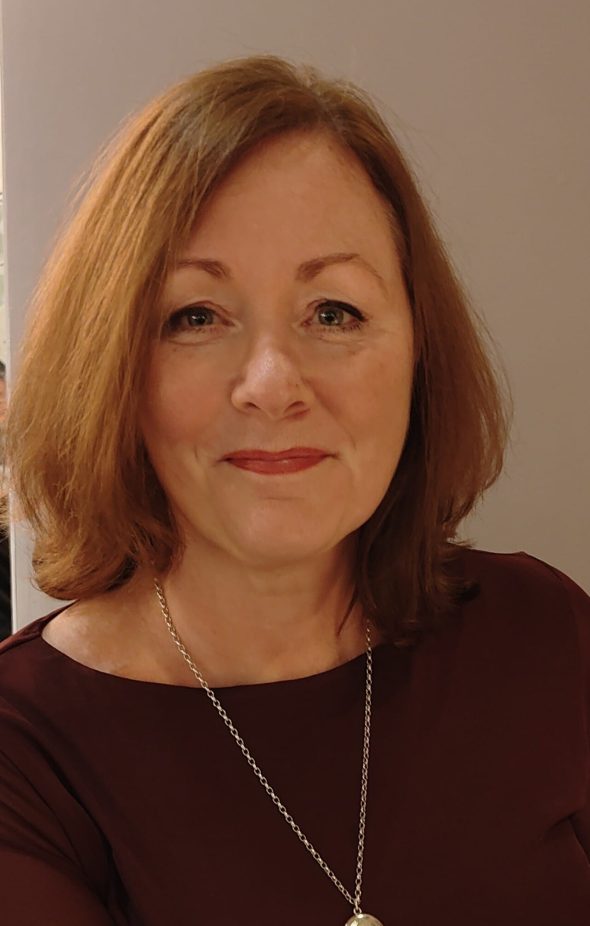
Bridget Foley, Attend - London

Bridget Foley, Attend

Bridget Foley - London

Bridget started volunteering very early on when she accompanied her Mum to Church, where they arranged flowers, handed out hymn books and mended curtains. As she got older she took on these and other tasks within the church and continued throughout her own children’s younger years.

Redundancy meant she was able to join Attend as a staff member, where she was a key part of setting up an Acquired Brain Injury programme and a Friends group to support it.

I think we all have a responsibility, especially in the world we live in these days, to give something back to our communities.

Even after moving on from Attend she has stayed closely involved with the organisation, first as a Trustee and then as Chair. She is grateful for all the experience and learning that volunteering has given her and highlights how rewarding it is to be able to give something back to the community.

Early volunteering with the Church

Interviewer

Good evening. Could I start asking your name?

Bridget Foley

Bridget Foley.

Interviewer

And could I ask which organisation we’re talking about today?

Bridget Foley

We are talking about Attend.

Interviewer

Excellent. And could I ask how old you are?

Bridget Foley

I am 62 years young.

Interviewer

Thank you. So was volunteering always part of your life?

Bridget Foley

Pretty much, yes. I grew up as a practicing Catholic. And so I was always at church, Mum was always doing flowers or doing something, mending curtains, giving out hymn books. So that was my introduction, I guess, to volunteering, and as such it was part of the sort of day job, if you like. It was part of the way I was brought up.

Interviewer

And that acted as an example for you, but did you actually get involved in that yourself?

Bridget Foley

Yes it did. It was a great example. But as I got older, I was doing the flower arranging, I was giving out the hymn books. And then as a young adult I started to read at Mass, and became a Catechist for first Holy Communion children who weren’t going to Catholic schools. And I took that into my married life when I had my own children. And continued that really throughout my children’s young lives, I guess. Always volunteering, and then volunteered as a School Governor, first of all as a Parent Governor. And then later I developed into the Chair of Governors.

Interviewer

So somehow you always seemed to find something to do.

Bridget Foley

Always, yes. Give somebody busy something to do.

Joining Attend

Interviewer

And we first met as part of your working career.

Bridget Foley

Yes. So I met you, David, back in my CIPD days when I was your business manager.  You were delivering, VRQs on behalf of CIPD, and it was my job to maintain that relationship. So that’s where we started to get to know each other.

Interviewer

Absolutely. And you then transitioned from that job to getting involved with us as an organisation. Could you explain a bit about your paid role with us?

Creating an Acquired Brain Injury programme

Bridget Foley

So in 2009, I was made redundant from CIPD, and as part of that process I let my customers know. And you came back to me, and said, “come and see me.” So I went to see you, and you very kindly offered me a job. And that was when we launched the acquired brain injury approach, which is a bedrock of Attend these days. And so I was there at that very beginning. Worked for you on a part-time basis, and then full-time basis for quite a few years.

Interviewer

Yes, absolutely. So for people listening, that service is still around. And I was just reading the draft of the board papers. We’ve had 22 new referrals in the last two months.

Bridget Foley

Wow. It’s amazing.

Interviewer

You know, that service has just carried on rolling on year after year.

The long-lasting impact of the ABI service

Bridget Foley

Yes. And the great thing about the acquired brain injury programme is the impact it has on so many different stakeholders lives. It’s not just the people themselves, but also their families, their friends, people that may be volunteering for Attend, but you can really see the fruits of your labour, I guess. Which gives me great satisfaction.

Setting up a Friends group

Interviewer

So as part of your time with us, we decided we would try, and set up a friends group to support the organisation.

Bridget Foley

We did. We did.

Interviewer

So can you tell me a bit about that?

Bridget Foley

Yes, so we set up the Friends of ABI, and it was trial, and error. I remember we had great fun doing it. We met some amazing people who were very willing to give their time up, but that’s really how it all started. That support mechanism to the customers, the clients, I should say. And we did things like an art gallery viewing. We did outings. We got them involved in workshops both craft but also practical things about managing money, those sorts of things. And yes, it was very satisfying actually.

Interviewer

Excellent. Yes. And again, that group still runs today. I think this week they’ve got a craft evening, and a ukulele evening. They’re still doing their stuff. And I think that’s a delightful legacy really, that you can get things going, and moving on.

Bridget Foley

And I think what’s good now is it’s driven by the clients rather than the staff group, which I think is how it should be. So they’re managing themselves, and they’re learning skills as well as the skills we are trying to teach them.

Interviewer

And it’s interesting because when we started that, of course we had no space.  And then we had some space for a bit when we were a bit more well off, and now we don’t. And now we rely on corporates to give us their space out of hours, and that is fantastic. So at the moment it’s a big shout out for Thistle Hotels who are providing the venue for ukulele, and Bolt, Burdon, Kemp, who are providing venues for other things. So, you know, if any corporates are listening, it’s a really easy offer. It really is. You know, let us have your meeting room for a couple of hours.

Bridget Foley

Such an easy way to get involved, and show some commitment to the community.
Moving on but staying involved

Interviewer

Absolutely. So you then moved on from us, which was great. You decided it was quite obvious that you were going to find another better paid career outside of the voluntary sector, frankly. So you moved on, then we lured you back in again. But this time not in a paid role. So would you like to talk a bit about your role on the board?

Becoming a Trustee

Bridget Foley

So I think the great thing about Attend is that once you are connected with Attend, you never really lose that connection. And I was very, very happy to be approached about coming onto the board as a trustee, to give something back to you, and to the client base, and all the people that we are trying to support. So I came in as a trustee, and learned the ropes, I had some great Chairs back in those days who I learned from as well, and not just being involved with the day to day running of the organisation, but the overall strategy of the organisation, and working with you, and supporting you, and the staff group is a really important part of being a trustee.


Taking on the role of Chair

Interviewer

So I think it was about 2018 or so you became the Chair.

Bridget Foley

Yes. That was a bit of a shock, but yes.

Interviewer (

And people I think who are listening might think that being a Chair is a really onerous task. How do you find it?

Bridget Foley

I was a little bit nervous about being Chair because, you know, leading people is a responsibility, and hopefully doing it in the right way, and having people’s voices heard. So I was very keen to make sure that my skills came through in that. And I didn’t find it onerous at all, actually. I found that the learning was amazing.  Working with you, and the team has always been very rewarding. The best part of the role has been learning from the staff group, and hearing their successes, and their challenges, and maybe supporting those opportunities, I guess. But no, I haven’t found it onerous. I found it challenging at times, but I would advocate for doing it. If anyone ever is thinking about it, I would advocate for doing it. Yes.

Interviewer

I think from my point of view, we speak every Tuesday.  We catch up, and for me, leadership is always a lonely role. And no matter who you’ve got around you, it’s great to have somebody who’s a little bit removed from the day-to-day running of the organisation where I can flag up whether I’m being reasonable or unreasonable. And if you’ve got a great relationship with the Chair, they know how to tell you to tone down, or  keep going in the way that you’re going. And that has been enormously supportive.

Bridget Foley

Oh, thank you very much. I mean, I think it’s really lonely at the top. I think any trustee that becomes a Chair or any trustee, really has to remember that you’re not there to tell the Chief Exec what to do, but you are a sounding board, and hopefully someone that can be relied on to be measured, and balanced in their responses. But ultimately you are in charge of the organisation. And I’ve learned loads from you, I have to say. And adjusted the way I work at my own job accordingly.

The importance of volunteering

Interviewer

So here we are, we are seven years down the line.

Bridget Foley

Can you believe it?

Interviewer

Where have those seven years gone? Literally it’s been, I always say it’s a great adventure.  And it has been a great adventure. The organisation has changed a lot, and we’ve had to change with the organisation realistically. The practicality is you’ve now used your maximum periods of office as Chair but you’ve decided that you want to carry on, on the board in another capacity. And I have to say we are delighted about that. Have you got any last thoughts that you’d like to share with us?

Bridget Foley

I think if you are thinking about volunteering in whatever role it is, just give it a go. I think life has changed from, you know, 70 years ago where you had to give several hours a week. Nowadays you can sort of dip in, and dip out. So I think it does appeal to all ages. But I would give it a go. I definitely listen more than speak, and yes, it’s been incredibly rewarding, which is why I’m not giving it up. I’m just handing the reins to someone who is equally brilliant, and will do a fantastic job. But I think we all have a responsibility, especially in the world we live in these days, to give something back to our communities. So it’s important for everyone to do something, even if it’s a little bit.

Interviewer

Thank you. Thank you for your time. I really appreciate it. And thank you for everything you’ve done.

About this story

Contributor: Bridget Foley
Recorded on: 15 December 2025
Role:
Setting: Church, Head Office
Organisation:
Location:
Themes:
Decade: