St Oswalds Hospital League of Friends
St Oswalds Hospital was built in 1848 originally as a Union Workhouse for the poor. In 1930 it became the Ashbourne Public Assistance Institution and then in 1948 was made part of the NHS as St Oswalds Hospital.
Stories of volunteers supporting the health service since 1949
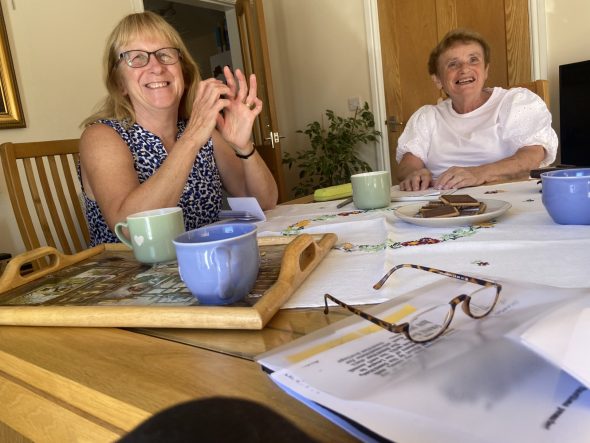
Carol Watson, Yvonne Frost - Ashbourne, Derbyshire
Retired nurses, Yvonne Frost and Carol Watson, reflect on their years at St. Oswald’s Hospital, sharing memories of their care, community, and the close relationships they built with their patients. After retiring, they continue their involvement through the League of Friends, raising funds, and supporting the hospital. Their continued dedication stemmed from their deep love for caring for others and supporting the hospital.
Well, I suppose we couldn’t let go in a way, could we?
This captures their motivation to continue giving back even after retirement. Although they are saddened by the League of Friends’ closure due to the lack of membership, they remain proud of the work they have done, and the sense of community they have created.
Interviewer
First of all ladies, could I start by asking your names?
Yvonne
I’m Yvonne Frost and I’m 69.
Carol
I’m Carol Watson, and I’m 75, I think.
Interviewer
And which League of Friends are we talking about today?
Carol
St. Oswald’s
Yvonne
Yes.
Interviewer
Thank you. Can you tell me a bit about what the League of Friends St. Oswald’s does?
Carol
Well, it’s changed a bit really, hasn’t it? Because years ago when we were on the nursing side, before we joined the League of Friends, they used to do the trolley shop, what’s called a trolley shop, and come round with things for the patients, you know, soaps, drinks, whatever. That went, didn’t it?
Yvonne
It did, yes.
Carol
They stopped that for some reason because I think things were changing, weren’t they?
Yvonne
Yes.
Carol
And for some reason it wasn’t.
Yvonne
Yes, it did. But then we’ve done different fundraising events as well.
Carol
Oh yes. Lots of fundraising. Yes. When the Queen was a hundred, we had a big garden party, which was fantastic, weren’t it?
Yvonne
Yes
Carol
If we say so ourselves.
Yvonne
We used do Easter and Christmas raffles.
Carol
Yes, we did.
Yvonne
Buy presents for the patients for Easter, and Christmas.
Carol
And take a lot of the patients, you call them now, on trips, we take them out for lunch, and up to the lovely country pubs around there in Derbyshire, you know, and things like that. Which was great, wasn’t it, really?
Yvonne
It was very good. Yes.
Carol
Yes.
Interviewer
So I’ve been to the hospital, and it feels like a new build.
Carol
It is a new build. The old site was a workhouse to start with.
Yvonne
The old hospital was beautiful.
Carol
Yes.
Yvonne
You’ve got atmosphere. It was a lovely place.
Carol
It really was. It got modernised a bit. And I mean, it was very basic to start with, but we had 40 patients on one ward and 41 on another. Now this one carries 24. Quite a difference, you know. And then of course, in that era of the 40 – 41, we had respite patients coming in.
Yvonne
We did, yes.
Carol
Which doesn’t happen now. They’d be out for four weeks, and come in for two to give the relatives a break. But they stopped that, didn’t they? I mean, a lot’s changed in the health service, as you probably know, which was vital to some people having that bit of a break, you know?
Yvonne
Then we used to have long stay residents with mental health issues, didn’t we?
Carol
Yes, yes we did. When the Pastures closed, we had six of them that were brought to St. Oswald’s. Everything was altered for them. Obviously. It was a right at the bottom of the ward. All security and coded things you can imagine in case anybody tried to get out. Actually, it worked out well, didn’t it?
Yvonne
It did. They had their own little sitting room, a proper sitting room with proper fireplace with pretend fire.
Carol
We had an RM that was there, especially to, you know, registered mental nurse to do their care and what have you. We had some characters, didn’t we really?
Yvonne
We did.
Carol
Yes. We had one gentleman, what’s it? They called him Billy Whiz. He couldn’t walk, hence the Billy Whiz I think. He was on his bottom.
Yvonne
He bottom shuffled like a young baby.
Carol
He did. He was a grand chap. He was a hairdresser from Wirksworth.
Yvonne
It was lovely.
Carol
Yes. And we had a terrible day there. One day he pulled the television off because, you know, he could get under where the wires and things were. I mean, he was a real tinker really. But thank God it didn’t damage the television, and nobody got hurt.
Yvonne
No, they didn’t. No
Carol
Things changed after that. It was fixed. Obviously he couldn’t pull it again. We had some characters like Miriam, she was a character, wasn’t she. She had not been out in the big outside world for 25 years. So we’ve got this trip. Where we were going to the seaside, weren’t we?
Yvonne
Yes.
Carol
Where was it? Can you remember? Was it Skegness? I don’t know.
Yvonne
I’ve got Skegness or Mabelthorpe in my head.
Carol
Anyway, we managed to get her. I mean she was quite frightened to go out after being institutionalised all that time. And I just remember, I mean dear me, she says, “Carol, there’s some weird looking boogers out here” she goes. It would be marvelous, you know, really when you get to, and we had a lovely day, didn’t we?
Yvonne
We did. Yes.
Carol
We really did. We could have got to Spain quicker, I think <laugh>, but with all the stops and start and all different things doing with them. But they were good times, weren’t they Yvonne?
Yvonne
We ended up in the fish and chip shop, didn’t we? For the teas?
Carol
Yes. And it was Miriam’s favourite food, fish and chips. She worked in a fish and chip shop, and one of the staff nurses, I mean they were quite big fish, broke her fish in half. Well you would have thought World War III was carrying on then. You know, it sounds silly to say these things, but this is what they were like, weren’t they Yvonne?
Yvonne
Yes.
Interviewer
But, so I picked up from what you’ve said so far, that you both had careers in nursing.
Carol
Oh yes. Yes. For a long time.
Yvonne
Yes.
Carol
Before was Band three, weren’t we? We were going up the ladder. Yes.
Interviewer
So how long did you work at the hospital?
Yvonne
Oh, well I was there for 31 years.
Carol
I think I did about 25. Yes, we were the last two to come out of the old site.
Yvonne
Yes, we were.
Carol
It was quite sad really,
Yvonne
It was very sad.
Carol
Because a lot of memories.
Yvonne
Yes.
Carol
But things really changed after that. Why? It was only built for 24 beds. When you think we’ve got 80 on the other site?
Yvonne
It was sad when it closed.
Carol
It was really, yes.
Interviewer
What took you both into caring as a profession?
Yvonne
Well, I first went there, and I was a domestic for about six months. And then I was an auxiliary as we were called then. An auxiliary job came available, and I had a very quick interview, and was given the job. So, I just carried on from there. Carol, and I both did our level threes together, didn’t we?
Carol
Yes, we did. We did lots of courses, and things didn’t we? We went all over the place doing things. It was all a learning matter. It was good. I worked at Boots the chemist, and then when after I had the children, I started to work at the hospital, and we loved it, didn’t we? It was hard work.
Yvonne
Well, it was hard work because there was none of the modern lifting aids or anything like that, you know.
Carol
Not like there is now. It’s very different now.
Yvonne
There was not a lot of manual.
Carol
Which it was lovely because we got a lot of local people. I mean we could spend all day chatting really because well, “hello and how’s your granny”. You know “how are you.”. And that’s how it went. Didn’t it Yvonne really.
Yvonne
Yes.
Interviewer
So, I’m guessing that most of the staff were local.
Carol
Yes.
Carol
They were. Really? Yes.
Yvonne
Few out of in villages.
Carol
Get an odd one or two that had to travel a bit. Parwich or somewhere. Because when Parwich Hospital closed
Yvonne
We had some of the staff from there, didn’t we?
Carol
We had their staff to come
Yvonne
And the old maternity home was open then. So, some of their staff went there as well.
Carol
Yes.
Interviewer
Fundamentally you’d be quite likely to know your patients as well.
Carol
Absolutely. Yes. And that’s what all the chatting coming you said, you know, talking about everybody.
Yvonne
It was a bit embarrassing sometimes, especially when it was a fellow that you knew. Yes. And you were doing the personal care, and stuff.
Carol
Yes. I used to say, “are you going to be all right with me doing this?”
Yvonne
Yes, I did understand.
Carol
And he’d say, “no, no, that’s all right”. You know, we did it, and that was it.
Yvonne
Yes.
Carol
You’re anatomy is the same no matter whoever’s looking after you. No. We can tell some stories, can’t we?
Yvonne
Oh, we can. Yes.
Carol
Yes.
Interviewer
So, you got to the point where you were retiring?
Carol
Yes.
Interviewer
And what made you decide to join the League of Friends?
Carol
Well, I suppose we couldn’t let go in way, could we?
Yvonne
Well, you were there first, and then you asked me to join because the League of Friends were getting a bit low on numbers. Weren’t they?
Carol
I finished work. I think I was 63 when I finished. How old were you, Yvonne, can you remember?
Yvonne
60.
Carol
And then, yes. We just thought, well we thought with being in that environment, and we knew what patients needed.
Yvonne
You phoned me to see if I’d join.
Carol
And Sheila was our friend. She was a registered nurse there. She came with us to the League of Friends as well.
Yvonne
Oh, we’ve done some fundraising since we’ve been there.
Carol
Yes.
Yvonne
We did one, was it last year? That little garden party type thing outside in the patient’s garden?
Carol
Yes, we did. Yes. When the Queen Mother was a hundred. We had a big party. That was nice.
Yvonne
That was up at the old hospital.
Carol
That was the old site though. Yes.
Interviewer
So, what was the party all about? Was it patients or was it people from outside?
Yvonne
It was a fundraising event, so it was you know people from outside.
Carol
Yes. We all dressed up. Who were you? Lord, whatever his name was?
Yvonne
I was Salvation Army.
Carol
Oh, that’s it. Walter, the porter, his blood pressure was rather high the day he saw her in these stockings. You know. No, we’ve had lots of fun, you know, and it’s who you’re with, and how you make it
Yvonne
A male staff nurse in the stocks that got completely wet through. All the wet sponges were thrown at him.
Carol
But yes, we’ve had some super times.
Yvonne
We did raise quite a bit of money that day actually.
Carol
Yes, we did over a thousand, weren’t it?
Yvonne
Yes.
Carol
Yes. It was.
Interviewer
So, what I pick up is that for you, it’s been something about friendship. It’s been something about fun, and it’s been something about raising money at the same time.
Carol
And caring. We do absolutely. The caring part was very, you know, if you’ve got palliative care, it was, you know, you did your stuff then sort of thing, didn’t we?
Yvonne
But yes, when we carried on the League of Friends, I made new friends as well because I had met some of the people on the League of Friends. That’s sure. You do, you make new friends, and it’s a way of carrying it on a bit longer as well.
Carol
It is, yes. And then some of the nursing staff would come to the League of Friends meetings, and if they needed a new stethoscope or whatever, we used to get involved with that, and get the money for it.
Yvonne
The last things we bought were some sort of ultrasound thing that cost about £80,000,
Carol
£75,000. Wasn’t it? It was for the scanning machine, wasn’t it?
Yvonne
Yes, they raised money for the big one. The last two bits we bought for the consultants to find where they’re putting injections, and stuff in, I forget what it’s called.
Carol
Oh, dermoscope.
Yvonne
That’s it.
Carol
A dermoscope. Yes.
Yvonne
So, we have bought quite a few bits.
Carol
Yes. it was a good thing, wasn’t it? Yes. You see, when it’s a pity, really, I mean for people that need treatment, we get the consultants there. We used to do all different clinics. We did the clinics downstairs. There was about, well Rheumatology.
Yvonne
Oh, there’s Orthopaedics,
Carol
Diabetic clinic, hearing clinic, spinal clinic. And so, we got used to working with the consultants and it was so much easier for the Ashbourne people there. Particularly the patients not having to travel off into Derby.
Yvonne
And I think that helped when we were on the League of Friends because we’d had consultant contacts as well.
Carol
Yes. And they could say, “oh, I want this so and so for my”, whatever it was. And then of course we could put it forward to the meeting, and see if we could help them to get it.
Interviewer
What do you think about the League of Friends closing down then?
Carol
I think it’s very sad.
Yvonne
We can’t get anybody to join, and we haven’t got enough people.
Carol
That’s right.
Yvonne
You have to have so many people, don’t you to have a committee?
Carol
The chap who does all the accounts. He’s not well, is he?
Yvonne
No. He’s very poorly.
Carol
He’s a lovely chap. But he’s done wonders over years.
Yvonne
Judy, the secretary, she’s absolutely marvelous. But she thinks she’s had enough now.
Carol
Well, we’re all getting older, you see, that’s the thing.
Yvonne
And you can’t recruit. I think everybody’s just got such busy lives now, and people don’t want extra.
Carol
Things aren’t the same really though. Are they? In a lot of ways really, I don’t think now.
Yvonne
No.
Interviewer
So, what do you think is different?
Carol
I think they’re just, they’re too busy a life, and they don’t understand probably what’s going on.
Yvonne
It’s like when you want to do fundraising, and stuff. We did a raffle, didn’t we, for Easter. And because people don’t carry cash anymore, you don’t do very well with raffles anymore because they’ve got no cash on them.
Carol
Yes.
Yvonne
So, I think, you know, there’s a lot of contributions to it really, why we’re closing down. Mainly because there’s not enough on the committee.
Carol
They’ll be missed, you know, they’ll be sorely missed. I think they will anyway.
Yvonne
Well, they know where the money’s going. They can still access it if they want to buy something.
Carol
What happens to the money that we have got in the bank?
Yvonne
It’s going to be spent,
Carol
It’s going to stay with St. Oswalds because it’s been given by local people.
Yvonne
Yes. It’s still going to be spent.
Carol
And then they will, if they need any equipment, then of course that’s where it will go.
Yvonne
It’s just that we won’t be doing any more fundraising. So no, there’ll be no more to go in the pot basically, unless anybody leaves anything in the will or anything, you know?
Interviewer
And what would it mean for you? Because it feels like it’s been quite a social activity. So, will you do your social stuff separately now?
Yvonne
Possibly, yes. I mean, Carol, and I have been friends a long time.
Carol
Absolutely.
Yvonne
We keep in touch anyway.
Carol
Yes, definitely. And if you know, if they wanted anything up there, we could go, and help.
Yvonne
Yes, we would. Yes. We’d still chip in.
Carol
Yes, absolutely. Yes. Are they going, a lot of these League of Friends, are they all finishing everywhere then? Or is it just us?
Yvonne
I think there’s quite a few.
Interviewer
They’ve been finishing probably for the last 10 years. Bit by bit. There have been different groups as they get to the end of their natural life, you know, and that end of that natural life may be the people who are leading it or the hospital is changing or whatever.
Yvonne
I think with ours it’s contribution of both, isn’t it? It’s the hospital changes plus a few in the League of Friends are now quite elderly.
Interviewer
So, when you knew I was coming to see you today, was there anything you wanted to tell me that you haven’t had the chance to say yet?
Carol
All little clips of what’s happened? After the workhouse, end of the building was developed in St. Oswalds Hospital. It’s just the beginning.
Yvonne
Yes. Just little clips of things.
Carol
Well, we had some right characters really in the hospital.
Interviewer
So, it’s more about the people than anything else.
Carol
Yes, it is really.
Yvonne
Yes.
Carol
You can take those bits if you want, but I don’t know whether you’d be interested in what some of the patients did do.
Interviewer
Well, thank you. We’ll take them with us. Yes. And out of interest, are you both local ladies for the whole of your life or how’s that?
Carol
Oh yes. We’re Ashbourne born. Well, I mean this is Mayfield, but Ashbourne.
Yvonne
I was born in Etwall, but we moved to Ashbourne when I was six.
Interviewer
Okay. So you’ve been around for a bit.
Carol
Yes, absolutely.
Yvonne
Yes
Interviewer
And there is a real sense when you come out to these sorts of community hospitals that it is a proper community.
Carol
Oh yes. Well, you see, it’s lovely because you, and especially people coming in, spend all day chatting to people, “oh, I know your granny now, you know”, and all that.
Yvonne
Yes. I think like, again, more so in the old hospital because the new hospital, when I was still there, we were getting patients from further afield, like from Derby. You know, Ilkeston and all over the place, weren’t we?
Carol
Yes.
Yvonne
Rather than just local people. So, it did change a lot when we first opened the new hospital.
Carol
Yes, it has. It’s changed in that way, hasn’t it? You know when they stopped the respite, which was very helpful to some relatives.
Yvonne
Because we always thought that the new hospital was still going to
Carol
Be putting them into a care home, it’s very expensive, isn’t it?
Yvonne
Because we thought it was still going to be community hospital, didn’t we? A proper community hospital when it first opened, but it’s for everybody really.
Carol
Well, we lost the A and E service, which really that would’ve helped the acute setting because if say your little boy had tumbled, and got a big lump on his leg, you could pop him there. They could check him out. Save people in Derby having to travel.
Yvonne
When we had the meetings, when the new hospital was being built, we all said we still need the minor injuries.
Carol
We did. It’s been the worst thing they did really was stopping that. There is a Saturday, and Sunday they’ve got the, what do you call it? The out of hours.
Yvonne
DHU.
Carol
Yes. DH Derby Health United. So, there is that.
Yvonne
Quite a few of the staff nurses could suture, and stuff, couldn’t they?
Carol
So, yes. Because I mean, from what you can hear or make out it’s a nightmare at the Royal Derby with the emergency place, you know, casualty, what they call it now. So, yes. So shame we did lose it, isn’t it?
Yvonne
Yes, we did lose a few bits when we moved down.
Interviewer
It has been really lovely to hear a bit about the St. Oswald’s, and its story, and about your story too, and how that’s fitted in with the League of Friends. So, thank you ever so much.
| Contributor: | Carol Watson, Yvonne Frost |
| Recorded on: | 8 September 2025 |
| Role: | |
| Setting: | Hospital |
| Organisation: | |
| Hospital: | |
| Location: | |
| Themes: | |
| Decade: |
St Oswalds Hospital was built in 1848 originally as a Union Workhouse for the poor. In 1930 it became the Ashbourne Public Assistance Institution and then in 1948 was made part of the NHS as St Oswalds Hospital.
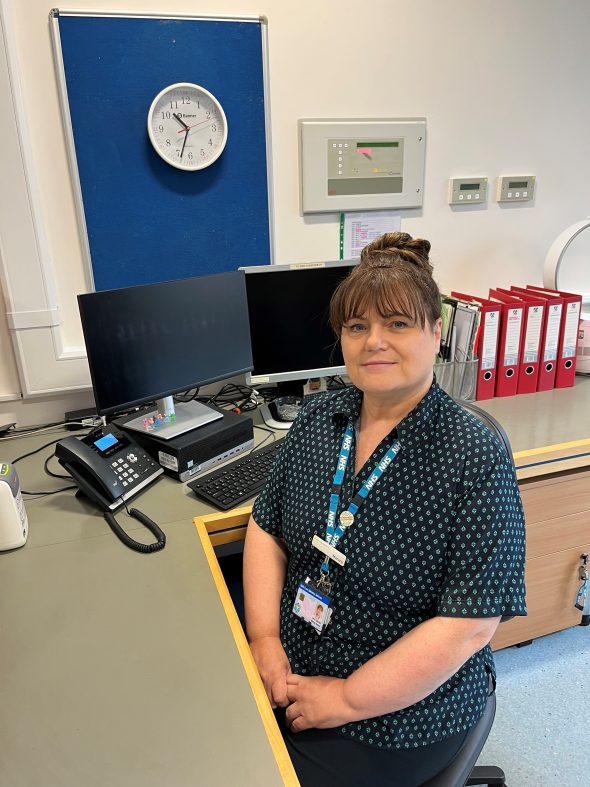
Listen 00.06.24
Story: Marion Seery - Ashbourne, Derbyshire