Friends Voices

Stories of volunteers supporting the health service since 1949

Rin Roach, Friends of Cathja  - West London

Rin Roach, Friends of Cathja 

Rin Roach - West London

Rin describes an organisation where people are accepted for who they are, and what they bring, a place where they are genuinely allowed to be.  

 It’s a place where people come and go, as it suits them, and as they need. It’s a community where people aren’t judged, and as they blossom, they can bring a smile.  

We stay where we feel most loved, most appreciated, most looked after…

It’s a place where she has found a place to not only belong, but where her skills are a force for positive change. 

A safe place to be

Interviewer

Perhaps we could start by me asking your name,


Rin Roche

Miranda Roach, but I do go by the name of Rin.


Interviewer

Excellent, thank you. And what organisation are we talking about today?


Rin Roche

Friends of Cathja.


Interviewer

Okay. And could I ask how old you are?


Rin Roche

Me. Yes, but only if you don’t tell other people. I’m 57.


Interviewer

Oh, same age!


Rin Roche

<Laugh>


Interviewer

Same age. I was born in 1965.


Rin Roche

Yes, Well done.


Interviewer

Good year. It’s so good year, obviously <laugh>. So what first inspired you to get involved with the organisation?


Rin Roche

Well, I think as you know, I came here as a service user. I didn’t come here as a volunteer so slightly, you know, I came about ‘sort of’ volunteering through a different angle. You know, it’s more, not osmosis, that’s not the word I’m looking for, when you just kind of come into it from not a direct angle. I can’t remember the word.


Interviewer

Okay. And how long ago was that?


Rin Roche

15 years.


Interviewer

15 years. So something about it, you must have liked it, because you stayed.


Rin Roche

Yes, so, so I mean, just thinking back to that time, I don’t often really retrospect for obvious reasons, but the barge was a place where I, I felt safe, respected, somewhere that I could be myself wouldn’t be judged, felt supported. And you know, when you’re feeling as you, as we were discussing about your, your friend, you know, when you’re in that state where you are very chaotic, you need something that that offers you some sort of stability.


Interviewer

Okay. So that’s quite a bit about almost having a place to come to, a place to be. And Yes, I mean, it’s full of woodwork. Was woodwork something that you knew a lot about when you came or that’s something that you learned?


Interviewer

Perhaps we could start by me asking your name,


Rin Roche

Miranda Roach, but I do go by the name of Rin.


Interviewer

Excellent, thank you. And what organisation are we talking about today?


Rin Roche

Friends of Cathja.


Interviewer

Okay. And could I ask how old you are?


Rin Roche

Me. Yes, but only if you don’t tell other people. I’m 57.


Interviewer

Oh, same age!


Rin Roche

<Laugh>


Interviewer

Same age. I was born in 1965.


Rin Roche

Yes, Well done.


Interviewer

Good year. It’s so good year, obviously <laugh>. So what first inspired you to get involved with the organisation?


Rin Roche

Well, I think as you know, I came here as a service user. I didn’t come here as a volunteer so slightly, you know, I came about ‘sort of’ volunteering through a different angle. You know, it’s more, not osmosis, that’s not the word I’m looking for, when you just kind of come into it from not a direct angle. I can’t remember the word.


Interviewer

Okay. And how long ago was that?


Rin Roche

15 years.


Interviewer

15 years. So something about it, you must have liked it, because you stayed.


Rin Roche

Yes, so, so I mean, just thinking back to that time, I don’t often really retrospect for obvious reasons, but the barge was a place where I, I felt safe, respected, somewhere that I could be myself wouldn’t be judged, felt supported. And you know, when you’re feeling as you, as we were discussing about your, your friend, you know, when you’re in that state where you are very chaotic, you need something that that offers you some sort of stability.


Interviewer

Okay. So that’s quite a bit about almost having a place to come to, a place to be. And Yes, I mean, it’s full of woodwork. Was woodwork something that you knew a lot about when you came or that’s something that you learned?

Finding yourself through artistic expression

Rin Roche

No, so I, I mean, when it comes to sort of skills I, I’ve got, I’ve got an artistic side. You know, the woodwork is more practical, you know, that’s more, you know, carpentry, engineering, there’s a lot of measuring, me and measuring aren’t friends. But so I don’t know , I’ve really learned a lot because it, the, the point of being here is not about tutoring. The point of being here is about engaging with the making process, in order to benefit your mental health. You know? Because obviously if you are a lot of people with mental health problems, as you know yourself, you, you isolate from other people. You don’t tend to mix with other people, because they don’t understand you. Because they expect different things from you that you can’t cope with. So that can make it quite hard to sort of be in, in any, in any setting. And also, of course, a lot of places, this is very specifically mental health, some spaces are not specific. So you end up with like substance abuse or, you know, and that makes a whole different, you know different relationships. So you have to be, you know, so it’s, this was really a safe space that you could come be creative or, or not as the case, as the case may be.


Interviewer

So what’s your creativity? What do you do?


Rin Roche

I’m, I’m really big on recycling. Okay. So like I’ve made, I have made a couple of things that were, one was out of an old boat, pieces of an old boat. So I made a cabinet out of it. One was out of old wine boxes and I made a sort of thing, you know, there’s, there’s various pictures on, on the website that you could, and our Facebook page as well. So there’s a sort of history and I… sort of material… I’m kind of, make…not making clothes exactly. I’ve been upholstering a chair and doing bits and pieces like that. So I’m not as creative as other people on the boat. We’ve got some really fantastic makers as you’ve, as you’ve sort across the years, you know, and here today, ,

An opportunity to contribute through new skills

Interviewer

But, but I’m, my guess is it’s just different, the different skills complement, different people, you know, come together. So you come in, you can help upholster, which somebody else doesn’t.


Rin Roche

No, it’s… Yes, I mean, yes and no. So, so my skill, funny enough, so you were talking about the sort of experience of volunteering. So I came as a service user and was in that, you know, there’s this really strange thing isn’t there about being…you know, and, and there were those times when you, become you, you become something else, wherever it might be. And so we had a guy who did the fundraising and I’d never done any kind of grant writing or fundraising, or anything like that before. That hadn’t been anything that I’d been exposed to. I’d mostly been in the service and hospitality. Like I was, I actually worked in that building on the corner as a Financial Director’s Secretary many years ago. So I discovered I had a skill for grant writing, I say a skill for grant writing, but its an understanding, you know, because I was connected to the organisation, you know, to the, to the barge. And, and you know, how I believe in the work that goes on here, you know, how I see it benefit not just people like me, but many other people as well. So that was where my volunteering really started. I’m, I’m in a paid role now, but it wasn’t a paid role to begin with. It was, it was just voluntary to, you know, so…


Interviewer

Yes. So the voluntary, and now your paid role, is now as a bid writer as I would call it?


Rin Roche

Yes. Kind of. I have the title of Assistant Project Manager, is the label. But mostly my, my role here is, is sort of basic admin. Like, you know, I don’t know, you know, just basic admin stuff. But mainly grant writing. I do support for people on various things, but I’m not on the creative side. Okay. Like Pirin and Liz and Martin, you know.


Interviewer

Okay. So, so really important role. Keep the thing going actually?


Rin Roche

Yes. Pretty much. Yes.

A place where people belong

Interviewer

And the other thing I find quite interesting is that I have a sense that some people, this becomes quite a, a place they have a long term connection to like you, you’re not the only person who’s been here 15 years.


Rin Roche

No. No.


Interviewer

And why do you think that is?


Rin Roche

That’s a really interesting question. I don’t act, you know, it’s not something I really ever try to answer in myself.


Rin Roche

I think we stay where we feel most loved, most appreciated, most looked after, you know, I mean, we are quite selfish beings. You know, we like to think of ourselves as, as really, you know, altruistic and conscientious towards others, you know. But when you really peel everything away, you know, we are very much like, “oh, what about me?”


Interviewer

And I think, I think there’s a really interesting bit though, listening. I mean I love that description about where we feel most loved, and there is a sense that this is a community.


Rin Roche

Yes. That’s a really good way. Yes. I mean, I’d agree with that. Yes.


Interviewer

A community where some people have been here longer. Some people are here shorter. Some people come and go away and they might come back again a bit later on. It’s, but whenever they do, I have this, you can feel it…


Rin Roche

There’s a continuity. Yes. There is a, there is a familiarity, and continuity. So, you know, things don’t, a lot of things change, don’t they? I mean, you’ve probably seen that at Attend and, and those changes, sometimes they’re easy, sometimes they’re really hard, because that’s when your foundations are, they’re most shaky, you know? And where, you know, Cathja has been a, you know, a constant, you know, not just for me but for, for other people as you described.


Interviewer

And one of the things I find really interesting as I sort of sit here in, this place is that it probably isn’t intentional, it’s just happened, but it’s not so tidy that you’d feel you’d mess it up if you came and joined in.


Rin Roche

Yes. because and there is, there is actually, Yes, there is a rationale behind that because obviously with mental health, I was lucky that I wasn’t sectioned. You know, a lot of people end up getting into the institutional side of mental health, which is, you know, “do this, do that, take this, take that. Go here, go there.” There’s a lot of instruction. So the whole ethos of Cathja is about enablement, empowerment, self-direction. You know, it’s not about us saying come here at 10 or come or leave at this time. It’s not about us saying “tidy that.” It’s about people taking their own control over that, and their own intention over that. Which is the, the best for healing and moving, you know your son here talked about the Stroke Café, and that thing of somebody making themselves a cup of tea without spilling the milk or you know, is a, it can be, you know, even those minor things can be so major for, for the person, depending on their lived experience.


Interviewer

Absolutely. So here we are, 15 years further on now, the world has changed outside.


Rin Roche

Hasn’t it!


Interviewer

How would you describe, is, is there still a need for a place like this today? Or do you think the world is moving on? Or do you think there’s more need, or how do you see it?


Rin Roche

Yes, that’s an interesting question as well. I mean, the, the level of participation by people hasn’t changed. It’s been constant. It’s always about same group size and it’s like the tide outside it comes, you know, flows in, it flows out. A new bunch of people come, and old bunch of people go. And as you say, there’s some people like myself and a couple of others. And as you know, sadly we just lost Barry just recently. Did Carl tell you?


Interviewer

No he didn’t. I’m sorry to hear that.


Rin Roche

Yes. So Yes, so I mean Barry had been here 22 years, so he was 80. I mean he wasn’t a young young man, but Yes. But the same. So there’s that. Yes, so it is, it’s hard, it’s hard to judge because we are kind of an enclave. We don’t have like, passing footfall. We’re not like in a community center. We’re on a boat for a start. We should tell that to anyone listening that we’re on a Barge. So we don’t have people passing by or passing through. So that obviously influences maybe, you know, who and how many attend. But we do try to make sure that the place feels accessible, you know, with a website and Facebook page connections to the local mental health services. The council know us really well, and support us really well. They know us. You know, they, they’re very, we’ve got good regard for the service. So Yes. I don’t know that the need has changed, or that the people you, you know, I think there’s less use of medication, which is good. That’s quite interesting to see. I think, so yes.


Interviewer

Okay. So we, I mean you hear sort of this whole concept of social prescription now that goes on, you know, when you go to your GP, and they might refer you to go to the gym or to do a hobby or, you know, it’s almost like you are ahead of your time. In that sense.


Rin Roche

Yes.


Interviewer

This is the sort of thing now that people absolutely think is the right way forward for people with mental health. Yes. Now, when you knew we were coming today, was there anything that you thought you’d like to tell us? A favorite story perhaps of being involved here? Or is there anything that…

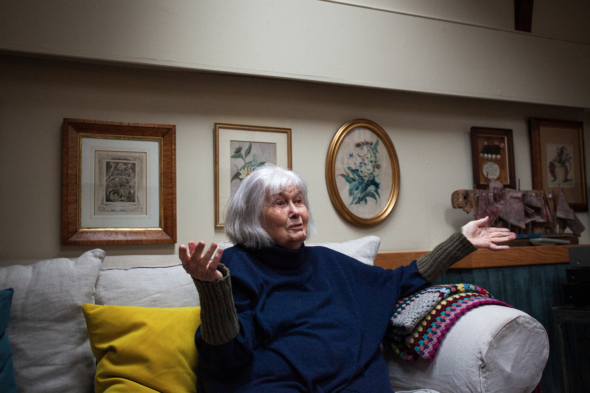
A place where people can be themselves

Rin Roche

I think there’s two, there’s two people that stand out. One was Debbie, who recently passed away, slightly young, that I think she was 62 I think, she was a great character. She was, you know, a matriarch of her family. Ruled the family with an iron fist, and had the label of schizophrenia. Which obviously we are trying, you know, Carl works very hard to try to change that. We’ve got this, the conversations now moving towards neurodiversity, neurodiversity and something else. I can’t, the other description because even Neurodiverse people are saying that’s like even that sort of you know… but anyway, so we went to France, this the second time. The first time we went with the boat, that was a major trip we went to. I can’t remember, but Carl can tell you all the details of the places.


Rin Roche

And which is when I first joined, this is going back. And then we went again with mini buses. So we arrive and Debbie was a large lady, shall we say she was a large lady, and we went swimming. So Debbie comes out of the changing room in the tiniest bikini you’ve ever seen in your entire life, proceeds to make her way to the diving, the diving platform thing. And you could feel the whole swimming pool like watching, you know, watching her go and do this. And then she went to do this dive, and you could feel everyone like hold their breath. And she did the most perfect dive. It was absolutely brilliant as it was not what everyone expected. They were expecting, you know, a huge like belly flop, that she was going to come up like, with no bikini sort of thing. And instead she emerged, you know, and it turns out that she actually ha was a, a fantastic swimmer and when she was a kid she’d won like all these swimming awards and was a sort of professional, not, a professional swimmer, but you know.


Rin Roche

Yes. But it’s really good swimmer. And the other one was Brenda, who was similar, who was really, you know, a woman of her own direction. We went to Belgium this time, I think that was, and she’d never been abroad for the longest time. And she went off and everyone was like, “oh, why have we let Brenda go? She’s never going to find her way back. We’re going to be…” And she literally just appeared like on the dot, like an hour later whenever we, when we said like, get back to us for, you know. She just appeared that and “Hello I’m back.” You know, it was absolutely magical. Because they were like, you know, because even within the group here, it’s really hard that, you know, people have these ideas of what people can, and can’t do.


Interviewer

Yes. So it, it was interesting because when you go both of those stories, it, it, it sort of, that whole concept of “not judging a book by its cover.”


Rin Roche

Absolutely.


Interviewer

But even here where you are, good, we still have those ideas, don’t we? Those set ideas that we…


Rin Roche

Yes.


Interviewer

Yes. Well Debbie was certainly body confident, wasn’t she? She knew what she could do in the water. How fantastic is that?


Rin Roche

Yes, It was absolutely. You know, and, and the, and the thing is, is like you say that, that that the way that someone, you know, you should always sort of work from a like you have with your friend… you know, you work from an enablement point of view, gives somebody that help, that support that kindness. And that is really what Cathja is about. It’s about… it doesn’t… obviously we are not a drop in service. We don’t encourage people to come and sit and chat. But not all mental health is visible or not, I know mental health isn’t visible. But, you know, it’s not obvious I should say. That’s what I’m trying,…you know, so some people might appear well, why don’t they go make something? It’s because they mentally can’t take that step. Due to something… they might be hearing voices or they’re just in, in such a deep depression or their minds racing or, you know, whatever it might be. You know, and, and Cathja, you know, gives that sort of daily, daily experience, that daily foundation where people can just come and be without that, that thing of being judged, you know?


Interviewer

Well, I have to say, I’ve thoroughly enjoyed meeting you and I’ve thoroughly enjoyed being here today. You’re fantastic. It’s easy to fall in love with what you do. But the reason it’s easy to fall in love with it is because you, you all share your own love with other people. And so thank you for doing that today and thank you for telling us your story. Thank you.


Rin Roche

No problem. No problem. Thank you.

About this story

Contributor: Rin Roach
Recorded on: 13 February 2023
Role:
Setting: Community
Organisation:
Hospital:
Location:
Themes:
Decade:

Related

This is a provision for mental health. It has these aspects, of growing there, and being yourself, taking ownership, having ownership, making decisions, not having six weeks treatment, not having this, not being judged

Listen 00:22:25

Story: Ann Bowden - West London